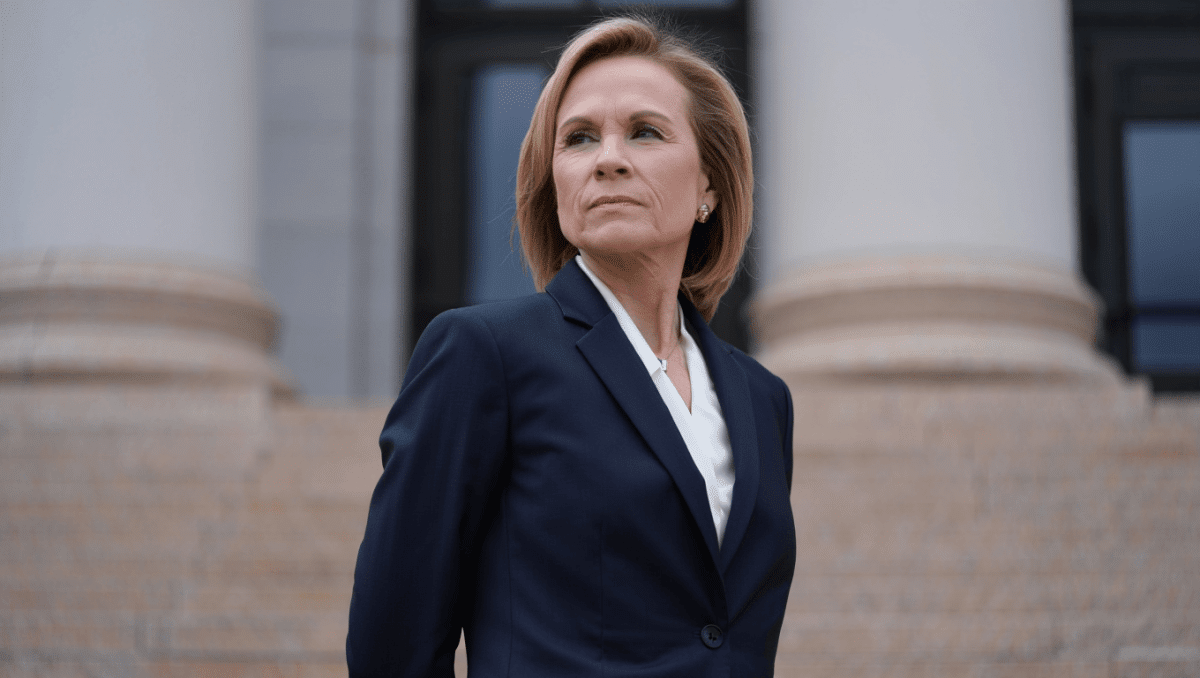
A Colorado appeals court has overturned the nine-year prison sentence handed to former Mesa County clerk Tina Peters, ruling that the trial judge improperly factored her public remarks about the 2020 election into punishment and ordering a new sentencing hearing. The decision preserves Peters’ convictions but narrows how courts may weigh a defendant’s speech when deciding punishment — a development with immediate consequences for her case and for how judges address political statements in future sentencing.
The three-judge panel issued a detailed, 78-page opinion finding that the lower court treated Peters’ expressed beliefs about alleged election fraud as a reason to increase her term. The appeals court said that crossed a constitutional line: a sentence may consider whether a defendant shows remorse, but it cannot be lengthened to punish the exercise of protected speech.
Peters was convicted in August on seven counts tied to unauthorized access to voting equipment after state investigators traced security breaches to actions taken while she served as Mesa County clerk. She was sentenced to nine years after a highly publicized hearing in which she repeatedly raised election-fraud claims and resisted the court’s courtroom procedures.
Boxing champions ditch long runs for high-intensity training: new era in fight prep
Czech nationals among victims of Pinedale-area crash: two confirmed dead
The appeals court’s ruling made three central adjustments:
- It affirmed Peters’ criminal convictions for the security breaches.
- It vacated the nine-year prison sentence and remanded the case for resentencing, explaining the original sentence relied in part on Peters’ speech.
- It rejected the argument that a presidential pardon from Donald Trump could erase state-level convictions, holding the pardon power does not reach state offenses.
A judge at the trial level will now set a new sentence. The panel noted Peters is no longer the county clerk and therefore is not in a position to repeat the conduct that led to her conviction, undercutting any claim that the original lengthy term was needed for specific deterrence alone.
State officials responded sharply. Colorado Attorney General Phil Weiser said Peters remains a convicted felon whose actions endangered others and undermined public trust. He emphasized that a presidential pardon would not overturn state convictions. Colorado Secretary of State Jena Griswold also welcomed the court’s refusal to treat a federal pardon as a shortcut out of state accountability and urged that Peters receive no special treatment at resentencing.
The appeals court also addressed Peters’ late attempt to rely on a presidential pardon. Her legal team argued the pardon eliminated state liability; the judges rejected that interpretation, joining other appellate courts in saying the Constitution’s reference to pardons applies to federal offenses, not crimes prosecuted under state law.
Why this matters now
The decision clarifies limits on how a defendant’s political speech may be used in sentencing, reaffirming that courts cannot impose harsher punishment primarily to silence or deter expression. At the same time, the ruling preserves criminal liability for the underlying conduct — unauthorized access to election systems — signaling that protected speech does not shield unlawful acts.Legal and timeline notes
- Convictions: upheld (seven counts related to security breaches)
- Sentence: vacated; case remanded for resentencing
- Pardon: federal pardon does not negate state convictions, per the appeals court
- Parole eligibility previously cited (November 2028) will be reassessed once a new sentence is imposed; no resentencing date has been set
Next steps
The 21st Judicial District judge who imposed the original sentence has been directed to conduct a new sentencing hearing without considering Peters’ protected speech as an aggravating factor. That hearing will determine a new term and any revised parole timetable.The case sits at the intersection of criminal accountability for election-related misconduct and constitutional protections for speech — a balance courts are now reexamining as the legal fallout from the 2020 election continues to ripple through state and federal systems.