Show summary Hide summary
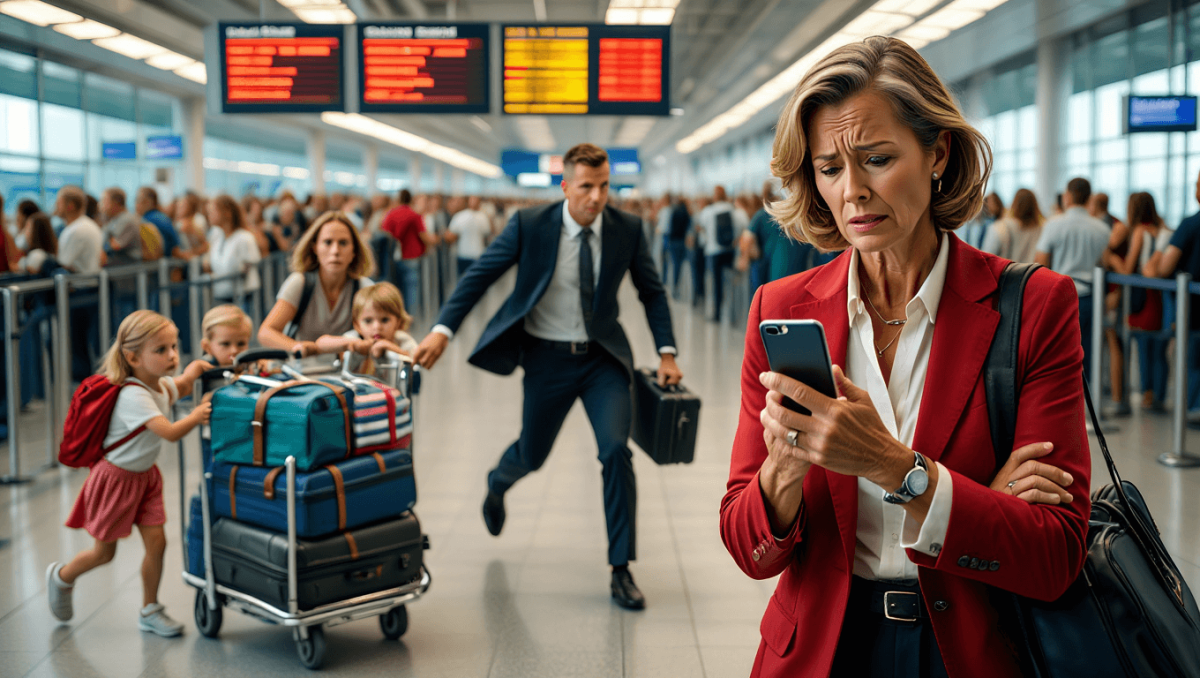
This summer’s surge in air travel has spotlighted a familiar but little-named threat to calm trips: the stretch from your front door to your seat where plans unravel and tempers flare. Known in travel circles as the airport red zone, this window of unpredictability can turn routine travel into a cascade of stress with real consequences for schedules, wallets and relationships.
Why it matters now: higher passenger volumes and tighter connections in June 2026 mean more pressure on the systems that usually smooth travel — so knowing how to avoid a meltdown is practical, not just pleasant.
What triggers the meltdown
Boxing champions ditch long runs for high-intensity training: new era in fight prep
Czech nationals among victims of Pinedale-area crash: two confirmed dead
At the core is a loss of certainty. Airports compress multiple time-sensitive steps into a brief period: driving, parking, check-in, security, boarding. Each hold-up compounds the feeling that control has slipped away, and the body responds as if under threat.
Clinical and performance experts describe the same biology: uncertainty activates the stress response, releasing adrenaline and cortisol and narrowing attention. That rush helps when there is real danger, but in a terminal it produces racing hearts, short tempers and impulsive decisions — the very behaviors that make delays or missed connections more likely.
That reaction also has social effects. Polling and travel studies show a large share of couples report tension while traveling, and airport rows — sometimes dubbed “airport divorces” when partners split to avoid arguments — are no longer rare. The stakes: strained relationships, extra fees, and missed flights.
How travelers get pulled in
Psychologists call the pattern a negative feedback loop. Past travel mishaps plant a belief — “this trip will go wrong” — which primes expectant worry. Those thoughts change mood and behavior: rushing, snapping, distracted driving or arguing at the counter. Small obstacles then confirm the expectation and escalate the response.
Even people who fly frequently are not immune. Experienced travelers report scanning for potential failures the moment they leave home, from whether the kiosk will accept a passport to whether a bag tag is attached correctly. The result is cumulative tension by the time they reach the gate.
Practical steps to exit the red zone
- Build a preflight ritual. A short, repeatable routine — a three-deep-breath pause, a spoken cue that today is travel day, or checking a single “essentials” pocket — signals your brain to shift from alarm to task mode.
- Allow extra buffer time. Add generous padding to every stage: travel to the airport, check-in, and security. Treat arrival time like a reservation you cannot modify — it removes the urgency that fuels anxiety.
- Remove micro-decisions. Keep passports, phone, cards and key meds in one dedicated pouch you never put in checked luggage. Pre-load mobile boarding passes and set alarms for key moments so you don’t make frazzled choices on the fly.
- Divide responsibilities. Tell travel companions who handles which task — parking, bags, kids, documents — so fewer last-minute negotiations occur under pressure.
- Accept limited control. Name the uncertainty out loud: acknowledging that delays happen often diffuses the fight-or-flight response and makes corrective thinking more likely.
These techniques are simple but effective because they work with human biology rather than against it. Small rituals and structural changes reduce surprises and thus blunt the stress cascade before it peaks.
Short examples of what to change
Make one concrete tweak this trip: put your passport or ID in a slim neck wallet or pouch that stays on you, set two alarms (one for leaving home, one for boarding), and agree with your partner on a single decision-maker for lines and fees. Those three moves alone avoid many common red zone triggers.
Different trips will require different adjustments. Traveling with toddlers, for example, often benefits most from a preflight briefing and extra time; business travelers may gain most from eliminating micro-decisions and carrying an “essentials” kit.
The bottom line
Air travel will always include elements outside your control. The practical response is to reduce the controllable friction around you so your nervous system receives fewer alarms. By creating routines, building extra time into your plans and simplifying choices, you cut the physiological and social fuel that inflames the airport red zone.
On busy summer days at airports across the country, those small preparations are the difference between a stressful ordeal and a travel day you can actually enjoy.