
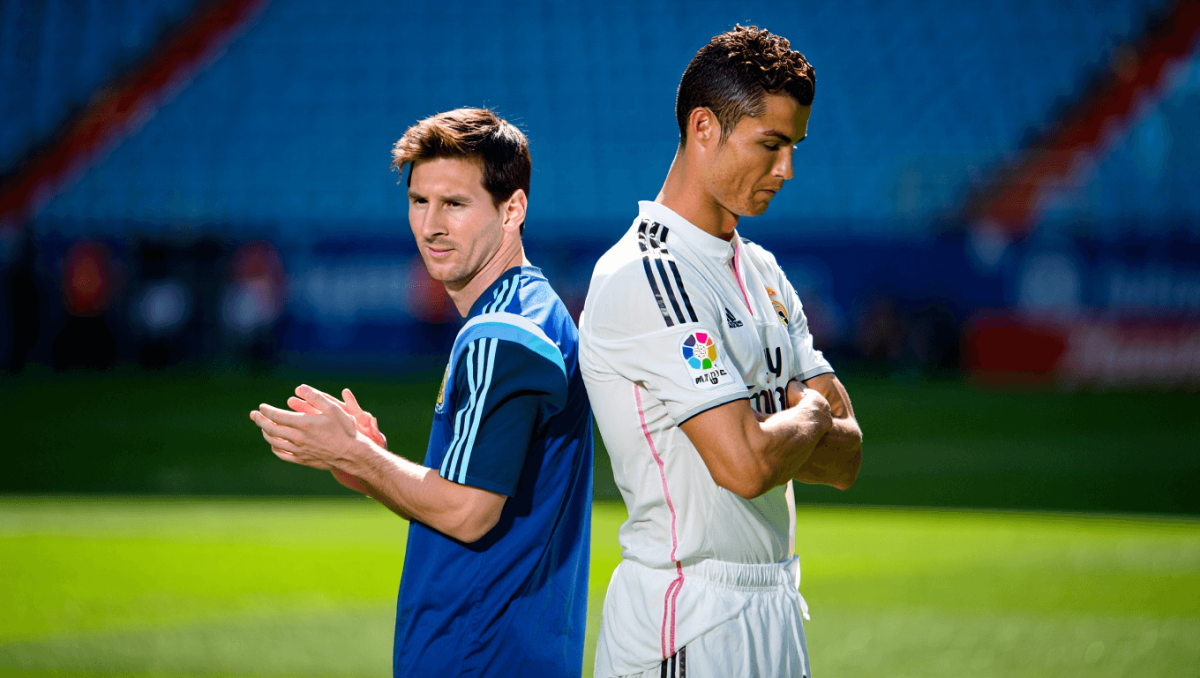
Two contentious video-review decisions this week have done more than shape single matches — they’ve underscored how public opinion has tilted toward one superstar and away from another. The reactions to a red card shown after a pitchside check and to a marginal offside call reveal broader shifts in how fans read fouls, replays and the reputations of Lionel Messi and Cristiano Ronaldo.
In one game, Folarin Balogun was dismissed after a referee reviewed a studs-up challenge on Bosnian defender Tarik Muharemovic and judged it to meet the threshold for serious foul play. Supporters pointed to a comparable incident earlier in the tournament involving Messi — and argued the younger striker’s punishment should mirror the treatment Messi received.
About a day later, motion-tracking and replay technology flagged Mario Pašalić as offside in the lead-up to Croatia’s dramatic equalizer against Ronaldo’s Portugal. Even though the call went against Portugal — traditionally associated with Ronaldo — much of the public sympathy flowed to Croatia, who have already outperformed expectations in this cycle.
Boxing champions ditch long runs for high-intensity training: new era in fight prep
Czech nationals among victims of Pinedale-area crash: two confirmed dead
Why these moments matter now
The timing matters because they show how reputations affect interpretation. When officials consult VAR, the technology is meant to reduce error. But it can also magnify existing narratives if viewers, players and even referees perceive actions through the lens of a player’s standing.
- Public perception: Fans are more likely to excuse or criticize an action depending on who committed it.
- Officiating pressure: High-profile names invite closer scrutiny from broadcasters and online chatter, which can feed back into how incidents are debated.
- Technology limits: VAR and semi-automated systems settle some questions but cannot erase the audience’s prior beliefs.
- Long-term stakes: These reactions help shape legacies and may influence how future controversies are judged.
There are genuine concerns about how replay technology is applied. Inconsistent use can deepen perceived bias — intentionally or not — and examples from recent tournaments show how uneven enforcement fuels debate. At the same time, supporters’ responses often reveal more about their loyalties than about a single decision’s fairness.
That dynamic is particularly visible with Messi and Ronaldo. Four years after Argentina’s World Cup triumph, Messi’s image remains remarkably resilient. His low-key demeanor — once criticized as a lack of leadership — now seems to work in his favor: it leaves room for admirers to project heroic narratives onto his performances without the distraction of theatrics.
Ronaldo’s standing is more complicated. Now in his early 40s and deployed primarily as a central striker, he still produces decisive moments: a late penalty that leveled a match, a narrowly ruled out chance that showed he can be a threat. Yet his overall influence during that game was limited; he finished with one touch in the box outside the penalty conversion and was substituted as the coach chased a winner.
Portugal’s campaign is far from over — there is time for Ronaldo to change perceptions with a series of big performances — and football remains inherently unpredictable. Upsets happen; underdogs do prevail. But even dramatic results are unlikely to entirely rewrite the narrative already taking shape among fans and pundits.
Put another way: the technical rulings will keep coming, and some will be controversial. But the way those rulings are received now is filtered through reputations cemented over years of success and personality. In this moment, the public mood appears to have chosen a favorite — and no single VAR replay is poised to reverse that.