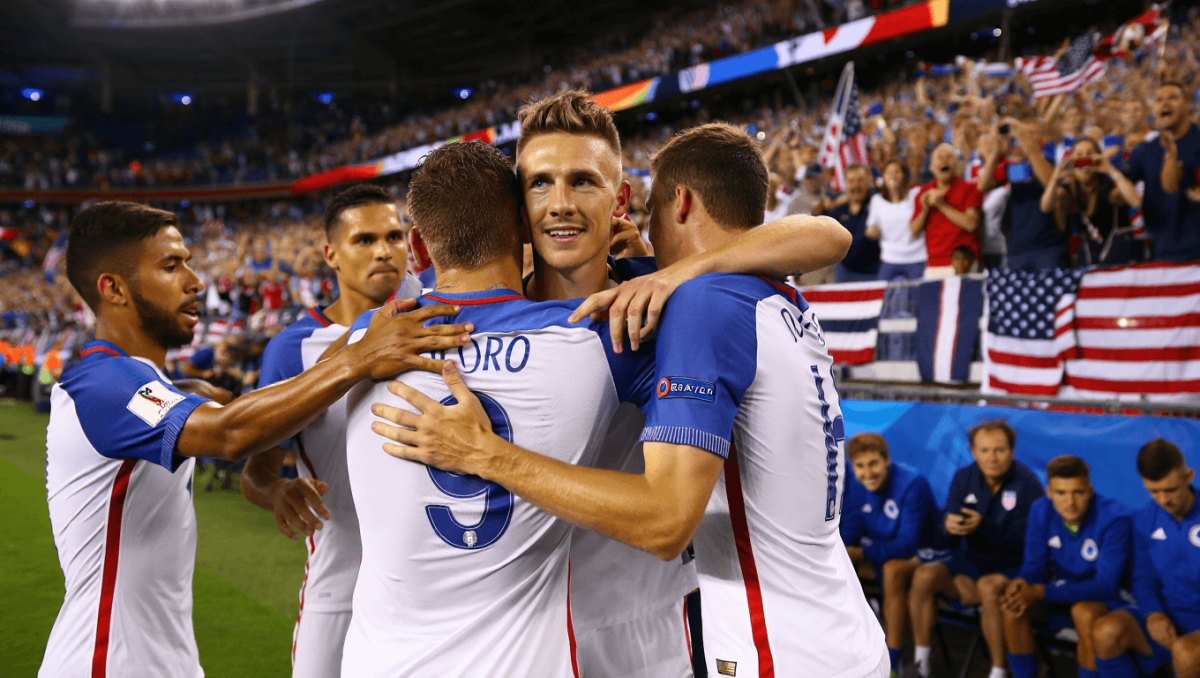
Italy’s absence from the World Cup knockouts has become a quietly seismic shift in this tournament — and the United States’ 2-0 win over Bosnia and Herzegovina on Wednesday made that reality harder to ignore. The result not only advanced the U.S. despite a late dismissal, it also highlighted how much the tournament landscape has changed for traditional powers.
Bosnia’s path to Qatar — and Italy’s stumble
Bosnia reached the tournament through a playoff route that included a decisive shootout victory over Italy after a match marked by a first-half dismissal for Alessandro Bastoni. That result, and the Azzurri’s failure to recover, now looks less like an anomaly and more like evidence of deeper issues in Italy’s approach.
Bosnia’s group-stage draw was unusually kind: they faced few top-ranked sides and emerged into the knockout phase without the kind of relentless offense that typically makes headlines. In practical terms, their progression owed as much to circumstance as it did to moments of defensive discipline.
Boxing champions ditch long runs for high-intensity training: new era in fight prep
Czech nationals among victims of Pinedale-area crash: two confirmed dead
How the U.S. navigated the match
The American team played with a measured balance under manager Mauricio Pochettino, combining structure with enough attacking intent to avoid pressure. Even after Folarin Balogun received a red card in the 65th minute, the United States did not visibly collapse; they adjusted possession and defended crisply until full time.
That kind of composure is not guaranteed at a World Cup. Earlier rounds have shown several heavyweights struggle to close matches — Spain’s opening draw with Cape Verde and England’s battle to come back against DR Congo are recent examples. The U.S. performance here suggests their progress is not solely dependent on individual brilliance but on a coherent team plan.
Attacking trends and tournament context
This World Cup has been a showcase for forward players. The tournament’s biggest names — including Lionel Messi, Kylian Mbappé, Harry Kane and Erling Haaland — have provided a steady stream of goals and decisive moments. The Americans don’t possess a single superstar at that elite level, but they do have a collection of players capable of producing collective momentum when tactics allow them to.
Other surprises so far — teams like Cape Verde and DR Congo — have made noise by committing to forward play rather than parking for results. That shift rewards sides that take calculated risks, and it penalizes those who rely on defensive conservatism alone.
What to expect next for the U.S.
The margin for error narrows quickly. Belgium stands between the United States and the quarterfinals, and a potential meeting with Spain could follow. These are teams that combine high-end individual talent with structured systems — a stiffer test than the group opponents the U.S. has already faced.
Quick takeaways
– The U.S. showed tactical resilience, absorbing the red card setback and managing tempo.
– Bosnia benefited from a favorable group composition more than from an expansive offense.
– Italy’s failure to reach the knockout rounds raises questions about the long-term sustainability of their recent tactical identity.
– The tournament is currently tilted toward teams that prioritize attack, rewarding risk-taking over rigid defense.
Upcoming knockout map (simplified)
| Stage | Opponent | Primary challenge |
|---|---|---|
| Round of 16 | Belgium | Experienced, quick attackers; press against possession |
| Potential Quarterfinal | Spain | Territorial control and precise passing; breaking lines is difficult |
Perspective
This World Cup feels less like a re-run of past tournaments where defensive mastery prevailed, and more like a stage for attacking initiative. For Italy, the questions are structural: can the national setup adapt to a game where positive intent is being rewarded? For the United States, the test is immediate — maintaining momentum against more complete opponents and translating collective energy into consistent results.
Either way, Wednesday’s result did more than advance one team and eliminate another. It underlined a broader shift in tournament football: patience and possession still matter, but teams that pair those qualities with forward imagination are gaining the upper hand.