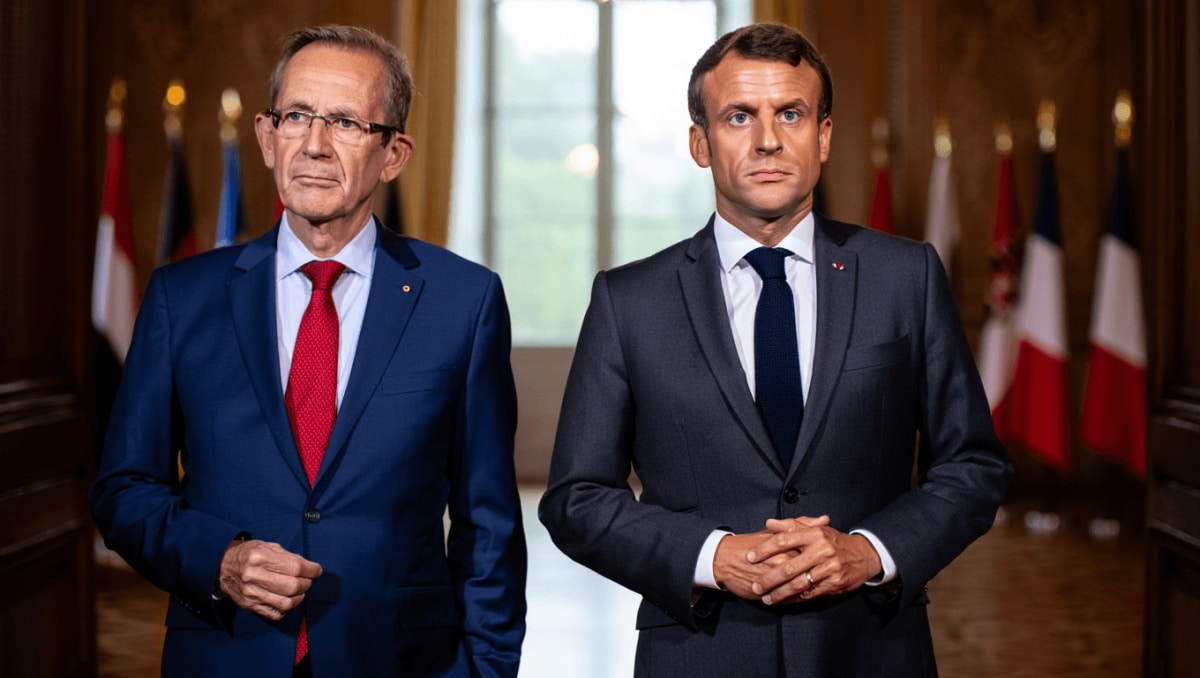
Germany will send conventional forces to take part in a French-led nuclear exercise before the end of the year, Chancellor Friedrich Merz and President Emmanuel Macron announced Friday, marking a clear step toward deeper European coordination on high-end deterrence. The move comes amid renewed questions about transatlantic guarantees and signals an effort by Paris and Berlin to shore up collective security on the continent.
The agreement, reached after talks at Norvenich air base near Cologne, stops short of transferring nuclear weapons or funding for France’s deterrent. Instead, Merz said the initial phase will involve German conventional units joining French training aimed at improving interoperability and understanding of how a nuclear-capable force operates.
Why this matters now: European capitals are re-evaluating defense arrangements as doubts persist about the United States’ future security commitments. The Franco‑German initiative is designed to reduce frictions in crisis scenarios and to make European responses more coherent and faster.
Boxing champions ditch long runs for high-intensity training: new era in fight prep
Czech nationals among victims of Pinedale-area crash: two confirmed dead
Both leaders emphasized that the initiative complements — not replaces — NATO arrangements. Under NATO’s long-standing sharing arrangements, U.S. nuclear bombs are stored in Europe and some German aircraft are certified to deliver them in a crisis. Berlin reaffirmed its commitment to those obligations while opening a new channel of direct cooperation with Paris.
Merz framed the decision as a break with past reticence. “Previous administrations turned down similar offers,” he said, arguing that current global tensions require fresh approaches. He also stressed that Germany’s participation is being introduced incrementally and that any doctrinal change would come only after careful evaluation.
Macron described the partnership as a way to increase “strategic uncertainty” for potential adversaries by improving joint readiness and sharing select operational practices. He said the effort will include exchanges between military personnel, joint exercises and closer cooperation among experts — but declined to outline operational specifics.
On Thursday, the two air forces staged a symbolic exercise: French Rafales and German Eurofighters performed in-flight refuelling together. The Rafale is France’s nuclear-capable fighter, a fact Paris has highlighted since announcing in March a plan to expand its nuclear arsenal and to invite European partners into closer deterrence cooperation.
France has been the European Union’s only nuclear power since Britain left the bloc, and Paris has actively courted partners. Several countries — including the UK, Poland, the Netherlands, Belgium, Greece, Sweden, Denmark and Norway — have signaled interest in working with France on aspects of nuclear deterrence.
Germany’s entry adds momentum: Berlin is pursuing a major rearmament program aimed at building the continent’s most capable conventional force by 2039. That shift, combined with closer ties to Paris, strengthens a broader push for European strategic autonomy even as NATO remains the central security framework.
- What Germany will do: Provide conventional units for a French-led exercise before year-end; participation is incremental and not nuclear-armed.
- Relationship to NATO: Leaders say the move complements NATO nuclear sharing, not a replacement for it.
- Operational signals: Joint refuelling of Rafale and Eurofighter jets symbolized the start of practical cooperation.
- Wider diplomatic context: France’s invitation follows its decision to expand its nuclear arsenal and growing European concern about U.S. commitments.
The announcement also follows the collapse this summer of a planned €100 billion fighter program intended to replace current Rafale and Eurofighter fleets. Paris and Berlin now appear keen to salvage momentum in bilateral defence ties ahead of the end of Macron’s presidential term, when the political appetite for such a push could shift.
Officials on both sides insist Germany will not finance France’s nuclear forces. Instead, the effort is described as an investment in shared procedures, confidence-building and faster decision-making in crisis scenarios — all designed to make deterrence more credible across Europe.
As the partnership moves from declaration to practice, defence analysts will be watching for how exercises are structured, which capabilities are prioritized, and whether Berlin’s steps prompt other EU states to seek deeper roles alongside Paris. For now, the message from Norvenich is clear: European capitals are taking more responsibility for shaping their own security posture.
Reporting from Cologne and Paris. Additional reporting from Warsaw.