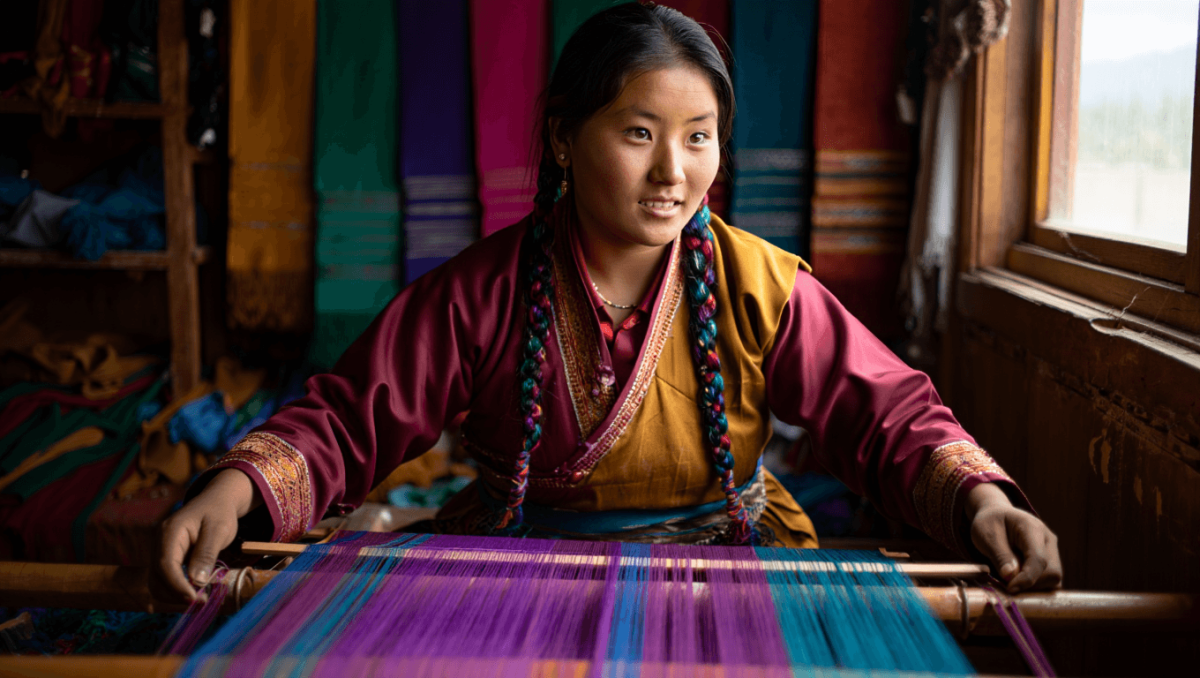
In a highland community in Tibet, a handful of artisans are sustaining a textile craft that stretches back generations — and turning it into a lifeline for families today. Their cooperative combines traditional hand techniques with fresh market strategies to preserve cultural knowledge while generating income.
A craft under pressure
The cooperative emerged as a response to shrinking demand for artisanal goods and the steady rise of factory-made textiles. By organizing production, pooling resources and marketing under a shared name, members have been able to reduce costs, reach buyers beyond the valley and train younger weavers in time-honored methods.
How the weaving works
Artisans still prepare fibers by hand and weave on simple looms passed down in households. The cooperative focuses on a few core specialties: highland wool shawls, ceremonial bands and narrow decorative panels. Each item is rooted in local patterns and dyes, but small design tweaks make some pieces more appealing to contemporary customers without erasing their identity.
Boxing champions ditch long runs for high-intensity training: new era in fight prep
Czech nationals among victims of Pinedale-area crash: two confirmed dead
What the cooperative delivers
| Product | Primary Material | Traditional Use |
|---|---|---|
| Shawls | Mountain sheep wool | Daily wear, warmth |
| Ceremonial bands | Hand-spun yarn | Ritual and festive dress |
| Decorative panels | Natural dyes, cotton warp | Home textiles, gifts |
Economic and cultural stakes
– The cooperative supports more stable, **sustainable livelihoods** by turning seasonal work into year-round activity.
– It functions as a living archive: skills that might otherwise disappear are taught to apprentices.
– By standardizing quality, the group gains access to regional markets and online platforms that individual artisans could not reach alone.
Balancing tradition and market demands
Members are deliberate about what changes to accept. Simple adaptations — such as lighter weights, modern color accents or standardized sizing — help the pieces sell beyond local customers while keeping core techniques intact. At the same time, the cooperative invests time in documenting patterns and teaching terminology so the cultural meaning is not lost as products move into new markets.
Challenges ahead
Access to broader markets brings benefits but also risks. Competition from mass-produced goods, the expense of certified shipping, and younger people drawn to urban jobs all put pressure on the cooperative model. Climate-related shifts in grazing patterns affect wool quality in some years, increasing the importance of craft-led income diversification.
Why this matters now
Efforts like this cooperative illustrate a practical path for cultural preservation that ties directly to economic resilience. For readers interested in heritage, ethical fashion or rural development, the project shows how small-scale organization can keep traditional knowledge alive while meeting 21st-century market realities.
A pragmatic example
The cooperative’s approach — combining craft training, shared procurement and selective product innovation — offers a model other communities might adapt when seeking to protect intangible heritage without closing off economic opportunity. As artisans continue to refine that balance, their work remains both a cultural statement and a source of household income.