Show summary Hide summary
Georgia lawmakers are moving quickly toward a law that would require every student to pass daily weapons screening when entering a public school — a direct policy response to the 2024 school shooting in Winder. If approved during the final days of the 2026 legislative session, the measure would make Georgia the first state to mandate campus-wide weapons-detection systems at every public school, a change with immediate budget, staffing and civil-liberty implications.
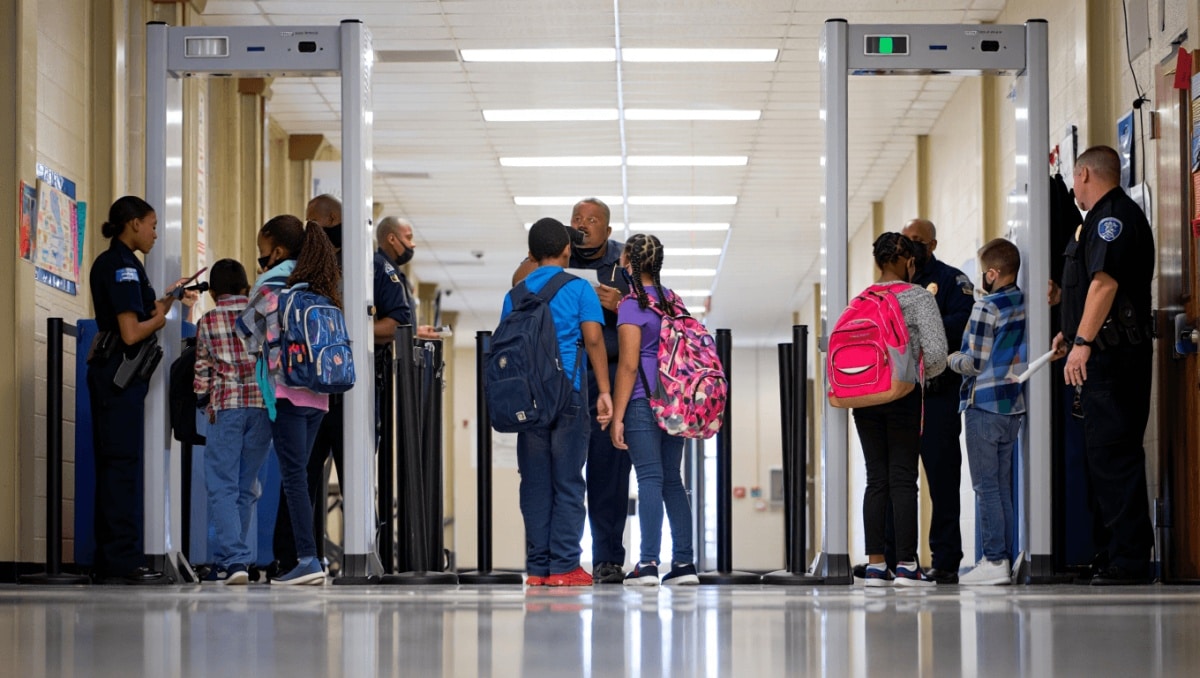
The bill, advanced by House Majority Leader Chuck Efstration, would push districts to install modern detection units that pair sensor technology with software analysis and, in some cases, camera feeds. Supporters say the systems bring the kind of routine security seen in courthouses and airports to schools, and argue they could stop weapons from ever reaching hallways and classrooms.
Students and families affected by last year’s shooting at Apalachee High School have become a focal point for the debate. Survivors and relatives contend that earlier detection could have prevented the weapon from being brought into the school; lawmakers backing the bill cite that tragedy as proof of urgency.
Boxing champions ditch long runs for high-intensity training: new era in fight prep
Czech nationals among victims of Pinedale-area crash: two confirmed dead
What the proposal would do — and cost
The draft law requires detection systems at all public school campuses, including elementary schools — a provision that has drawn particular scrutiny. Implementation raises several logistical and financial questions: modern units can exceed $10,000 apiece, checkpoints need staff, and districts must decide whether to reallocate existing safety funds or seek new money from the state.
- Mandate: Daily screening of students at every public school campus.
- Technology: Systems use electromagnetic sensors, camera analysis or AI-assisted software to flag potential weapons.
- Funding status: Georgia currently provides $50,000 per campus annually for safety; state budget writers have proposed a one-time $50 million grant program to help districts pay for equipment.
- Operational needs: Checkpoints require personnel to monitor alarms and conduct secondary searches.
Advocates in larger districts point to investments already made. Atlanta Public Schools spent more than $4 million in 2021 to replace traditional metal detectors with newer gateways; district officials say the number of guns found on campuses fell sharply after installation. At Midtown High School, students move through detection gates holding laptops aloft while staff monitor a readout that signals whether a bag needs closer inspection.
Effectiveness and practical limits
Nationwide evidence that detectors stop shootings is limited. A U.S. Department of Education survey shows that only a small share of schools use daily metal detector checks — roughly 2.4% of all schools and about 6.2% of high schools — while random screenings are somewhat more common.
Security researchers warn of a familiar trade-off: set sensitivity too high and alarms proliferate, producing many false positives; set it too low and real threats may pass undetected. Over time, repeated false alarms can erode vigilance, leading staff to assume most alerts are benign.
“When staff see dozens of nonthreat alarms from laptops or binders, it’s human nature to expect the next alert to be the same,” said Nikita Ermolaev, a research engineer who studies security systems. That pattern, he noted, can allow a genuine weapon to slip through.
District leaders also raise practical concerns about where funding would come from and whether existing safety allocations — often used to pay school resource officers — can cover new equipment and staffing without additional state aid.
Political and policy pushback
The measure has drawn opposition from lawmakers and educators who argue the approach treats weapons detection as a substitute for policies to reduce children’s access to guns. Critics, including some Democrats in the legislature, call for a broader focus on gun-safety measures rather than an exclusive reliance on screening technology.
“Installing detectors everywhere risks treating this as an unavoidable condition rather than addressing why weapons are so accessible,” said one state legislator who voted against the bill. Opponents also question the bill’s requirement for elementary schools, where the perceived threat and the practical priorities differ from high schools.
As the bill moves through a Senate committee and toward final votes, the debate has condensed into a few clear trade-offs: immediate, visible security measures versus long-term strategies to limit firearm access; one-time capital expense versus ongoing staffing costs; and the promise of deterrence against the reality of false alarms and limited research on whether detectors prevent mass shootings.
The legislature must approve the measure before it reaches Gov. Brian Kemp’s desk this session. If enacted, school districts will face tight timelines and difficult choices on financing, staffing and how to balance safety with students’ daily experience on campus.