Show summary Hide summary
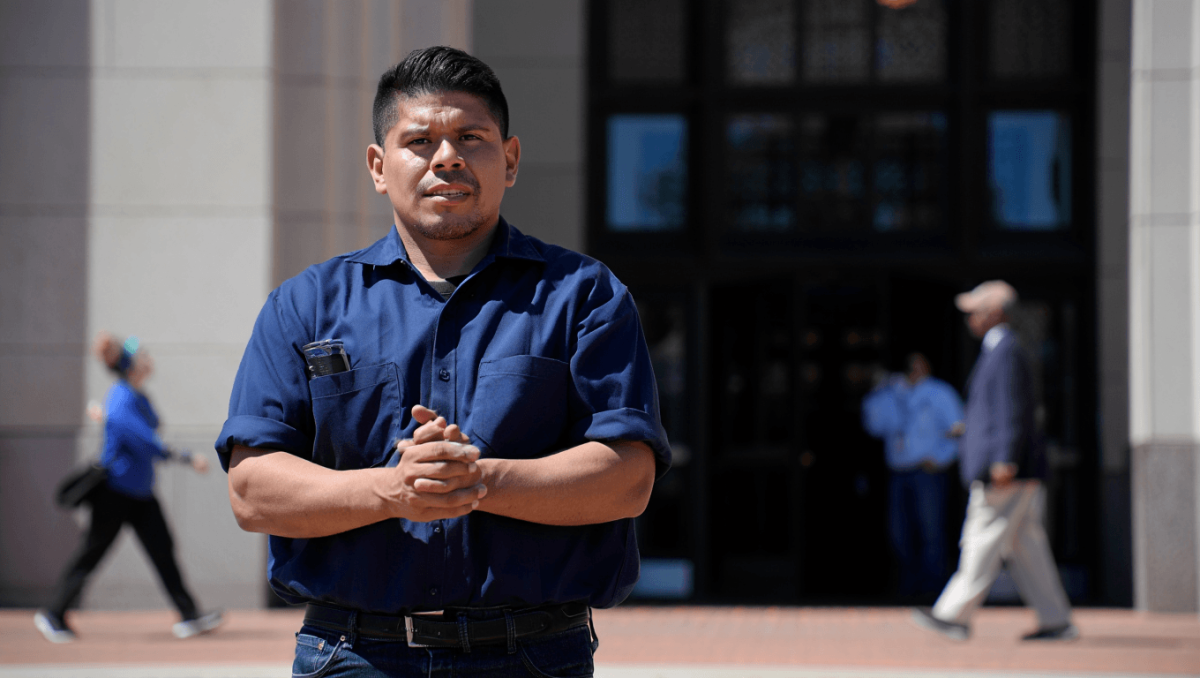
A federal judge in Great Falls ordered the immediate release of Roberto Orozco-Ramirez this week, finding his continued confinement unlawful and raising fresh questions about the administration’s interpretation of long‑standing immigration rules. The decision ends more than 100 days behind bars for the Froid diesel mechanic and poses a potential test of nationwide detention policy.
Shortly before 11 a.m. Thursday, Orozco-Ramirez stepped free from the Cascade County Detention Center and was reunited with his eldest son. Family members and neighbors watched as they embraced, visibly emotional after months of separation.
Chief U.S. District Judge Brian Morris directed federal authorities to release Orozco-Ramirez within 24 hours, calling the government’s reading of the immigration statute “erroneous” and warning that the executive branch cannot disregard the Constitution’s protections against arbitrary confinement. The judge’s written order emphasized the centrality of due process in detention decisions.
Boxing champions ditch long runs for high-intensity training: new era in fight prep
Czech nationals among victims of Pinedale-area crash: two confirmed dead
Local supporters — many from the tiny northeastern Montana town where Orozco-Ramirez has lived for a decade — had mounted a quick fundraising effort to retain immigration expertise for his defense. His lead civil counsel credited the community for raising the funds that made the legal challenge possible.
The U.S. Attorney’s Office in Montana said it is reviewing the judge’s ruling but declined further comment.
Why the case matters now
The ruling arrives amid a national legal dispute over ICE’s broadened guidance, announced last year, which expands the categories of people the agency says must be held without bond. Federal appeals courts have split on the issue, producing conflicting precedents around the country. The Great Falls decision is the first of its kind in Montana and could influence how similar cases are handled locally.
- Community impact: Neighbors, co‑workers and parents of Orozco‑Ramirez’s children rallied publicly and raised money to support legal representation.
- Legal posture: The initial federal criminal charge of illegal re‑entry was dropped by prosecutors in April, but immigration authorities continued to detain him.
- Movement between facilities: Following the dropped criminal charge, Orozco‑Ramirez was transferred several times among Border Patrol and detention facilities before returning to Cascade County in early May.
- Broader implications: The decision challenges the administration’s claim that immigrants who entered unlawfully are categorically ineligible for bond.
A brief timeline
Orozco‑Ramirez, a diesel mechanic and Little League coach who has lived in Froid for about a decade, was arrested in January. Federal prosecutors later withdrew the illegal re‑entry felony in mid‑April, but he remained in custody while immigration authorities reviewed his status. Between mid‑April and early May he was shuttled among detention sites in the region before landing back in Great Falls.
Meanwhile, civil litigation aimed at securing his release argued that, because an appeal related to a 2009 deportation order remains pending in the Ninth Circuit, federal enforcement officials lacked authority to continue detaining or remove him. That legal challenge formed the basis of the judge’s order.
At a recent federal hearing, roughly 50 supporters — including several who traveled hours from Froid — filled the courtroom to back Orozco‑Ramirez and his family. The proceeding focused less on his personal record than on the proper application of immigration statutes and constitutional limits on detention.
Attorneys for Orozco‑Ramirez argued the government’s new policy effectively strips judges of discretion and denies long‑settled protections; defense counsel pointed to other recent rulings around the country that have reached similar conclusions. Prosecutors from the U.S. Attorney’s Office said they were reviewing the decision.
Reaction in the community has been mixed online: many praised the outcome and called for regularization of his status, while others questioned how he entered the country. Local supporters describe the arrest as unexpected in a conservative, mostly white rural town and say it underlined how national immigration policy can reach small communities.
The case will likely continue to evolve — both through appeals and in parallel litigation over the administration’s detention guidance — and could inform how courts balance public‑safety concerns with constitutional safeguards for individuals in immigration proceedings.
Mara Silvers contributed reporting.