
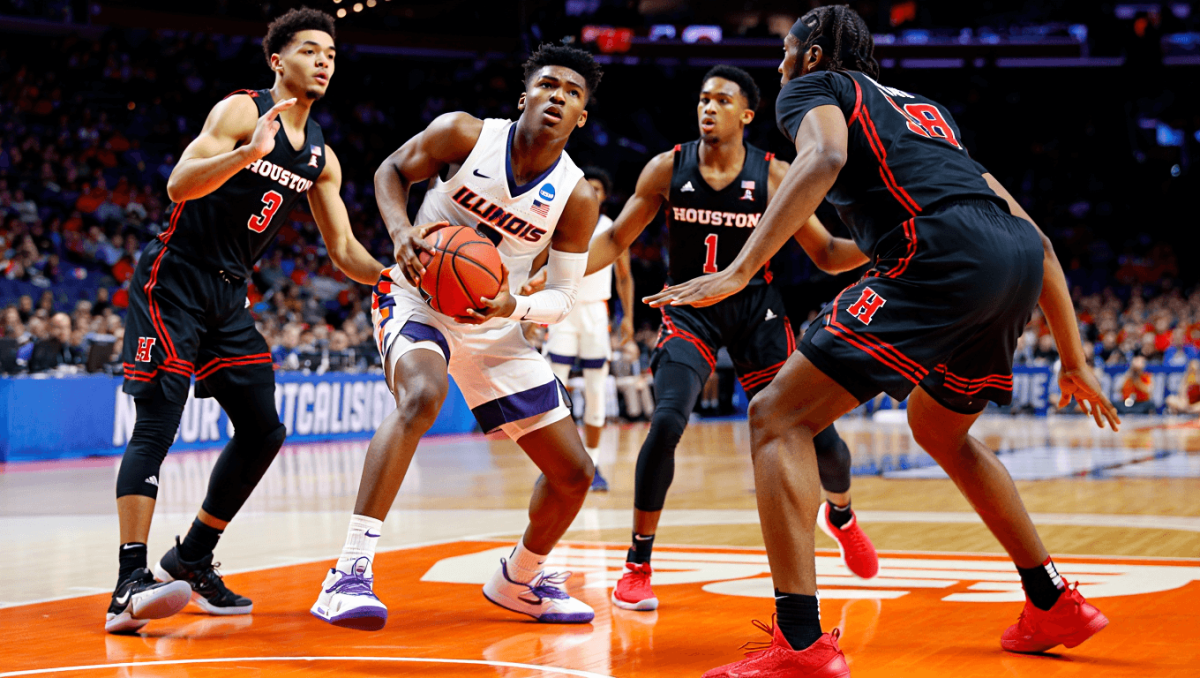
Houston enters the Sweet 16 with a reputation for shutting opponents down early in the NCAA tournament, but this weekend the Cougars face a stiff test: a powerful Illinois offense that can punish defensive lapses and foul trouble. The matchup, played at the Toyota Center in Houston, raises immediate questions about which team can impose its style and control the game’s tempo.
Under coach Kelvin Sampson, Houston has become a first-weekend staple, routinely dismantling opponents with pressure defense and efficient transition work. The Cougars have gone unbeaten in opening-week games in the tournament since 2018 and often win those contests by comfortable margins—a reflection of Sampson’s emphasis on physical defense and discipline.
What sets Houston apart is not only the intensity of its half-court and full-court pressure but also the ability to convert stops into quick scoring bursts. Analysts track those swings as “Kill Shots”—10-0 runs that can flip momentum in an instant—and Houston ranks among the nation’s leaders in generating them while limiting opponents’ own big runs.
Boxing champions ditch long runs for high-intensity training: new era in fight prep
Czech nationals among victims of Pinedale-area crash: two confirmed dead
But Illinois presents a contrasting challenge. The Illini, seeded third, are offensively gifted: long, multi-positional forwards who can finish inside and a team that consistently makes its free throws. Illinois’ offense operates at a high rating and can stretch a frontcourt that has been knocked into foul trouble at times this season.
- Houston’s advantages: elite ball pressure, experience winning early-round games, strong transition scoring after turnovers.
- Illinois’ advantages: top-tier offensive efficiency, length inside, high free-throw accuracy that punishes aggressive defenses.
- X-factors: Houston’s ability to avoid foul trouble up front; Illinois’ capacity to withstand relentless pressure without turning the ball over.
Matchup dynamics matter. Illinois has shown vulnerability against elite defenses this season, scoring well under its average when facing teams with top defensive ratings. That suggests Houston can make life difficult if it sustains intensity for the full 40 minutes. Conversely, Houston’s occasional scoring droughts could be catastrophic: the Illini are capable of turning offensive dry spells into decisive runs.
The game’s venue complicates the picture. Although it’s officially a neutral site, playing at the Toyota Center effectively gives Houston a near-home crowd advantage. Even so, seeding and location don’t erase the tactical battle on the floor: Houston prefers to slow the pace and force contested possessions, while Illinois wants to exploit mismatches and finish strongly at the rim.
Oddsmakers opened the matchup with Houston as a narrow 2.5-point favorite—reflecting how close this game should be on paper. The betting line underlines the core tension: neither team wants to play a frenetic pace, and the outcome will likely hinge on a handful of possessions, foul management, and which side executes its game plan in crunch time.
For neutral viewers, this Sweet 16 clash offers a classic contrast: a defense-first program known for momentum swings versus an offense-built Illinois team that can punish mistakes. If Houston can keep its frontcourt clean and generate a few early stops that turn into points, they’ll have the edge. If Illinois survives the initial pressure and establishes its half-court attack, the Illini could pull off a road-style upset in a hostile building.