Show summary Hide summary
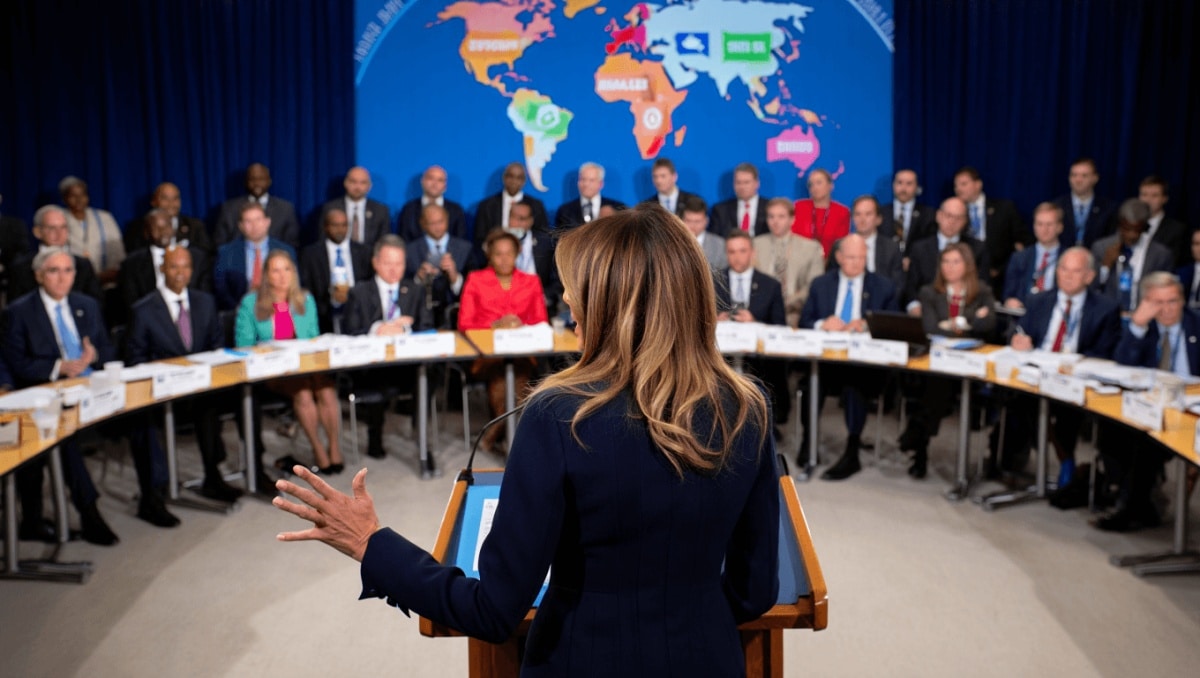
At a State Department summit on Tuesday, First Lady Melania Trump pressed more than 40 nations to join a new international effort to expand children’s access to education and digital tools, arguing that coordinated action is needed now as classrooms and labor markets shift toward technology. The gathering — the inaugural meeting of her initiative — put policy, private industry and education leaders in the same room to map concrete steps for digital learning and online safety.
What the summit set out to do
Ms. Trump opened the two-day meeting by urging participating officials to move beyond statements and begin concrete collaboration: host regional forums, commission studies, and form partnerships that equip young people with practical skills for a changing world.
Boxing champions ditch long runs for high-intensity training: new era in fight prep
Czech nationals among victims of Pinedale-area crash: two confirmed dead
Her initiative, called Fostering the Future Together, was unveiled last fall at the U.N. General Assembly. At Tuesday’s session she framed the coalition’s work as a way to ensure children can thrive “in the digital era,” linking education access to broader economic and social outcomes.
She left the auditorium after delivering remarks; a spokesperson said she will continue discussions at a White House roundtable planned for Wednesday.
Focus areas and commitments
The summit zeroed in on four priority topics: AI in education, education technology tools, digital literacy, and online safety. Panelists from governments and civil society described national initiatives and shared lessons learned.
- Countries were encouraged to convene regional meetings to tailor solutions to local needs.
- Delegates were asked to pursue joint research projects to evaluate digital learning approaches.
- Organizers emphasized the need for public-private partnerships to scale successful programs.
- Supportive education policies and targeted legislation were highlighted as levers for implementation.
Officials said a mix of policy changes, new programs and industry collaboration would be necessary to translate summit rhetoric into classroom results.
Who attended — and what they said
Representatives traveled from Latin America, the Caribbean, Europe, Asia, Africa and the Middle East. Tech firms including Microsoft, Google and OpenAI met privately with attendees over lunch to discuss potential collaborations, an arrangement that organizers said was designed to foster direct dialogue between policymakers and companies building digital tools.
Among the delegates were Olena Zelenska, the first lady of Ukraine, and Sara Netanyahu, spouse of the Israeli prime minister. Zelenska argued that modern education must adapt to individual needs and described Ukraine’s push to integrate artificial intelligence across its systems, including schools. Netanyahu emphasized the need for protective measures online, saying children cannot be left to navigate digital risks by themselves.
Why this matters now
As classrooms incorporate more software and AI-driven tools, disparities in access and digital safety are becoming policy flashpoints. Decisions made by governments and technology firms in the coming months could determine whether students in lower-income or conflict-affected regions are left behind or supported.
For policymakers, the summit offered an opportunity to align funding, curricula and legal frameworks. For companies, it signaled possible areas for product development and public-sector partnership. For parents and educators, the discussions underscore an urgent need for guidance, resources and robust online protections.
Beyond education, participants noted potential economic effects: better digital skills can expand workforce opportunities, while gaps in access risk widening income and social inequalities.
Next steps and lingering questions
Organizers left the meeting with a to-do list: regional convenings, pilot programs, and legislative proposals. How quickly countries follow through — and how effectively private partners are held to standards on privacy and safety — will determine whether the initiative produces tangible results.
Ms. Trump has also used her platform to advocate for humanitarian priorities tied to the summit’s themes, including efforts to reunite children separated during Russia’s war against Ukraine, underscoring the interplay between conflict, displacement and educational access.
Whether the coalition becomes a durable force for change will hinge on sustained political commitment and clear accountability measures — details that participants said they expect to refine at upcoming meetings and the White House roundtable.