Show summary Hide summary
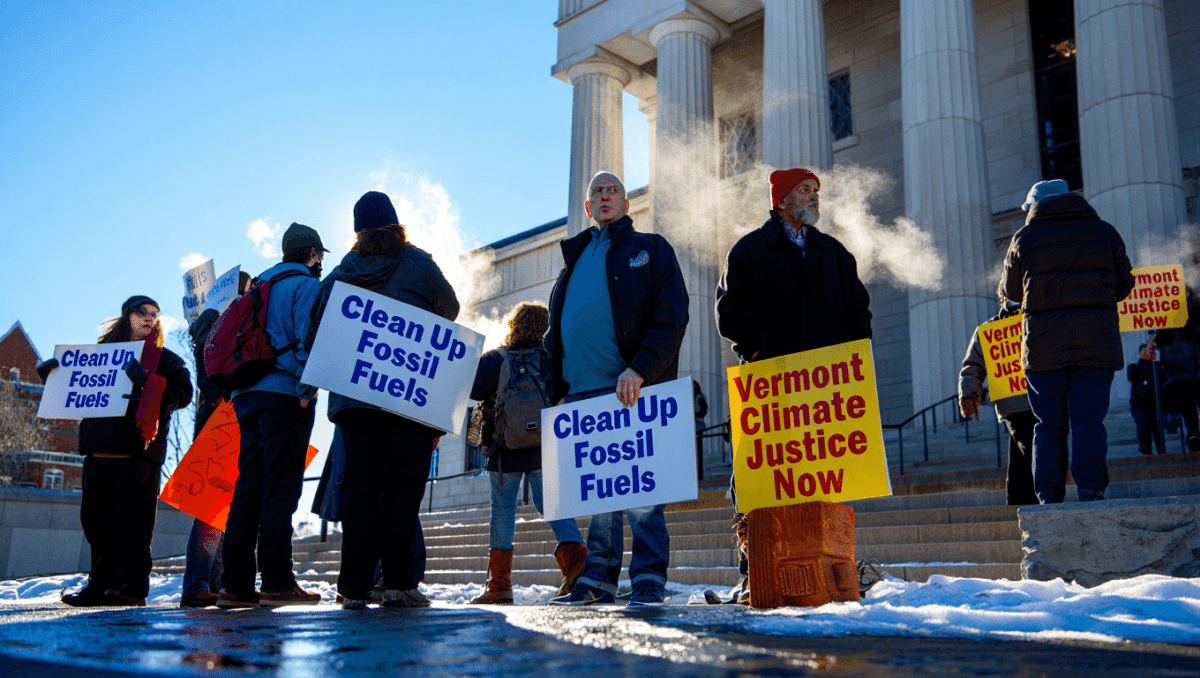
Vermont has mounted a robust legal defense of a newly enacted climate “superfund” law after the Trump administration filed suit to block the measure, setting up a test of how far states can go in holding fossil fuel companies financially responsible for greenhouse gas emissions. The dispute has immediate implications for state-level climate policy and may shape whether similar laws survive federal legal challenges.
What Vermont’s law aims to do
The statute creates a mechanism for the state to pursue compensation from large fossil fuel producers for harms the government attributes to historic greenhouse gas pollution and to direct recovered funds toward mitigation and adaptation projects. State officials say the law is intended to cover costs linked to extreme weather, infrastructure damage and public-health impacts exacerbated by climate change.
Boxing champions ditch long runs for high-intensity training: new era in fight prep
Czech nationals among victims of Pinedale-area crash: two confirmed dead
Supporters call the measure a novel use of state authority to shift financial responsibility for climate-related public costs away from taxpayers. Opponents argue it stretches state power and could interfere with interstate commerce.
The federal lawsuit: core claims
The Trump administration’s legal filing asks a federal court to block enforcement of the Vermont law. The complaint, according to court summaries released by both parties, centers on the contention that the state measure is preempted by federal law and that it intrudes into areas of national and international concern.
At issue are two legal battlegrounds: the scope of state authority to regulate and redress conduct that crosses state and national borders, and whether climate regulation in this form conflicts with federal statutes or foreign-policy prerogatives.
What Vermont argues in response
Vermont’s defense frames the law as a traditional exercise of a state’s responsibility to protect public welfare and manage environmental risks within its borders. The state emphasizes that the statute targets civil remedies tied to local harms and does not purport to set national energy policy.
Legal counsel for Vermont also notes that the law provides procedural safeguards and leaves room for judicial review, positioning it as a targeted remedy rather than an extraterritorial regulation.
- Immediate stakes: Whether Vermont can proceed with claims seeking monetary relief from fossil fuel companies.
- Precedent risk: A federal ruling for the government could constrain other states considering similar climate-liability statutes.
- Policy impact: A state victory could embolden local governments to pursue compensation for climate damage and accelerate legislative efforts to hold emitters accountable.
Broader legal and political implications
The case is likely to attract attention beyond Vermont’s borders. If courts uphold the state law, municipal and state governments may view litigation as a more viable tool to address climate costs. Conversely, a decision invalidating the statute could narrow the avenues for state-based climate accountability and reinforce federal primacy in certain environmental matters.
There is also a practical element for companies named in such suits: prolonged litigation can be expensive and create regulatory uncertainty even before any final judgment. That dynamic may influence settlement negotiations or corporate strategies around disclosure and risk management.
| Outcome | Immediate legal consequence | Likely wider effect |
|---|---|---|
| Vermont prevails | State may proceed with claims; damages and remediation funds could be pursued | Encourages similar state laws; increases litigation risk for producers |
| Federal government prevails | Statute could be blocked or limited on preemption grounds | Reduces state options; centralizes climate regulatory questions at the federal level |
| Settlement or narrow ruling | Case resolves without broad precedent | Creates case-by-case uncertainty; prompts legislative clarifications |
As the litigation advances, courts will weigh technical doctrines such as federal preemption alongside more familiar principles of state police powers. Observers say the timing and tone of any opinion could influence legislative planning in states weighing their own climate responses.
For residents and local governments, the outcome will determine whether a new legal avenue exists to recoup public costs linked to climate impacts, or whether those costs remain primarily a matter for federal policy and regulation.