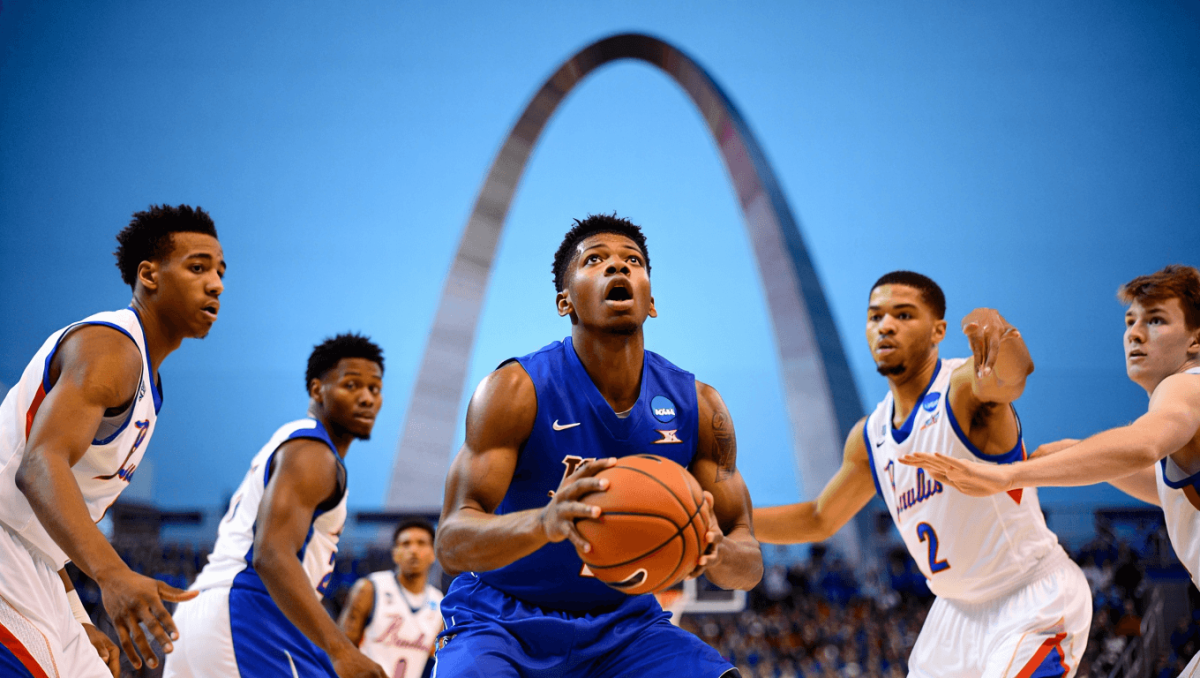
ST. LOUIS — A string of lopsided first-round matchups at the NCAA Tournament under the Gateway Arch on Friday underscored an uneasy reality: the gulf between major conferences and smaller programs is growing, and one closely contested game ended amid disputed officiating that will draw attention this week. The result and the late-game sequence in the Santa Clara–Kentucky contest carry immediate consequences for perceptions of fairness and for how mid-majors are evaluated going forward.
Across Friday’s first-round slate in St. Louis, the average margin of victory hovered just under 19 points, a striking figure for the opening day of the tournament and a fresh data point in debates about competitive balance.
How one game amplified the wider story
Santa Clara, seeded 10th, earned its win over a blue-chip Kentucky roster that had drawn headlines for its roster-building and reported NIL commitments in excess of $20 million. The outcome was decisive on the court, but the final minutes featured several disputed moments that shaped the finish.
Boxing champions ditch long runs for high-intensity training: new era in fight prep
Czech nationals among victims of Pinedale-area crash: two confirmed dead
With about 90 seconds remaining and possession in play, an official signaled a timeout that benefited Kentucky at a crucial juncture — a decision that, had the situation been handled differently, could have left the ball with Santa Clara and preserved a two-point lead via the possession arrow.
Moments later, redshirt freshman Allen Graves knocked down a three-pointer near Santa Clara’s bench. The opposing coach, Herb Sendek, immediately pleaded for a timeout from the officials; his request was declined. On the ensuing possession, Otega Oweh banked a three that tied the game and forced overtime.
Overtime produced two more controversial officiating moments: a foul call that sent Oweh to the line for a pair of free throws, and what many observers saw as a missed traveling violation on the outlet pass to Brandon Garrison. Those sequences had a direct impact on the final margin and will likely be scrutinized by committee members, media and fans alike.
- Momentum swings: Graves’ late three and Oweh’s banked shot created a rapid reversal that erased Santa Clara’s lead.
- Official rulings: A timeout signal and a declined timeout request—plus a subsequent foul and a missed traveling call—shaped the closing minutes.
- Broader implications: The game highlighted both the on-court competitiveness of a 10-seed and the potential influence of officiating on tournament outcomes.
For tournament organizers and officiating supervisors, the sequence raises familiar questions about consistency and communication in high-stakes moments. For basketball analysts, the average blowout margin across the day offers another data point in discussions about talent concentration and the role of resources — including NIL — in building rosters.
The controversy around the Santa Clara–Kentucky game is timely because it touches two of the tournament’s central narratives: the promise of March Madness upsets and the need for transparent, uniform officiating. Both matter now, as teams and selection committees take stock and as fans debate what the results say about parity in college basketball.