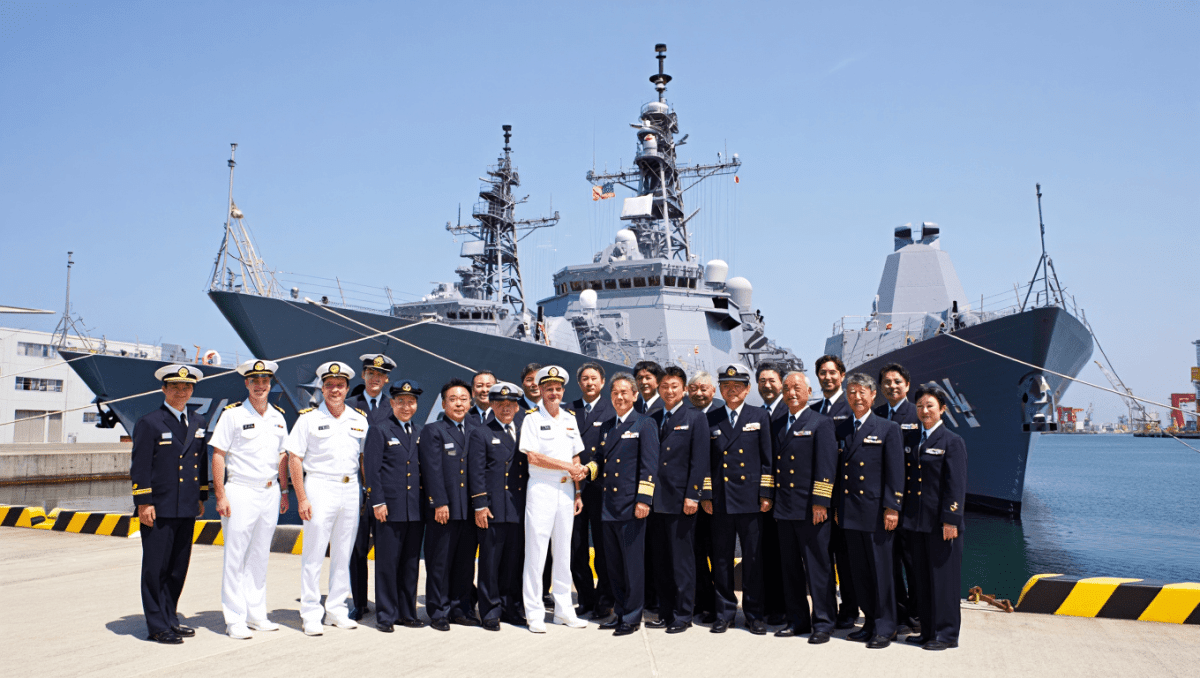
Australia and Japan have finalized a major defense sale valued at roughly $6.5 billion, with Canberra purchasing an initial batch of three Japanese-built Mogami-class frigates. The agreement marks a notable deepening of bilateral naval ties and will reshape Australia’s short-term surface combatant plans while strengthening industrial links between the two countries.
The deal centers on the acquisition of three Mogami frigates as the first tranche of ships, supplemented by cooperation across logistics, training and maintenance. Australian officials say the purchase is designed to accelerate the Royal Australian Navy’s capability refresh while leveraging proven Japanese designs.
Why this matters now
Short-term, the order fills gaps in fleet capacity as older vessels retire. Strategically, the arrangement reflects growing regional focus on maritime resilience and collective preparedness. Economically, the package creates opportunities for Australian and Japanese shipyards and for transfer of technical know-how.
Boxing champions ditch long runs for high-intensity training: new era in fight prep
Czech nationals among victims of Pinedale-area crash: two confirmed dead
What the agreement covers
- Initial ships: Three Mogami-class frigates ordered as the first delivery.
- Total value: Approximately $6.5 billion for the broader program elements tied to the sale.
- Scope: Vessels, logistics support, crew training and maintenance cooperation.
- Industrial aspects: Joint work across Japanese shipyards and Australian supply chains is expected.
Key facts at a glance
| Item | Detail |
|---|---|
| Agreement value | About $6.5 billion |
| Initial order | 3 Mogami-class frigates |
| Purpose | Naval capability upgrade, support and interoperability |
| Industrial impact | Collaboration between Japanese shipbuilders and Australian suppliers |
Regional and operational implications
Analysts say the purchase tightens defense ties at a time of heightened strategic attention across the Indo-Pacific. For the Royal Australian Navy, the Mogami design — noted for its modularity and modern sensors — offers a fast route to refreshed surface combatant capability without a lengthy domestic development program.
At the same time, the arrangement is likely to include extensive training and sustainment components, ensuring Australian crews can operate and maintain the ships effectively. That emphasis on lifecycle support is intended to reduce supply-chain friction and keep the new ships mission-ready.
Industrial and labor consequences
Beyond fleet numbers, the agreement is expected to have measurable effects on employment and skills transfer. Japanese shipyards will supply the initial hulls, while Australian contractors stand to win roles in system integration, sustainment and potential follow-on construction. Policymakers are framing the deal as both a security and an industrial partnership.
What to watch next
– Timing for delivery of the first frigates and the schedule for follow-on units.
– Details on weapons fit and sensor suites that will determine operational roles.
– Specifics of offset agreements or industrial participation by Australian firms.
– How the deal influences broader regional defense cooperation and procurement choices.
The pact signals a pragmatic approach: Australia gains near-term capability from an established design while Japan expands its role as a security partner and defense exporter in the region. As the program moves from agreement to execution, the practical questions of delivery schedules, domestic industrial participation and integration into Australian naval operations will determine the ultimate payoff.