Show summary Hide summary
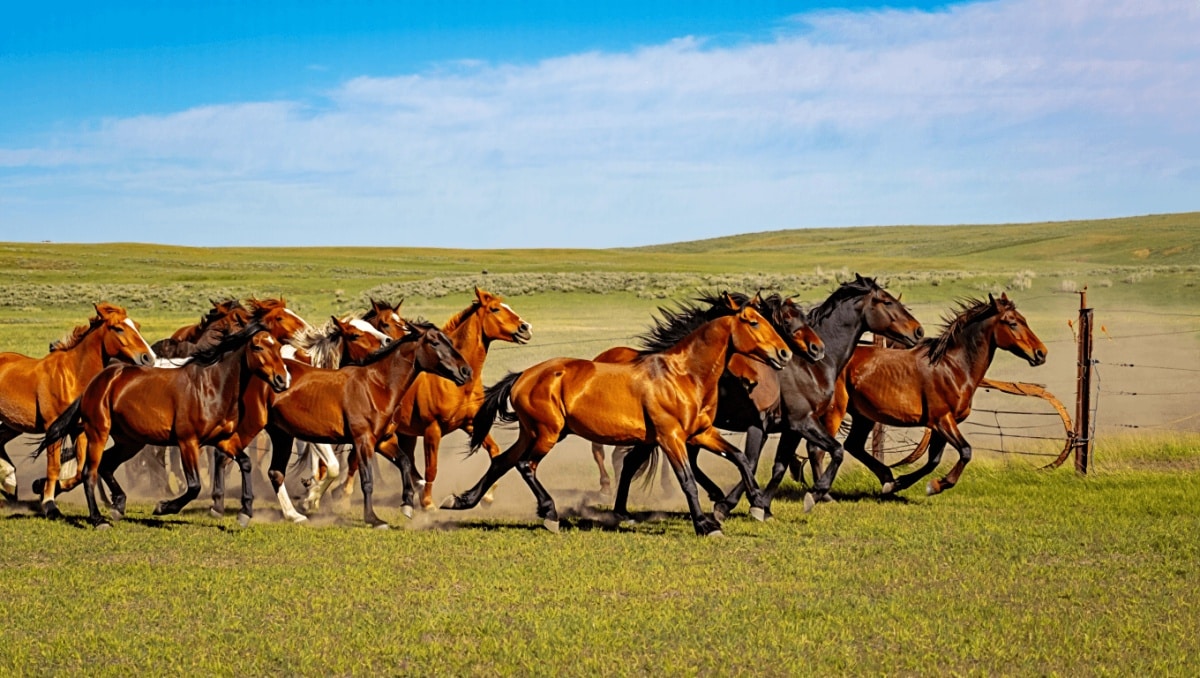
A federal pause means plans to remove more than 3,000 free-roaming horses from a checkerboard of public and private lands in southwest Wyoming will not proceed for at least several more months, a delay that could reshape management on millions of acres and reignite long-running litigation. The hold affects herds in the Salt Wells Creek, Great Divide Basin and parts of Adobe Town and follows recent court rulings and agency warnings about funding, staffing and legal risk.
The Bureau of Land Management told a federal court it does not expect to carry out a complete herd roundup before the end of the current fiscal year on Sept. 30, and asked the U.S. District Court for Wyoming to pause proceedings until at least May 10. A judge granted the joint motion, temporarily putting court-ordered deadlines on ice while the agency and the plaintiffs reassess next steps.
Why the action was delayed
Agency officials pointed to a mix of practical and legal concerns. Funding must be secured and personnel assigned before an operation of this scale can begin, the BLM said. At the same time, top courts have questioned whether the blanket removals comply with federal law requiring managers to preserve a “thriving natural ecological balance” for wild horses and burros.
Boxing champions ditch long runs for high-intensity training: new era in fight prep
Czech nationals among victims of Pinedale-area crash: two confirmed dead
Federal appeals judges previously overturned the BLM’s earlier plan, finding the agency had not adequately explained how removing all horses from public portions of the checkerboard would maintain required ecological conditions. That ruling set the stage for the newest round of litigation and the current delay.
- Horses affected: More than 3,000 animals in southwest Wyoming’s checkerboard area.
- Land area: Approximately 2.1 million acres in the Red Desert region and around Rock Springs.
- Agency timetable: BLM does not expect to begin full-herd removals before Sept. 30 (end of fiscal year); court pause effective until at least May 10.
- National context: As of March 1, the BLM reports more than 85,000 wild horses and burros on public lands — over three times its designated appropriate management level.
Positions on both sides
Wildlife advocates say the delay is a temporary victory. Legal representatives for groups opposing removals contend they will sue again if the agency’s revised plan aims for wholesale elimination of horses from public parcels in the checkerboard.
“Removing every horse from public lands would run counter to the statute,” said one advocacy lawyer, outlining the groups’ intent to continue challenging any plan that does not permit horses to remain where they currently roam. Their lawyers have been litigating federal management decisions in the region for more than a decade.
BLM officials, meanwhile, have signaled no retreat from long-term goals to reduce herd numbers in the checkerboard region. Agency spokespeople emphasize the need to align operations with available appropriations and to ensure staffing for large-scale gathers, along with building a sound legal rationale that would withstand judicial review.
What the agency will do in 2026
The BLM’s tentative activity schedule shows a largely limited set of actions in Wyoming next year rather than the sweeping roundups once proposed:
- Fertility control treatments planned for about 95 horses in the Stewart Creek and McCullough Peaks herds.
- A “drive trap” gather slated to remove roughly 286 animals from the Fifteenmile Herd in the Bighorn Basin beginning Sept. 15.
Those smaller-scale measures contrast with previous removal proposals and reflect the agency’s effort to balance population objectives, public scrutiny and court-ordered constraints.
Broader consequences
The delay is more than a procedural pause: it affects ranchers, local economies, conservation groups and the horses themselves. For ranchers and private landowners in the checkerboard — where sections of federal land alternate with private parcels — herd size influences grazing competition, brush control and land-use planning. For advocates, the litigation centers on statutory protections and whether federal managers can justify mass removals under existing law.
How the BLM rewrites or defends its plan will be decisive. If the agency presents new analyses showing that targeted actions meet legal and ecological standards, it may resume larger gathers. If courts again find the reasoning insufficient, large-scale removals could remain stalled or be narrowly tailored to survive judicial scrutiny.
For now, the next steps are clear: the courts will monitor agency filings and the parties will prepare for further briefing or hearings after the May 10 pause. The outcome will shape not only this region of Wyoming but also precedent for how wild horses on mixed-ownership landscapes are managed across the West.