
Show summary Hide summary
A federal judge in Chicago has ruled that senior officials crossed a constitutional line by pressuring major tech companies to remove online spaces documenting Immigration and Customs Enforcement activity. The decision, which grants a preliminary injunction against further government coercion, could reshape how law enforcement and political figures interact with platforms over user speech.
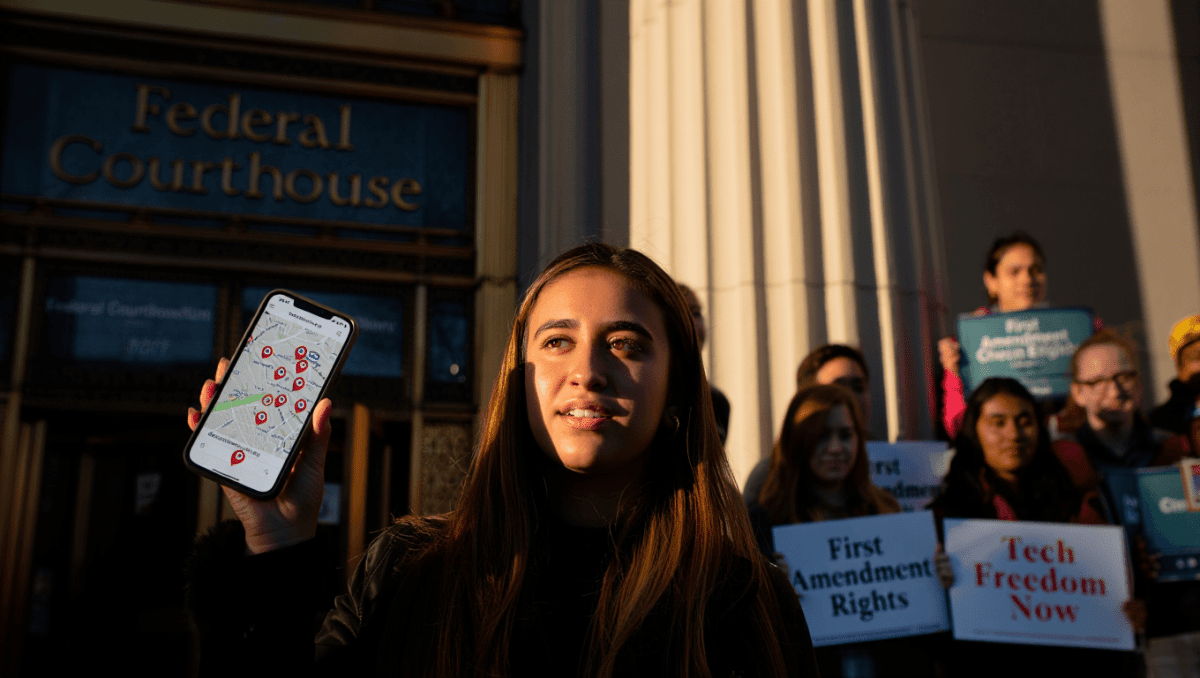
The ruling, issued by U.S. District Judge Jorge Luis Alonso, found that Apple and Facebook were effectively compelled to take down a mobile app and a Facebook group that allowed users to post videos and reports about ICE operations. The judge said those removals followed direct government contacts and public statements taking credit for the action.
How events unfolded
Boxing champions ditch long runs for high-intensity training: new era in fight prep
Czech nationals among victims of Pinedale-area crash: two confirmed dead
According to the court record, the sequence began in mid-October 2025 after an influencer shared a link to a Chicago-area Facebook group that tracked ICE activity. Within 48 hours the group had been deactivated. Around the same time, Apple removed a mobile app called Eyes Up, which aggregated user-submitted reports and footage related to ICE.
Platform moderators had previously reviewed both the group and the app and had left them online, the court said. The companies changed course only after receiving direct outreach from federal officials, and public posts by government figures celebrated the removals.
What the judge concluded
Judge Alonso — an appointee of President Obama — determined that the plaintiffs demonstrated a likelihood that their constitutional rights were violated because the government’s actions amounted to coercion rather than a neutral request. The court emphasized three linked facts: both platforms had earlier determined the content complied with their rules; both removed the content immediately after government intervention; and officials publicly highlighted the removals.
The ruling states that because the removals were traceable to government pressure, the plaintiffs suffered ongoing harms to their ability to publish and distribute speech. As a remedy, the court granted a preliminary injunction; the specific terms will be set later this month.
- Timeline: Link shared Oct. 12, 2025; group removed Oct. 14, 2025; plaintiffs filed suit in February.
- Parties named: creators of the app and Facebook group brought the suit, which named several federal officials as defendants.
- Platforms involved: Facebook (group removal) and Apple (app removal).
- Legal claim: Two-count complaint alleging violations of the First Amendment by coercing private companies to censor protected speech.
- Court action: Preliminary injunction granted to prevent further coercive removal requests; enforceable details pending.
Platform statements to the press were limited, and the court noted that Facebook declined to confirm whether it had received a formal DOJ request before taking down the group. Apple told the app’s creators that law enforcement had informed it the app violated rules, though the judge observed Apple had previously reviewed and accepted the app into its ecosystem.
Implications beyond the case
This decision touches on an increasingly fraught area where government interest in public safety or law enforcement intersects with private companies’ content policies. If upheld, the injunction could restrict how federal officials communicate with platform operators when they object to user-generated content.
For advocates of online accountability, the ruling affirms that government actors cannot simply direct private firms to silence critics without running afoul of the Constitution. For law enforcement, it raises questions about how to raise legitimate safety concerns with platforms without creating the appearance — or the reality — of coercive pressure.
The court also stressed a current practical consequence: at the time of the decision, the Facebook group remained disabled and the app was not available in the App Store, so the plaintiffs’ speech was still constrained. The injunction aims to restore a decision-making buffer that allows companies to evaluate content independently rather than act under government pressure.
Next steps include a forthcoming hearing to define the scope of the injunction and whether it will be extended while the case proceeds. The decision may be appealed, which could prolong legal review and keep the balance between government outreach and platform autonomy under scrutiny.