Show summary Hide summary
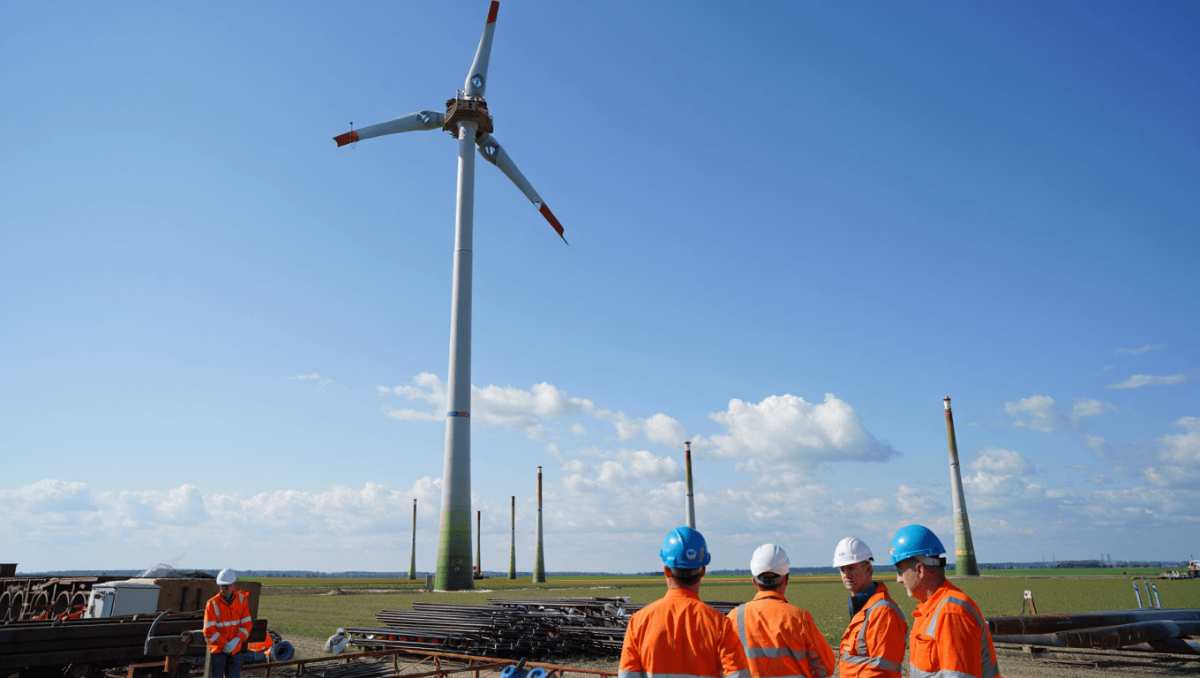
The nation’s wind industry has taken the U.S. Department of Defense to court, arguing that a freeze on routine federal reviews has stalled new onshore wind projects and put billions of dollars and tens of thousands of jobs at risk. The dispute centers on whether Pentagon security checks have moved from careful scrutiny into an effective halt — with developers saying the pause threatens projects across more than 20 states.
The complaint, filed in federal court in Oregon, names the Pentagon and Defense Secretary Pete Hegseth and was brought by a coalition of clean‑energy groups. Plaintiffs say an internal review process overseen by the military’s siting office has slowed or stopped approvals that are otherwise part of the standard permitting path, creating what they call a de facto moratorium on new land‑based wind farms.
The Pentagon says the review is needed to weigh national security considerations and that multiple agencies must coordinate during an inherently complex evaluation — including a check that runs alongside the Federal Aviation Administration’s review of turbine projects. The department declined to comment on the litigation.
Boxing champions ditch long runs for high-intensity training: new era in fight prep
Czech nationals among victims of Pinedale-area crash: two confirmed dead
What the lawsuit says and why it matters
According to the plaintiff groups, the backlog began growing last year when the Pentagon stopped countersigning final agreements in August 2025 and then systematically slowed later stages until reviews effectively ceased in April. Developers and industry trade groups say the interruption is already showing up in the market: the first quarter of 2026 saw the weakest start for new onshore wind installations since 2018.
Late last week the plaintiffs asked the court to order the Defense Department to resume its usual review schedule. Their filing included an economic study by consulting firm Charles River Associates, which quantifies the size of the projects affected and the potential economic fallout.
Numbers that sum up the impact
- 106 projects — The conservative count of onshore wind developments identified in the FAA database that are stalled or at risk if reviews do not resume.
- $47 billion — Estimated total investment value represented by those projects, covering equipment, construction, financing and other sunk costs.
- 21 states — Geographic footprint of the affected projects, with concentrations in high‑wind states such as Texas, Kansas and Illinois.
- ~30 gigawatts — Potential additional generation capacity from the projects, enough to power millions of households; roughly 12 GW of that is located in Texas.
- 75,000 turbines — Total number of onshore turbines already operating nationwide, producing about 161 GW of clean power.
- ~120,000 jobs — Jobs tied to the at‑risk projects, including direct construction roles, supply‑chain and induced employment. The broader onshore wind sector supports several hundred thousand jobs.
Political and procedural context
Wind power already supplies roughly one in ten kilowatt‑hours in the U.S. and is the largest single source of renewable generation onshore. The dispute comes amid a broader tightening of federal policy toward certain wind projects under the current administration, which has signaled skepticism about some developments, particularly offshore installations. Industry officials point out that decisions by the Pentagon’s siting clearinghouse will shape whether private land projects can proceed under existing permitting timelines.
The American Clean Power Association and other trade groups had raised concerns with the Defense Department earlier this year, seeking clarity about the slowed reviews. Industry leaders say predictable, timely federal permitting is essential not only for investor confidence but for delivering more clean power into regional grids.
What’s next
The court will now consider the motion to compel the Pentagon to restore its prior review cadence. If the judge orders a resumption, developers could see projects move forward more quickly. If not, the industry warns that multi‑billion‑dollar investments could be delayed or canceled — with ripple effects for supply chains, contractors and local economies where projects are sited.
For consumers and utilities, the case could affect near‑term additions of low‑carbon capacity at a moment when states and companies are counting on predictable pipelines of clean energy to meet emission targets and keep energy costs stable.
As the litigation proceeds, the outcome will be closely watched by developers, investors and state officials who have backed wind deployment as part of broader energy and economic plans.