Show summary Hide summary
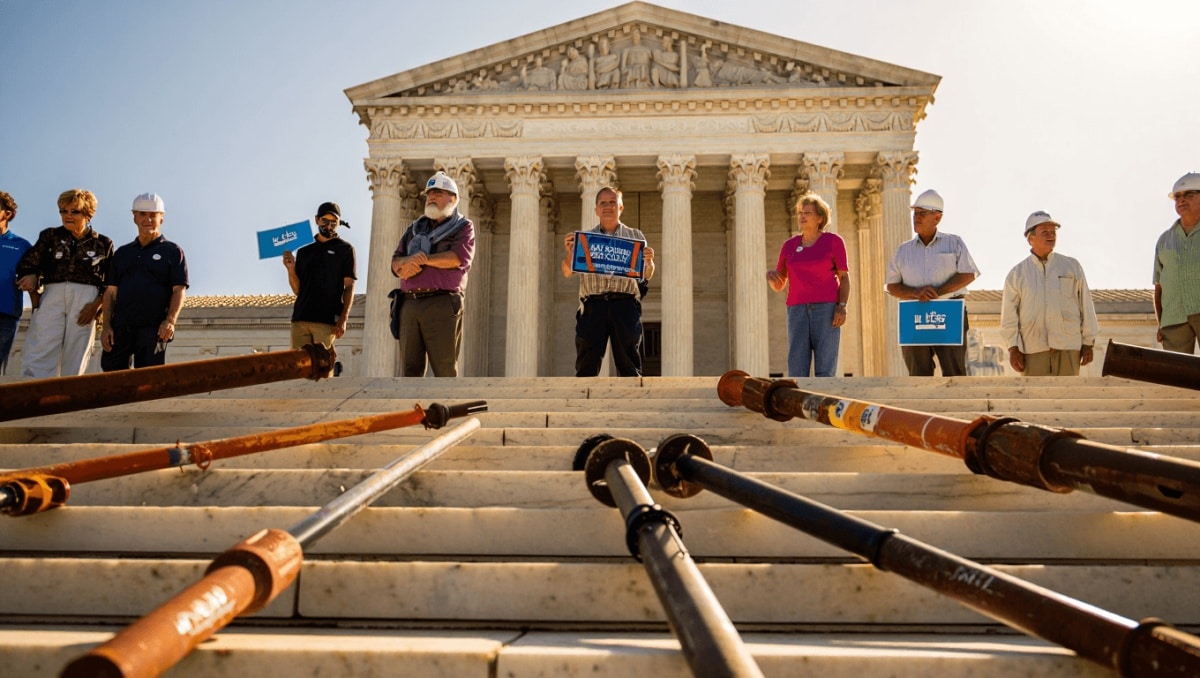
The Supreme Court on Friday cleared the way for several oil and gas companies to move longstanding Louisiana lawsuits into federal court, a shift that could reshape how claims over coastal land loss are resolved. The decision — unanimous among participating justices — centers on whether work performed under federal supervision during World War II places these disputes within federal jurisdiction.
At stake for residents and businesses along Louisiana’s coast is more than legal procedure: the ruling may change where liability is decided, which legal standards apply, and how quickly large damage claims proceed.
What the high court decided
The justices concluded that the companies’ activities, tied to expanding aviation fuel supplies for the federal government during the war, are sufficiently connected to federal authority to warrant hearing the cases in federal courts. Writing for the court, the opinion stressed longstanding congressional authorization for federal jurisdiction over suits involving the government and its contractors.
Boxing champions ditch long runs for high-intensity training: new era in fight prep
Czech nationals among victims of Pinedale-area crash: two confirmed dead
The ruling reverses a 2024 decision by the U.S. Court of Appeals for the Fifth Circuit and will affect a substantial portion of the dozens of suits filed in 2013 that accuse oil producers of violating state environmental laws for decades.
Justice Samuel Alito did not participate in the decision, citing a financial connection to an oil company named in the proceedings.
The practical result is immediate: cases that began under state law and before state juries can now be moved into the federal system, where defendants argue procedural and substantive outcomes could differ.
Why this matters now
Louisiana’s coast has lost large swaths of marsh and shoreline over the last century, and state officials warn the erosion could continue for decades — changes that plaintiffs link to oil and gas infrastructure such as canals and pipelines. The Supreme Court’s ruling affects how those long-running environmental and property claims are litigated and may influence settlement dynamics and future accountability.
- For coastal communities: Venue changes could delay final resolution but also alter the legal remedies available.
- For energy companies: Federal courts may offer different procedural protections and legal frameworks than state courts.
- For ongoing lawsuits: Roughly a quarter of the related cases are likely to see their venue shift as a direct result of the ruling.
- For policymakers: The decision highlights intersections between historic federal projects and modern environmental law.
Local leaders and environmental advocates signaled they would continue pursuing accountability regardless of the court’s venue ruling. Attorneys representing coastal parishes say moving a case to federal court will not end their efforts to seek damages for marsh loss and restoration costs. Activists emphasized the decision is an obstacle, not a conclusion.
The energy industry welcomed the outcome. Company statements reiterated that the contested work was performed under federal oversight and insisted federal courts are the appropriate forum to resolve these claims. Industry groups and business associations characterized the ruling as a needed clarification of legal jurisdiction.
The original wave of litigation began in 2013, with plaintiffs alleging decades of state-law violations tied to dredging, drilling and disposal practices. One high-profile state jury verdict had previously found in favor of coastal parishes, assigning responsibility to companies for failing to restore wetlands harmed by industrial activity.
How the transferred cases proceed in federal court will determine whether those earlier state-court findings stand, are modified, or are retried under a different legal framework. Legal observers say the move could affect potential awards, appeals strategy and the pace at which restoration funding is secured.
Whatever the next steps, the Supreme Court’s action reframes a long-running dispute at the intersection of historic federal projects, environmental harm, and local recovery efforts along one of the nation’s most vulnerable coastlines.