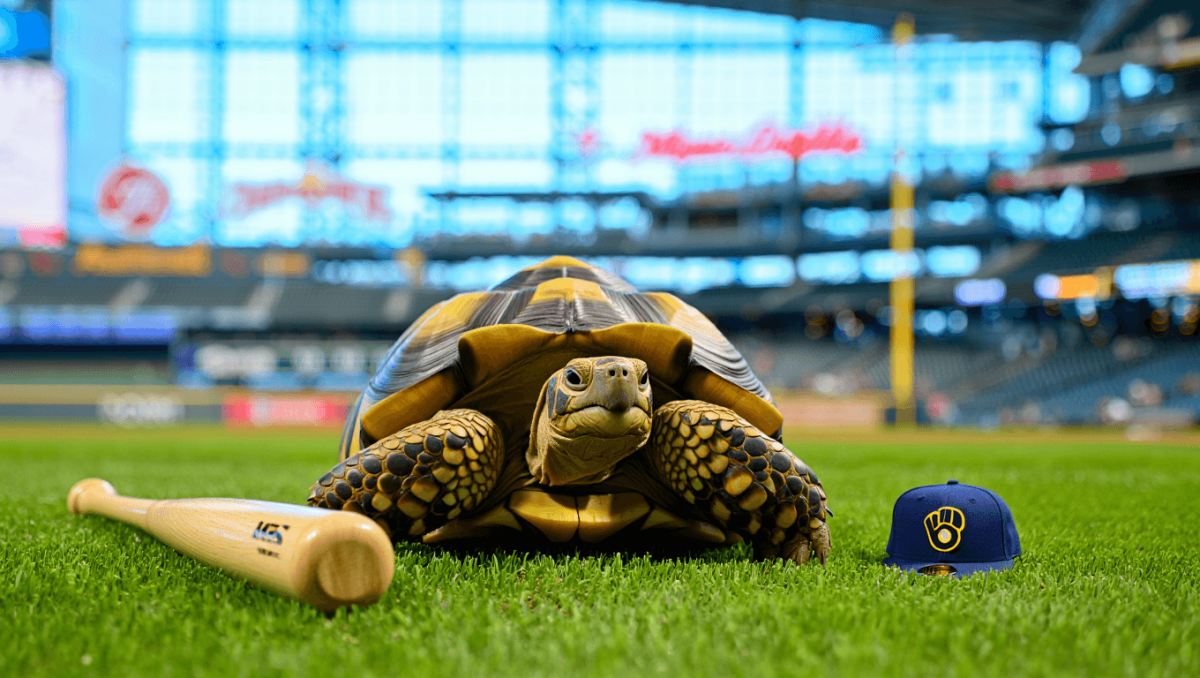
Early in the major-league season, the Milwaukee Brewers introduced an unusual new member to their clubhouse: a young tortoise brought in at the direction of manager Pat Murphy. The move is a small, unexpected gesture that already matters — it speaks to clubhouse culture, team morale and how managers look for low‑stakes ways to keep players engaged through a long season.
Murphy, who has a reputation for trying unconventional approaches, asked a team staffer to pick up the animal from a Kansas City‑area exotic pet shop. The result was a sulcata tortoise, a hardy African species that can live for many decades and grow far larger than it appears when young.
Speaking to reporters at Kauffman Stadium, Murphy said he’s been getting up to speed on how to care for the tortoise and expects the team will share responsibility for its day‑to‑day needs. The visit drew quick attention from players and media alike — a reminder that small, humanizing stories can break through during baseball’s routine grind.
Boxing champions ditch long runs for high-intensity training: new era in fight prep
Czech nationals among victims of Pinedale-area crash: two confirmed dead
Why this matters now
Baseball seasons can be long and repetitive, and teams increasingly look for simple rituals or distractions that build cohesion. Adding a distinctive clubhouse presence can serve multiple functions: it gives players a shared talking point, offers a lighthearted boost during travel stretches, and generates goodwill from fans and reporters.
There are practical questions, too. Animals in professional sports settings require clear caretaking plans, appropriate permits for travel, and attention to health and facility rules. Those details will determine whether the tortoise remains a permanent clubhouse fixture or a novelty that tours with the team only occasionally.
- Animal type: Sulcata tortoises are desert‑adapted and long‑lived; adults can reach significant size.
- Origin: Purchased from an exotic pet seller in the Kansas City area after a team request.
- Manager’s intent: Low‑risk morale booster and a talking point to ease the season’s monotony.
- Practical considerations: Care responsibilities, travel logistics, and health or venue rules will shape how the team uses the animal.
The decision also highlights how modern managers blend on-field strategy with off-field culture work. Small experiments like this are inexpensive yet visible ways to signal a team identity and keep players connected during inevitable slumps or long road trips.
What to watch next: whether the Brewers formalize care duties, how the players respond over weeks rather than days, and whether the tortoise becomes part of the club’s public narrative — or simply a fleeting oddity from a road series. For now, it’s an early‑season story that underscores how much of a baseball season is managed off the field as much as on it.