Show summary Hide summary
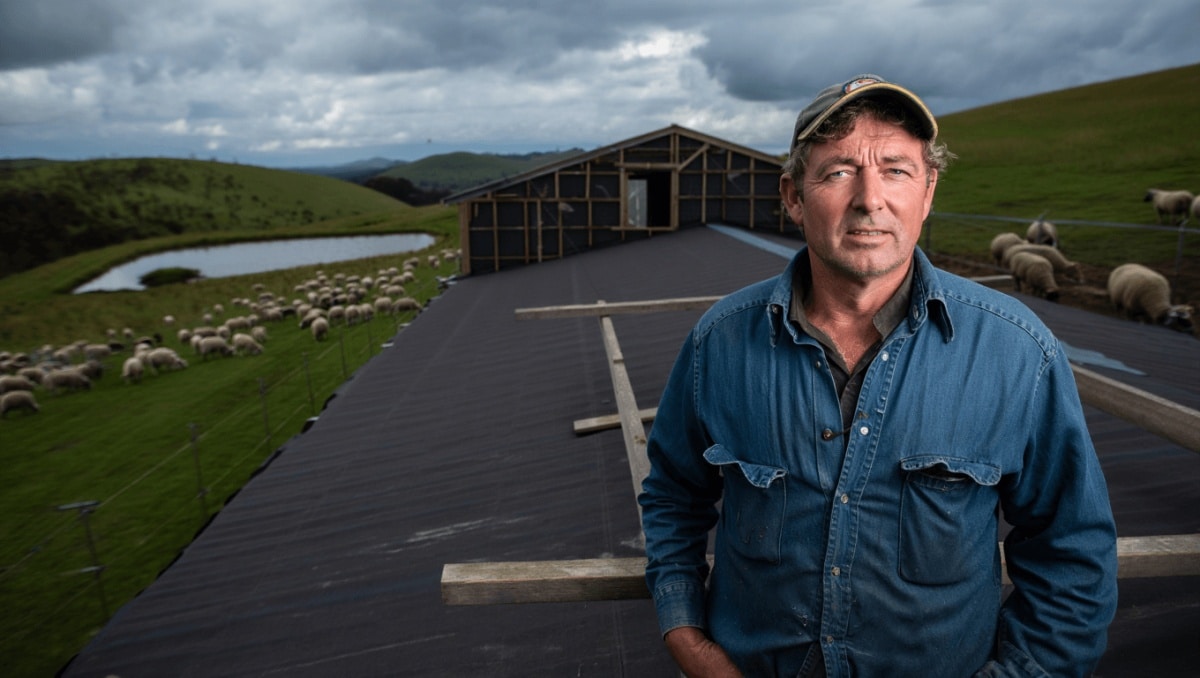
When Kentucky shepherd Daniel Bell planned a new barn for an expanding flock, rooftop solar seemed the obvious way to cut energy costs — until changes in federal policy made grant funding uncertain and the project unworkable on his land. His experience illustrates a widening ripple across rural America as shifts in federal energy rules reshape who can afford to go solar and where projects move forward.
A farmer pivots
Bell lives too far from power lines to run heated buildings cheaply, so he had planned to use solar panels on the new structure and apply for a federal renewable-energy grant to help cover costs. After federal program rules were altered, he abandoned plans to build on his own acreage and instead sought permission to put temporary barns on land owned by a commercial solar operator — where he can graze sheep beneath panels and tap into the array’s power. That workaround is available to some but not most.
Boxing champions ditch long runs for high-intensity training: new era in fight prep
Czech nationals among victims of Pinedale-area crash: two confirmed dead
This report draws on reporting by Grist and The Associated Press to trace how recent moves by the federal government are reshaping small and large solar projects in farm country.
What changed and why it matters now
Two federal supports that helped rural solar grow — the Department of Agriculture’s renewable-energy grant program and a major commercial solar investment tax credit — were narrowed early in the current administration. The upshot: developers and farmers face tighter deadlines, paused grant awards, and a suddenly riskier finance environment for projects on or near agricultural land.
That matters because many farms operate on thin margins. For some, on-site solar is a tool to lower utility bills or add steady lease income. For communities, delayed or canceled projects can mean lost jobs and fewer local economic benefits. For the national grid, stalled builds reduce the pace of clean power deployment at a moment when demand is rising.
Key near-term effects
- Paused grants: The USDA announced a suspension of new REAP grant awards while it updates rules to align with an executive order issued last summer; the agency says the pause is temporary.
- Tax-credit deadline: New eligibility windows require commercial projects to be under construction by July 2026 or in service by the end of 2027 to qualify for the investment tax credit, shortening the runway for many developments.
- Investment losses: Some developers have dropped projects they judged impossible to move forward quickly enough, writing off millions in sunk costs.
Projects stalled, abandoned or accelerated
Grist and AP analysis found at least 126 solar proposals near or on agricultural land waiting for regulatory approval; together they represent roughly 20 gigawatts of potential capacity — enough to serve around 4.5 million homes, by industry estimates. But the altered deadlines and a freeze on some federal support have produced a mixed landscape.
Some developers have paused or canceled plans after calculating they cannot meet the new tax-credit timeline. For others, the change triggered a race to push projects into construction before the cutoff. A German company, for example, says it scrapped projects in the U.S. Northeast that represented about $6 million and roughly 1,000 megawatts after concluding they could not be completed quickly enough.
The fate of a long-standing rural program
The USDA’s Rural Energy for America Program — REAP — has for years provided grants and loan guarantees to farmers, ranchers and small rural businesses to install renewable energy and improve efficiency. According to policy groups, REAP supported more than 19,000 awards totaling over $1.8 billion since the program began, and it received a significant funding boost from the Inflation Reduction Act in 2022.
That flow of support was disrupted after the new administration ordered a review and subsequently changed program rules. In early 2025 some recipients reported frozen payments; later the USDA indicated it would release previously awarded funds if applicants removed certain policy language from proposals. By March 31 the agency formally suspended new REAP grant awards while it updates the program to comply with the administration’s guidance.
USDA officials tell reporters the suspension is temporary and that the agency is working to align the program with current priorities. Still, data show the agency had not committed any new REAP renewable-energy dollars since September, and no new loan guarantees under the program were announced in the current fiscal year.
On-the-ground consequences
For small operators the disruption has been acute. A flower and fruit grower in Maryland saw a roughly $30,000 award frozen in 2024; she moved ahead at her own expense and later received reimbursement, but the delay created months of financial uncertainty and anxiety. Others have not had the cash reserves to proceed without the federal support.
At the same time, some large developers say the changing landscape favors big players with capital and established financing structures. Those firms can absorb risk, move quickly and shape projects to fit the new rules — a shift that could concentrate renewable development in fewer hands.
Voices from developers and farmers
Developers with extensive pipelines described a scramble to advance projects or accelerate construction timelines. One firm with roughly 150 projects on its books said many of its sites sit on fallow fields or former farmland; another large developer noted that while the loss of tax equity complicates financing, it also removes a barrier that sometimes slowed deals, effectively benefiting well-capitalized companies.
Farmers leasing land to solar operators report mixed outcomes: some receive modest stipends while waiting for construction; others expect meaningful revenue only once projects are online. For landowners relying on that income, uncertainty about federal policy translates directly into uncertainty about household budgets and farm operations.
Where things stand and what to watch
The most immediate items to monitor are:
- Whether the USDA reopens the REAP grant cycle and on what revised terms.
- How courts or Congress might respond to the changed tax-credit timeline and whether deadlines will be altered again.
- Which developers succeed in moving projects into construction before the deadline and which projects are abandoned.
Policy changes in the coming months will determine whether the current pause is a temporary recalibration or the start of a longer reorientation of rural clean-energy investment. For farmers like Bell and others across the country, the stakes are tangible: lower energy bills, new income streams and the viability of small operations depend in part on how federal rules settle.
Bottom line: Recent federal rule changes have narrowed the safety net that helped farms and rural businesses adopt solar, producing a scramble among developers, paused grants, and uneven impacts that favor larger, well-funded companies over smaller landowners. The outcome of the USDA review and any legislative or legal responses will shape whether rural America continues to be a major front for solar expansion.