
Show summary Hide summary
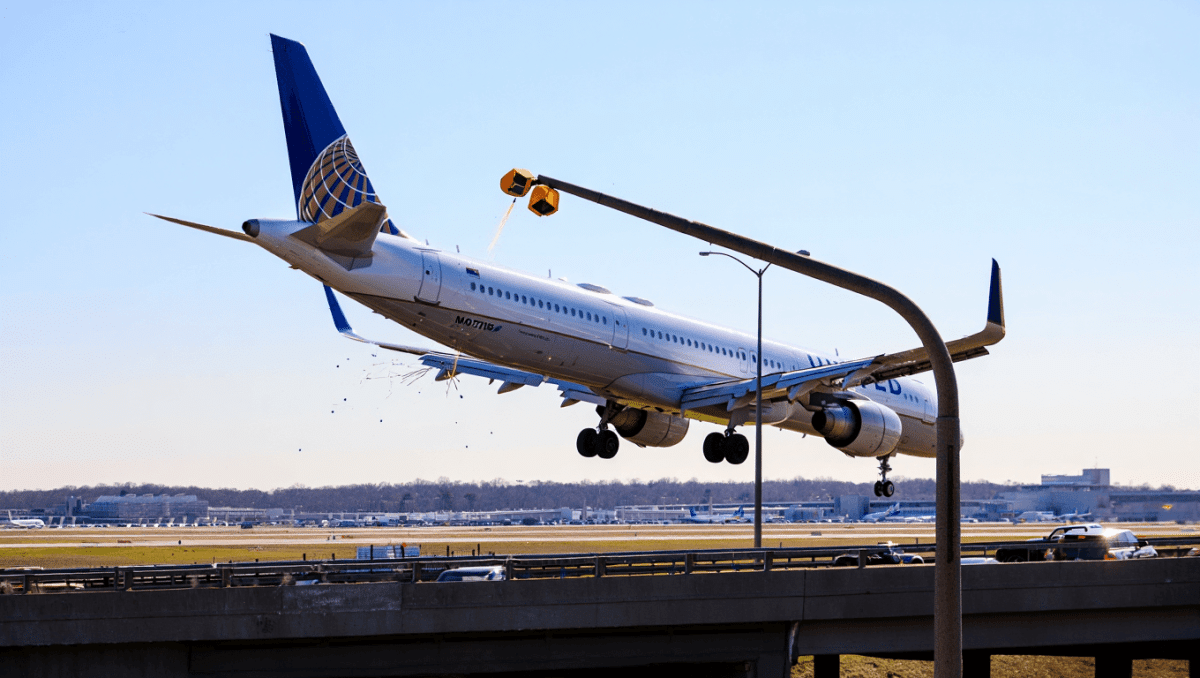
A United Airlines jet struck a highway light pole along the New Jersey Turnpike while landing at Newark Liberty International Airport, the Federal Aviation Administration said, prompting an immediate safety response and an agency inquiry. The episode, confirmed by FAA officials, raises questions about airport lighting and approach procedures at one of the region’s busiest hubs.
FAA confirms impact; investigation opened
The FAA said the aircraft made contact with a light pole located on the stretch of the New Jersey Turnpike that runs adjacent to the airport during its landing sequence. Federal investigators have been notified and are gathering initial facts to determine the sequence of events and whether any operational changes are required.
Boxing champions ditch long runs for high-intensity training: new era in fight prep
Czech nationals among victims of Pinedale-area crash: two confirmed dead
The agency did not release details about the flight number, the extent of any damage to the airplane or roadway equipment, or whether there were injuries. Local emergency crews moved to the scene as a precaution while airport and highway authorities assessed the site.
What investigators are likely to examine
- Aircraft approach path — navigation data and cockpit voice/flight data records to see where the airplane was relative to standard approach angles.
- Lighting and infrastructure — condition and placement of runway and highway light poles near the approach corridor.
- Weather and visibility — metrological reports for crosswinds, visibility, or other conditions that could affect descent.
- Air traffic control communications — transcripts and recordings to clarify instructions and pilot readbacks.
- Aircraft maintenance and crew records — recent inspections, reported issues, and crew duty/rest status.
Those lines of inquiry aim to identify whether the contact was the result of a mechanical fault, human factors, environmental conditions or a combination of issues.
Operational and public-safety implications
While the immediate focus is on safety for passengers and people on the highway, the incident also has broader consequences. Any damage to approach lighting or related airport equipment can require rapid repairs, affecting airline schedules and airport operations. Similarly, struck infrastructure on the turnpike may disrupt traffic and require engineering inspections.
For travelers, the main near-term impact is uncertainty: carriers and the airport may delay or re-route flights while inspections and investigations proceed. Airport authorities typically publish advisories and update flight-status information through airline channels and official airport feeds.
Next steps and what to expect
Federal investigators will compile a preliminary factual report in the coming days; a more comprehensive review could follow if the incident meets criteria for a formal safety investigation. Aviation regulators often release updates as new information becomes available.
Meanwhile, passengers and commuters should monitor official channels for the latest on flight operations and highway conditions around Newark Liberty International Airport and the New Jersey Turnpike.
Why this matters: incidents that link aircraft operations with public roadways underscore the complexity of safety management at airports located in dense urban corridors. Even a single event can trigger cross-agency inspections, temporary service disruptions and renewed scrutiny of airport perimeter design.