Show summary Hide summary
Kayla Barnes-Lentz, 35, has turned her home into a living laboratory for longevity—and she’s sharing the results online. Her regimen, which mixes exhaustive testing, high-tech therapies and strict lifestyle rules, has drawn a large following and fresh scrutiny as scientists warn that measurement does not equal proof.
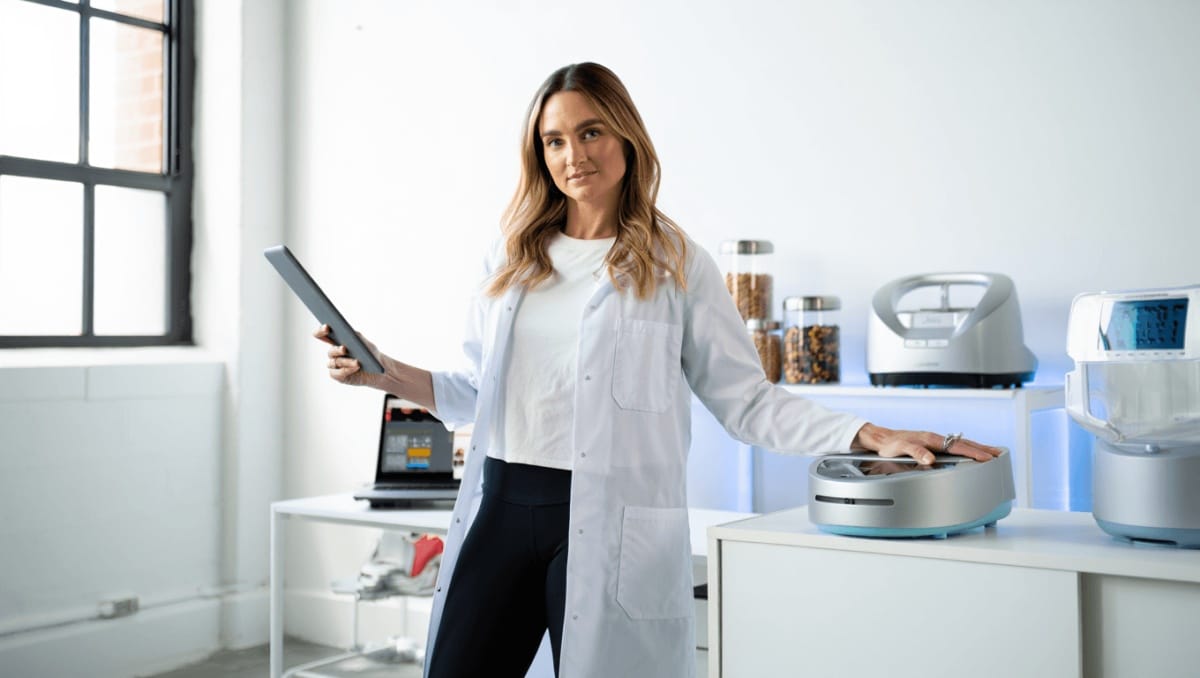
Every room in Barnes-Lentz’s house is curated for health: lighting shifts from cool to warm, furniture is chosen to avoid volatile organic compounds and air purifiers run constantly. The property also contains a sauna with red-light therapy, a cold plunge, a hyperbaric oxygen chamber, PEMF devices and a home gym. She and her husband say they’ve invested heavily in equipment and testing to monitor their physiology minute by minute.
The clinic that became a public experiment
In 2018 Barnes-Lentz opened LYV, a clinic intended to dig deeper than routine care into patients’ biomarkers. She says she was the clinic’s first patient and began publishing many of her test results online in 2019. Her public ledger includes gut panels, extended thyroid testing, toxin loads and repeated body-composition scans.
Boxing champions ditch long runs for high-intensity training: new era in fight prep
Czech nationals among victims of Pinedale-area crash: two confirmed dead
Early findings changed how she approaches interventions. For example, aggressive caloric restriction appeared to disrupt her menstrual cycle and precede worsening thyroid markers—prompting her to back off that approach. Those personal observations underscore what many researchers already note: men and women can respond differently to the same anti-aging strategies.
There is a broader context to that gap. Women were not required to be included in federally funded clinical research until 1993, and funding specifically directed at women’s health outside of oncology remains small. Meanwhile, roughly two-thirds of dementia and Alzheimer’s cases are diagnosed in women—an imbalance that many researchers say needs more targeted study.
What a day looks like in Barnes-Lentz’s protocol
| Time | Typical activities | Therapies / targets |
|---|---|---|
| 5:00 a.m. | Natural wake, body-composition read, workout | Weight metrics; strength training |
| Morning | Sauna + red-light therapy, high-protein breakfast with fermented foods | Red-light, fermented probiotics; aims for high fiber |
| Midday | Walk, red-light cap, one hour in hyperbaric chamber | Hyperbaric oxygen, photobiomodulation |
| Afternoon / early evening | Prepare organic dinner, supplement routine | Targeted nutrient and peptide protocols |
| 8:00 p.m. | Lights off, sleep | Prioritizes restorative sleep |
- Devices: hyperbaric oxygen chamber, PEMF (pulsed electromagnetic fields), sauna with red light, cold plunge, continuous air filtration.
- Tests: ovarian biological-age assay, gut microbiome screens, advanced thyroid panels, toxin load analyses, repeated body-composition scans.
- Nutrition & habits: fermented foods regularly, high-protein meals, large daily fiber target and an early dinner to extend nightly fasting.
Barnes-Lentz says one notable data point is her ovarian biological age. She has repeatedly tested with Timeless Biotech, which uses a model that combines standard biomarkers—FSH, estrogen, body-composition measures and reproductive history—with machine-learning algorithms to estimate ovarian age. Her results have shown an ovarian age younger than her chronological age, a finding she highlights publicly and that helped raise her profile.
Scientists caution against drawing simple cause-and-effect conclusions. Dr. Eric Verdin, president and CEO of the Buck Institute for Research on Aging, says individual anecdotes—no matter how widely shared—cannot substitute for controlled research. “A public data point like ‘ovaries five years younger’ can be misread as direct proof that a particular protocol causes that change,” he told reporters, urging rigorous studies before claims are generalized.
At the same time, some clinicians view Barnes-Lentz’s visibility as useful for broadening public conversation about prevention. Dr. Poonam Desai, an osteopathic physician board-certified in lifestyle and emergency medicine and a colleague of Barnes-Lentz, says that high-profile attention can nudge people to ask whether they should be monitoring reproductive aging or investing earlier in preventive care.
Business, relationships and how she shares results
Barnes-Lentz monetizes her work through affiliate links and a paid membership community where subscribers can ask protocol questions. She also co-owns a sauna company with her husband. The pair famously took their first date inside a multi-person hyperbaric chamber; they married in 2023 and continue to test and experiment together.
Her website includes explicit disclaimers: the materials are informational and not a substitute for medical advice. Still, experts worry that followers may interpret detailed public data as a blueprint rather than a set of personal choices and experiments whose broader benefits remain unproven.
The case illustrates an emerging tension in modern health: people can now access near-continuous biometrics and sophisticated assays at scale, but the science linking those numbers to longer, healthier lives is often incomplete. For readers, the takeaway is pragmatic: monitoring can illuminate trends and suggest interventions, but it is not a guarantee. Robust clinical trials—especially those focused on women—are still needed to move from promising measurements to proven outcomes.