Show summary Hide summary
A cruise ship carrying passengers from several countries is scheduled to dock near Tenerife this weekend after an outbreak of hantavirus on board, prompting international repatriation and quarantine plans. Governments and health agencies say the immediate risk to the wider public is low, but strict screening, targeted medical evacuations and a 42-day monitoring window are now under way.
The vessel, MV Hondius, is due to arrive at the industrial port of Granadilla early on May 10. Local officials have set a narrow window for disembarkation — between midday on Sunday and about the same time Monday — citing an approaching period of rough seas that would complicate operations.
How passengers will be processed
Boxing champions ditch long runs for high-intensity training: new era in fight prep
Czech nationals among victims of Pinedale-area crash: two confirmed dead
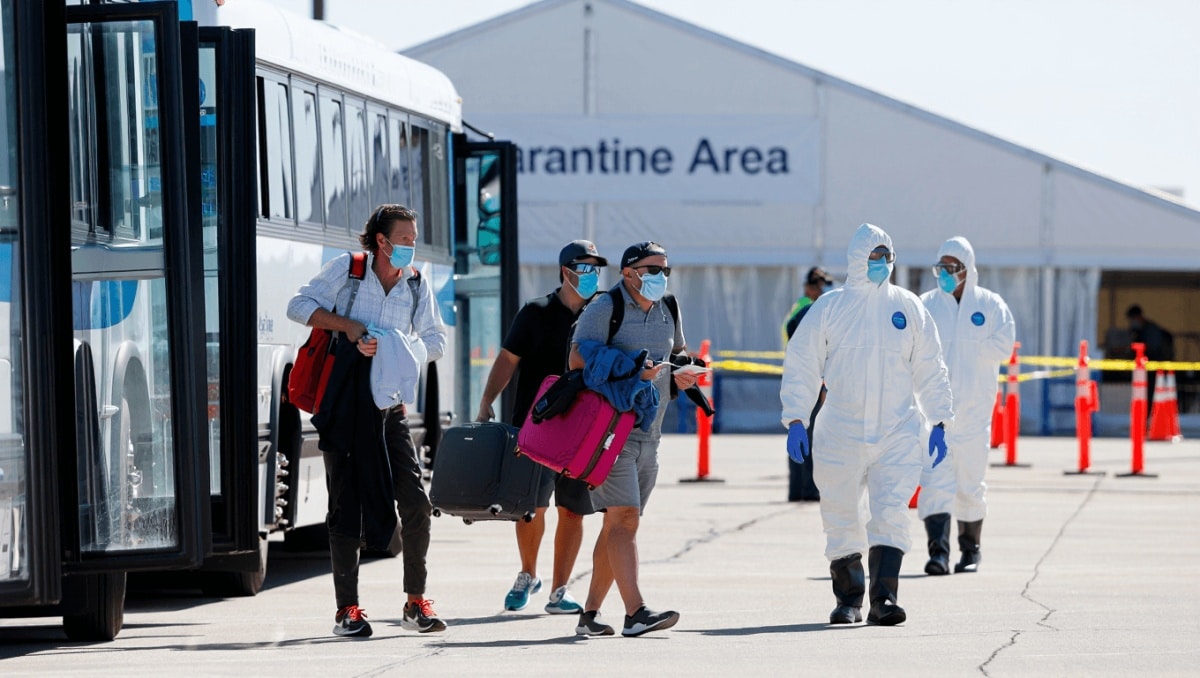
Authorities plan to transfer people ashore in small groups using tender boats. Medical teams will screen all arrivals before anyone boards aircraft bound for their home countries.
People who show symptoms will be placed on dedicated medical evacuation flights to the Netherlands for treatment; otherwise, governments are organizing individual repatriation flights. The World Health Organization’s outbreak response team has been coordinating with national health authorities on-site.
Shipboard arrangements already announced include the evacuation of all passengers and 17 crew members; about 30 crew will remain to sail the vessel to the Netherlands. Luggage and the remains of a deceased passenger will remain on board while the ship is disinfected.
Numbers, confirmed cases and testing
So far health authorities report eight people fell ill, including three deaths — reported to be two Dutch citizens and one German national. Six infections have been laboratory-confirmed and two are under investigation.
A Spanish woman who had been tested after flying with a passenger who later died has returned a negative result; she will be re-tested as a precaution, Spain’s health ministry said.
Where U.S. passengers will go
American citizens will be repatriated to Offutt Air Force Base in Omaha, Nebraska. From Offutt they will be taken to the National Quarantine Center at the University of Nebraska at Omaha for medical assessment and monitoring.
CDC teams will run exposure-risk assessments for each returning passenger and advise on the level of monitoring required. An additional CDC group will deploy to Offutt to support the public health response.
- Screening: Onshore checks before boarding repatriation flights.
- Medical evacuation: Symptomatic patients flown to the Netherlands.
- Quarantine: U.S. returnees routed to Offutt AFB and then the National Quarantine Center.
- Monitoring: A 42-day active monitoring period from last exposure is recommended by WHO.
Which countries are arranging flights
Spain will disembark its citizens first. European partner states — including Germany, France, Belgium, Ireland and the Netherlands — are sending aircraft to collect their nationals, with additional EU-chartered flights available for other European citizens. The United States and the United Kingdom have said they are prepared to assist countries that cannot arrange transport.
Officials emphasize that repatriation will be tightly controlled: passengers will be moved in sealed, guarded vehicles through cordoned routes to minimize contact with local communities.
Public health stance and monitoring
The WHO has been closely involved in the on-site response; its director-general travelled to Tenerife to oversee disembarkation and liaise with the ship’s medical staff. WHO leaders have stressed the current public health threat is limited and cautioned against equating this event with the global COVID-19 pandemic.
National health agencies — led by the CDC in the United States — describe their response as active monitoring and case assessment. The CDC issued a Health Alert Network notification on May 8 about a cluster of hantavirus cases caused by the Andes virus, urging clinicians and laboratories to be alert for imported cases and follow biosafety guidance.
That advisory raised questions among some infectious-disease experts who felt the notification could have come earlier; public-health leaders called for clearer, faster communication as the situation unfolds.
States monitoring people linked to the ship
- Arizona: A resident who recently sailed on the ship is asymptomatic and under monitoring.
- California: Several state residents were on the cruise; none are currently known to be ill.
- Georgia: Two returnees remain well and are being followed by public-health authorities.
- New Jersey: Two people potentially exposed during air travel are symptom-free and being observed.
- Texas: Two passengers returned home before the outbreak was identified and show no symptoms.
- Virginia: One resident who returned from the cruise is in good health and is being monitored.
Across affected countries, close contacts and recent disembarked passengers are being traced and followed. Health teams emphasize symptom awareness and rapid reporting if illness develops.
Why this matters now
The event tests international coordination for a pathogen that transmits differently from common respiratory viruses. For travelers and households, the practical consequences are limited — careful screening, possible quarantine for a short period, and follow-up monitoring — but the situation highlights how quickly cross-border public-health responses must be mobilized when a rare viral cluster emerges.
Officials continue to update guidance as testing and contact tracing proceed. This story will evolve as authorities complete disembarkation and publish final case counts and laboratory findings.
Updated May 10, 2026: authorities report the ship’s arrival schedule and additional operational details as described above.