Show summary Hide summary
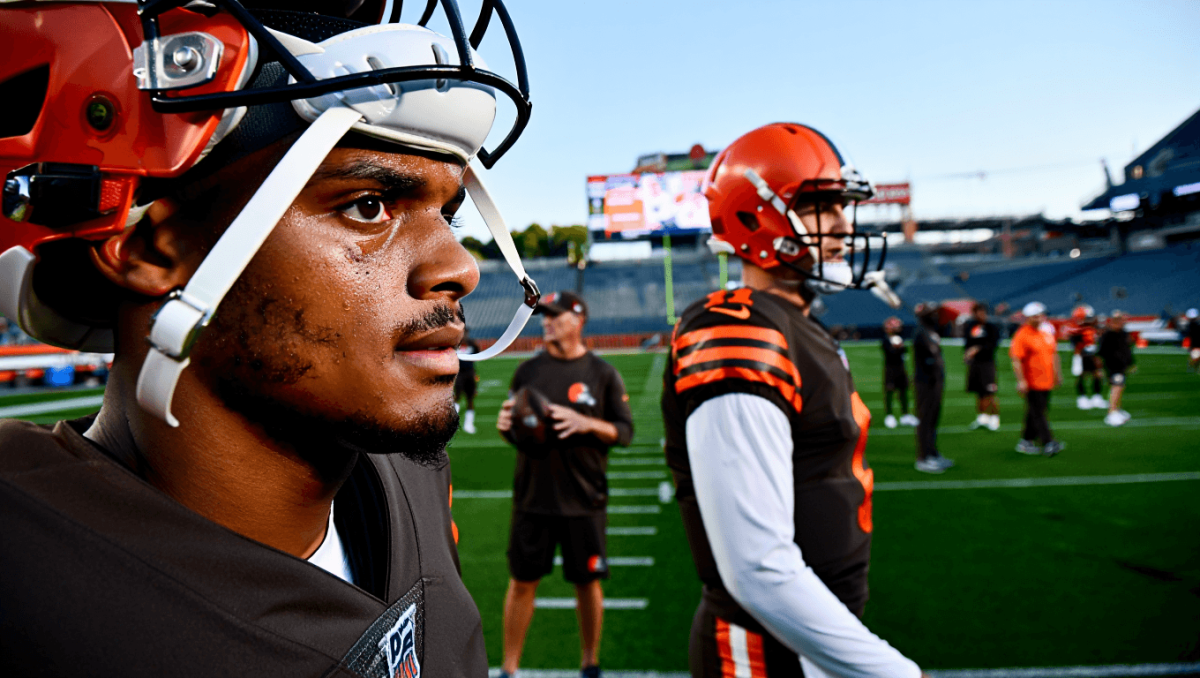
The Cleveland Browns enter training camp with a knotty, high-stakes question at the heart of their offense: who will start at quarterback on Day 1? Recent drafts and a coaching change have created a crowded depth chart, and the decision will shape the team’s 2026 trajectory — from play-calling to salary-cap strategy and playoff hopes.
General manager moves brought three young signal-callers to Cleveland over the past two offseasons: Dillon Gabriel and Shedeur Sanders in 2025, and Taylen Green in the most recent draft. Yet none of those selections looks assured to open the season as the Browns’ starter.
A veteran still in the picture: Deshaun Watson’s comeback window
At the center of the debate is Deshaun Watson, whose NFL résumé combines peak production with off-field controversy and significant recent injury. Before his legal and disciplinary issues, Watson posted one of his best seasons in 2020 with 33 touchdown passes, just seven interceptions and 4,823 passing yards — numbers that once put him among the league’s elite.
Boxing champions ditch long runs for high-intensity training: new era in fight prep
Czech nationals among victims of Pinedale-area crash: two confirmed dead
Since being acquired by Cleveland, Watson’s availability and performance have been limited. He has appeared only sporadically across multiple seasons and suffered a torn Achilles tendon last October. Still, with that injury now reportedly healed and one season remaining on his contract, the Browns’ new coaching staff appears willing to evaluate whether he can regain effective form.
New head coach Todd Monken, brought in to reshape Cleveland’s offense, has signaled an open-minded approach: he wants to see if a quarterback who once demonstrated top-tier skills can return to those levels under a fresh system. Monken’s stance effectively keeps Watson in immediate contention, at least through early practices and the team minicamp.
Young candidates and what they showed last season
Behind the veteran, Cleveland’s youth movement supplies several alternatives — each with different profiles and developmental timelines.
- Dillon Gabriel — Third-round pick in 2025. He started a string of games last season and completed a promising short sample (seven touchdown passes, two interceptions across roughly 185 attempts), but remains unproven over a full campaign.
- Shedeur Sanders — Fifth-round pick in 2025. Sanders finished last season as the starter, logging seven touchdown passes against 10 interceptions in about 212 throws; flashes of talent were offset by decision-making lapses.
- Taylen Green — Selected in the most recent draft’s sixth round. A raw athletic prospect with intriguing physical traits, he is widely expected to need time before contributing in regular-season games.
- Joe Flacco — Briefly brought in as a veteran option at the start of last season, Flacco’s role was transitional and he is not viewed as a long-term solution.
Monken has said he wants clarity on the quarterback pecking order by the end of the team’s June minicamp, which establishes who will enter July training camp as QB1. That timeline compresses evaluations and places pressure on early practices and camp reps.
Why the choice matters now
The Browns’ quarterback decision carries immediate operational and strategic consequences. Selecting Watson as a starter would signal a short-term push to extract as much production as possible from a high-paid vet while preserving young quarterbacks for future seasons. Opting for a younger passer would prioritize development and salary flexibility but likely require patience as the offense adjusts.
For fans, fantasy players and wagering markets, the decision will influence projections for Cleveland’s scoring outlook and win totals. For the franchise, it affects play-calling philosophy, roster construction around pass protection and receiving talent, and how the front office evaluates future draft capital.
Outlook
The Browns’ immediate path looks pragmatic: give Watson a full, transparent audition under Monken’s offense while keeping younger quarterbacks ready to step in. If the veteran cannot stay healthy or reach the level the staff believes necessary, the team has multiple internal candidates who could assume the role.
Ultimately, Cleveland’s quarterback situation is a reminder that drafting talent and signing name-brand players are only part of building a reliable offense — health, coaching fit and timely development all remain decisive. Expect the Browns’ QB competition to be among the more consequential storylines of their offseason and to set the tone for how the franchise approaches the 2026 season.