Show summary Hide summary
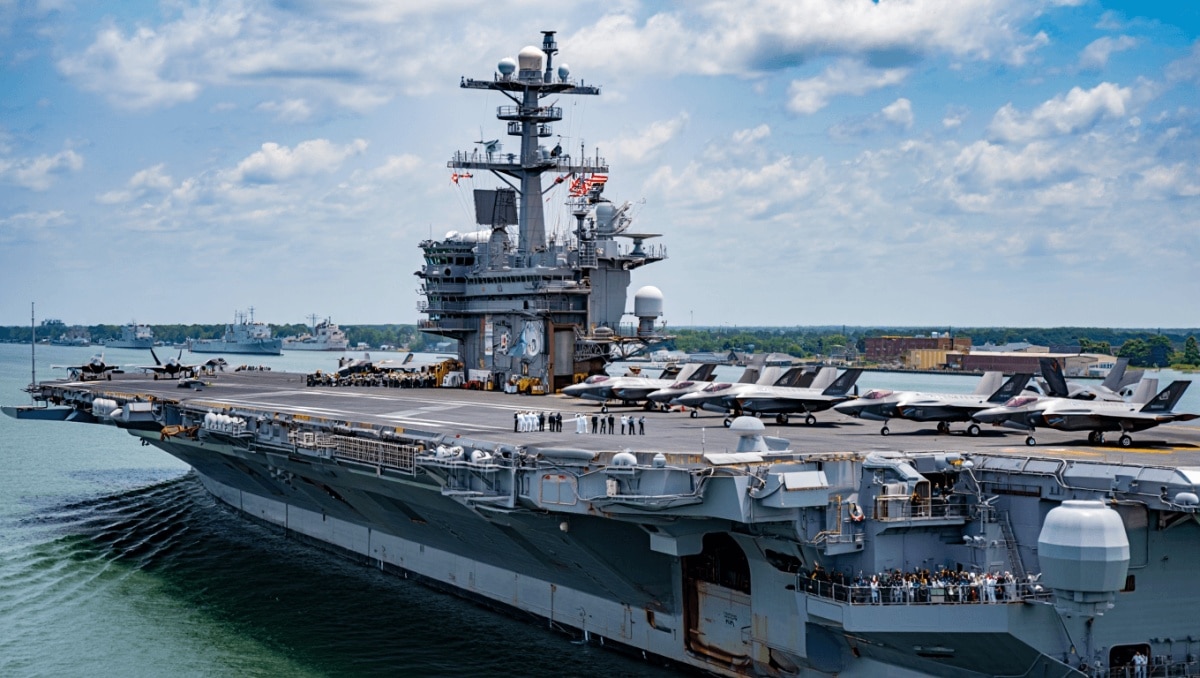
The Navy’s newest and largest carrier, the USS Gerald R. Ford, pulled into Norfolk on Saturday after what the service says was a record-setting deployment that leaves questions about crew endurance and ship maintenance. The nearly yearlong mission saw the carrier and its escorts operating across multiple theaters, earning a top unit honor and returning about 5,000 sailors to their families.
Defense Secretary Pete Hegseth joined the welcome-home event, praising the sailors and the accompanying destroyers for their performance during sustained operations away from U.S. ports.
What happened at sea
Boxing champions ditch long runs for high-intensity training: new era in fight prep
Czech nationals among victims of Pinedale-area crash: two confirmed dead
The Ford and two destroyers, including the USS Bainbridge and USS Mahan, spent months away from Norfolk. Along the way the strike group took part in a major naval buildup in the Mediterranean and conducted operations tied to rising tensions in the Middle East. The deployment required transit through the Suez Canal and operations in the Red Sea and adjoining waters.
During the voyage the carrier experienced a noncombat fire in a laundry area that displaced hundreds of crew members and forced the ship into port repairs on Crete. Navy officials said the damage was not battle-related but still required extended maintenance while the ship and sailors remained at sea for an unusually long stretch.
Record length and recognition
The Ford logged about 326 days at sea, the longest single deployment for a U.S. aircraft carrier since the Vietnam era. Only two earlier Cold War-era deployments were longer: USS Midway in 1973 and USS Coral Sea in 1965. The Navy awarded the strike group the Presidential Unit Citation, the service’s highest collective honor, citing exceptional performance during combat operations connected to the region’s escalating conflict.
- Deployment length: ~326 days at sea
- Crew returned: roughly 5,000 sailors
- Ships involved: USS Gerald R. Ford, USS Bainbridge, USS Mahan (and other escorts)
- Notable incident: noncombat fire in laundry space; repairs in Crete
- Award: Presidential Unit Citation for actions during regional operations
The prolonged time away has prompted scrutiny from policymakers, veterans’ advocates and Navy families about the toll on morale and readiness. Extended deployments raise practical concerns: increased wear on complex systems, longer maintenance cycles, and more strain on sailors who have been separated from home longer than is typical.
How this matters to the Navy and the public
Extended carrier deployments affect force posture and logistics. A ship at sea for months uses more consumables and requires more off-cycle repairs when it finally docks. On the human side, service members face longer family separations and more limited access to routine medical and mental-health services.
Officials point out that a separate carrier, USS Nimitz, logged longer continuous duty in 2020–21 — about 341 days — but much of that included prolonged shore isolation in the United States as part of COVID-19 precautions, which is different from continuous at-sea operations.
Naval analysts say the Ford’s deployment highlights the trade-offs the Navy faces as it balances global commitments with the maintenance demands of modern, technologically sophisticated carriers.
The return to Norfolk offers breathing room for repairs and crew recuperation, but it also raises questions about long-term fleet management as the Navy adapts to persistent regional tensions and evolving mission requirements.
Associated Press reporting contributed to this article.