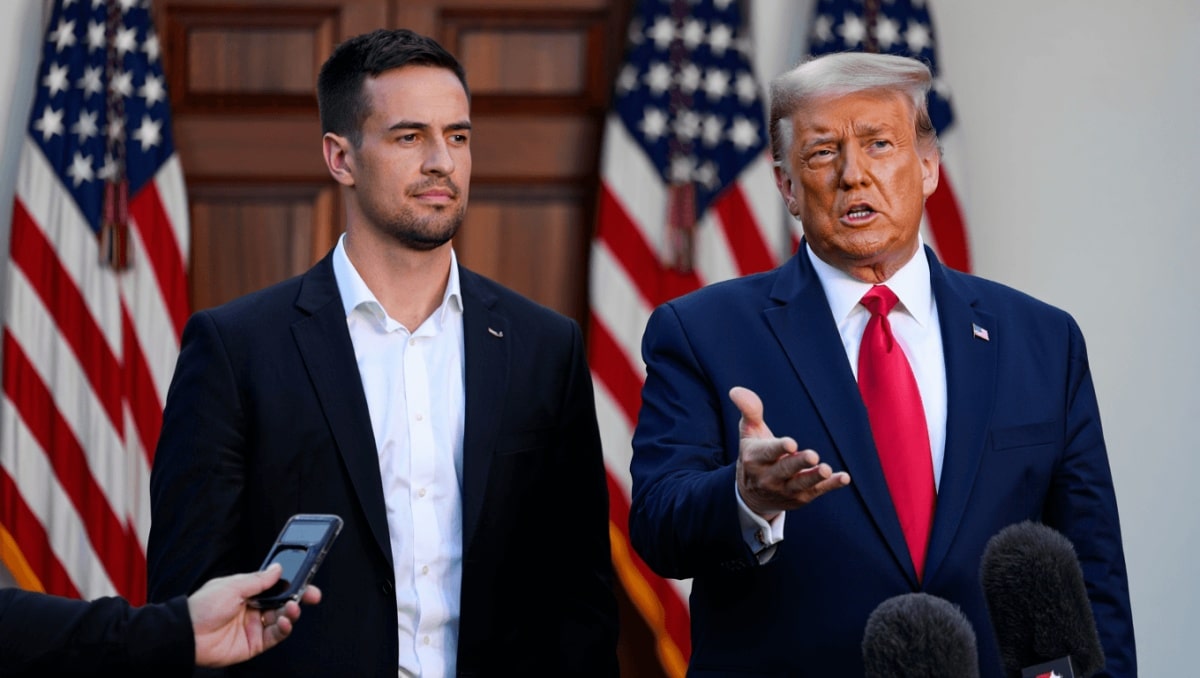
President Trump intends to nominate former acting FEMA chief Cameron Hamilton to lead the agency permanently, a move that could reshape federal disaster response as the White House pushes for broad changes in how emergencies are handled. The decision comes at a moment when Washington is debating whether more responsibility for disaster recovery should rest with states rather than the federal government.
Hamilton, a former U.S. Navy SEAL, led the agency on an interim basis from January through May last year before his departure amid policy disputes. He publicly resisted proposals to abolish the federal disaster agency, telling a House subcommittee that eliminating the agency would not serve the public interest.
FEMA has been without a confirmed administrator throughout the president’s second term, rotating through multiple acting leaders. Officials and lawmakers have warned that the lack of permanent leadership has complicated long-term planning and morale at the agency.
Boxing champions ditch long runs for high-intensity training: new era in fight prep
Czech nationals among victims of Pinedale-area crash: two confirmed dead
The White House offered Hamilton the job this week, according to a person briefed on the matter who spoke on condition of anonymity; the administration has not yet made a formal announcement. The nomination was first reported by The New York Times.
Mr. Trump has signaled a desire to shift more disaster responsibility to the states and has convened a FEMA Review Council expected to propose major reforms to how federal support is delivered after catastrophes. How a confirmed administrator would balance those political priorities with operational demands remains an open question.
Homeland Security Secretary Markwayne Mullin has publicly called for reforms to FEMA, presenting a different tone than some in the administration who have previously discussed more extreme restructuring. That split in rhetoric inside the cabinet adds uncertainty over the agency’s future direction.
Hamilton’s relationship with Department of Homeland Security officials grew strained during his time as acting chief, he has said. On a podcast last fall he described efforts to eliminate what he considered wasteful spending and to shrink parts of the agency’s footprint — not to wipe the agency out entirely.
Any nomination would face practical hurdles in the Senate. Federal statute requires the FEMA administrator to demonstrate knowledge of emergency management and homeland security and to have at least five years of executive leadership experience. Critics may point to Hamilton’s lack of service as a state emergency management director as a potential liability in confirmation hearings.
His résumé combines military and federal emergency service experience. According to public records, Hamilton served about a decade in the U.S. Navy SEALs, including multiple overseas deployments with SEAL Team Eight between 2005 and 2015. He later held roles as a supervisory emergency management specialist at the State Department and as director of emergency services within DHS.
Hamilton also ran in the 2024 Republican primary in Virginia’s 7th Congressional District but did not win the nomination. In a LinkedIn post this month marking FEMA’s 47th anniversary, he thanked colleagues for their service and said he wished his tenure at the agency had been longer, adding that further reform work remained.
What to watch next:
- Whether the White House files a formal nomination and the timeline for that paperwork.
- The scope and tone of hearings during the Senate confirmation process, including questions about state-level experience.
- Recommendations from the FEMA Review Council and how a new administrator would implement them.
- Short-term impacts on FEMA staffing, budgets and disaster-response readiness if leadership changes direction.
The nomination matters beyond personnel: it could determine whether federal disaster policy tilts toward centralized response or greater reliance on states and localities. That choice will shape how quickly communities receive aid after hurricanes, wildfires and floods, and how resilient systems are built before the next major emergency.