
Show summary Hide summary
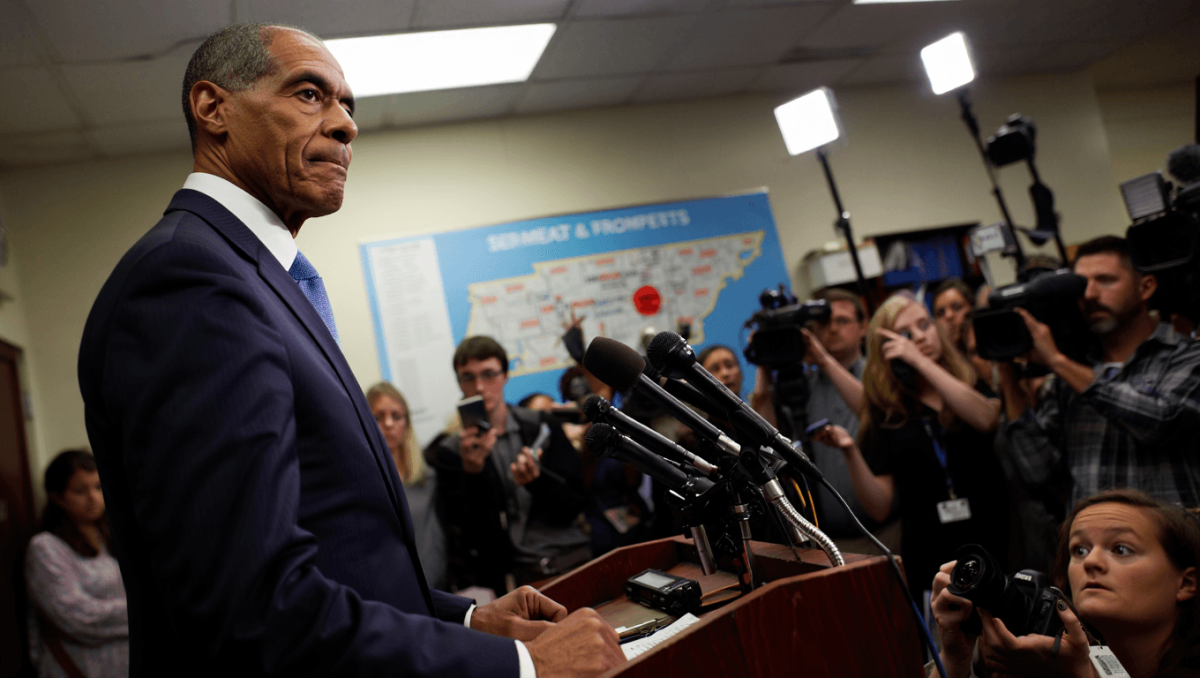
Rep. Steve Cohen announced Friday he will not pursue another term, blaming Tennessee’s newly redrawn congressional map for making his reelection all but impossible. The move comes as states across the South accelerate map changes after a Supreme Court decision that weakened federal oversight of voting maps — a shift with immediate consequences for Memphis and for Democrats nationwide.
Map changes squeeze a long-serving incumbent
Cohen, a Democrat who has represented the Memphis-centered district for roughly 20 years, said the legislature’s new lines were intentionally crafted to reduce his chances at the ballot box. He has filed a federal challenge to the new map and said he would resume his campaign if the court orders the old district restored.
Boxing champions ditch long runs for high-intensity training: new era in fight prep
Czech nationals among victims of Pinedale-area crash: two confirmed dead
The redistricting followed a high-court ruling that removed a key layer of protections under the Voting Rights Act, clearing the way for state legislatures to redraw boundaries with fewer federal constraints. Tennessee was among the first to move; other Southern states are considering similar adjustments.
What this means for Tennessee and beyond
Local leaders and civil-rights advocates warned the changes will likely result in a congressional delegation dominated by Republicans, leaving Memphis with a diluted voice in Washington. Cohen said that outcome could marginalize the city when federal priorities shift under a Democratic administration.
- Shift in representation: Tennessee could move to an all-GOP House delegation after the next election cycle.
- Legal recourse: Cohen’s lawsuit seeks to restore his previous district; a successful challenge would allow him to re-enter the race.
- Electoral difficulty: Democrats would need unusually high registration and turnout to win under the new maps.
- Regional ripple effects: Louisiana, Alabama and South Carolina are among other states taking steps that could similarly reshape minority-majority districts.
Primary dynamics and grassroots reactions
The redrawn map had already set up a primary contest: Cohen faced a challenge from a Black progressive state lawmaker, Pearson, who has signaled plans to campaign in the new territory now labeled the 9th District. Pearson acknowledged the altered terrain will make victory tougher but said his message aims to reach working-class voters across urban and rural lines.
Meanwhile, Memphis organizers have mobilized in response to the change. Protesters filled the statehouse after the map was unveiled, and local civil-rights groups have vowed to hold whichever representatives emerge accountable.
“We have to stay engaged,” said Tierney Macon of a Memphis equity organization, noting that activists plan to maintain pressure on both new and incumbent lawmakers regardless of party.
Cohen’s final stretch in Congress
In his office, surrounded by photos of Memphis projects he helped secure, Cohen warned that the redistricting was designed to add one more Republican vote in Washington. He vowed to continue opposing former President Donald Trump, calling him a central focus of his remaining work in the House.
Throughout his tenure, Cohen frequently drew attention for outspoken moments — including once bringing fried chicken to a Judiciary Committee hearing to mock an absent official’s courage — and he was an early proponent of impeachment efforts against Trump during his first term and afterward.
Even as he prepares to step away from the ballot, Cohen framed his decision as a response to structural changes, not a change of heart: he said he does not want to quit and will pursue the legal pathway to restore the district if possible.
Why this matters now
The intersection of recent Supreme Court rulings and aggressive state-level redistricting is reshaping political power in the South at a time when control of Congress is razor thin. For voters in Memphis, the stakes are immediate: altered representation, different legislative priorities, and a renewed emphasis on turnout and organizing.
Observers say the outcome of Cohen’s court challenge — and similar lawsuits elsewhere — could set precedents that determine whether minority communities retain influence over congressional maps or see that influence erode in the years ahead.