Show summary Hide summary
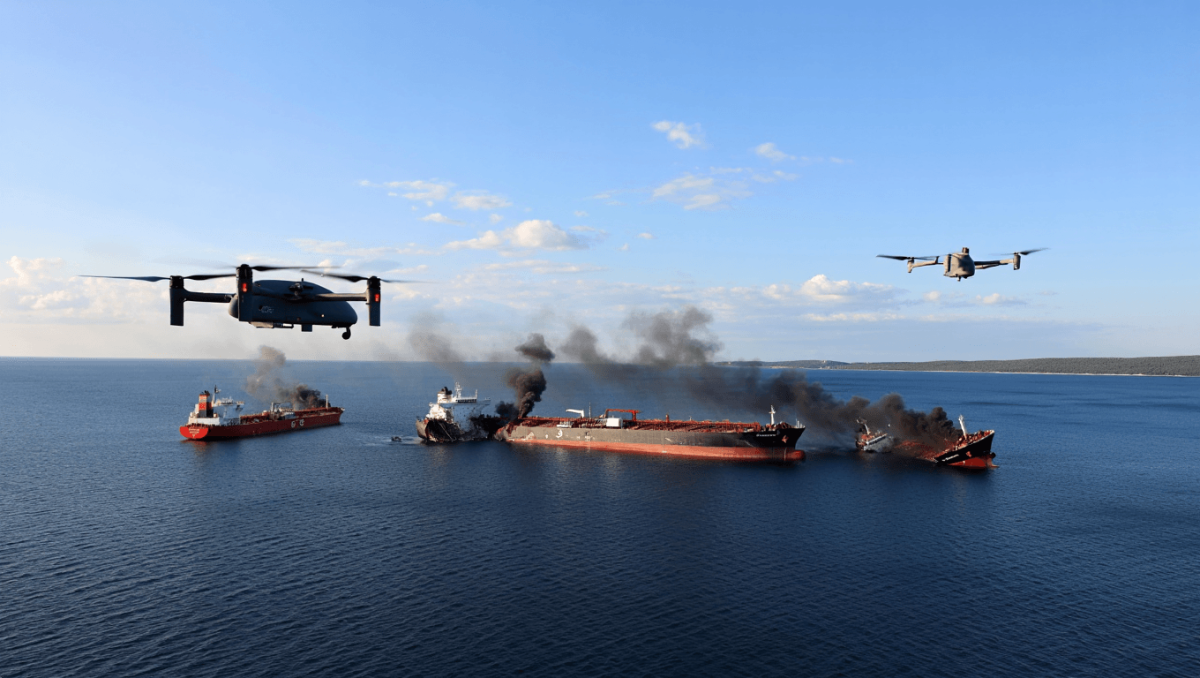
Three commercial tankers described by authorities as part of a so-called “shadow fleet” were struck by unmanned aerial vehicles off Turkey’s Black Sea coast this week, raising fresh questions about maritime security and the movement of sanctioned cargoes. The attacks, which Turkish officials are investigating, carry immediate implications for shipping routes, insurance costs and efforts to enforce energy sanctions.
Turkish maritime authorities reported the incidents after vessels in international waters near Turkey’s northern coast were struck by drones. No group has publicly claimed responsibility and details remain limited as investigators examine the damage and review tracking data from the targeted ships.
What is at stake
The term “shadow fleet” is commonly used to describe oil tankers that obscure cargo origin or ownership — practices that became more visible after sanctions on Russian oil tightened. Strikes on these vessels not only threaten seafarers and port operations but could also reshape how crude is traded and transported in the region.
Boxing champions ditch long runs for high-intensity training: new era in fight prep
Czech nationals among victims of Pinedale-area crash: two confirmed dead
For cargo owners, brokers and insurers the incidents are a reminder that geopolitical friction is spilling into maritime lanes. Insurers have already flagged the Black Sea and adjacent waters as higher risk since 2022; renewed attacks could prompt further premium hikes or restrictions on coverage for certain voyages.
Key facts at a glance
| Aspect | Details |
|---|---|
| Location | Off Turkey’s Black Sea coast, in waters monitored by Turkish authorities |
| Targets | Three commercial oil tankers reported to be linked with so-called shadow fleet operations |
| Weapon | Unmanned aerial vehicles (drones) — investigators are determining type and origin |
| Casualties | Authorities have not confirmed any fatalities; damage assessments are ongoing |
| Claims of responsibility | No group has taken responsibility publicly at the time of reporting |
Potential consequences
- Heightened shipping costs: insurers may increase war-risk premiums or restrict cover for tankers operating in and near the Black Sea.
- Route adjustments: charterers could divert tankers to longer, safer passages, raising transit times and freight rates.
- Sanctions enforcement: attacks on vessels tied to covert oil transfers may complicate monitoring efforts and encourage stricter tracking measures.
- Regional security: recurring incidents risk entangling more actors and escalating maritime tensions in a strategically sensitive sea.
Officials in Ankara said they are coordinating with international partners to collect evidence and to monitor shipping traffic more closely. Analysts warn that if such attacks become more frequent, commercial operators will have to weigh the cost of protection — including private security and alternative routing — against the economics of transporting discounted crude.
For consumers and markets, the immediate effect would likely be indirect: tighter shipping capacity and higher insurance costs can nudge freight rates upward and, in some scenarios, feed through to energy prices. Policymakers tracking sanctions compliance will also see this as a signal to tighten vessel transparency tools and expand surveillance cooperation.
As investigations continue, maritime stakeholders and national authorities will be watching for three questions: who carried out the strikes, whether the attacks were targeted specifically at sanctions-evasion activity, and whether similar incidents will follow. The answers will shape how industry and governments respond to security risks in one of the world’s busiest energy-transport corridors.