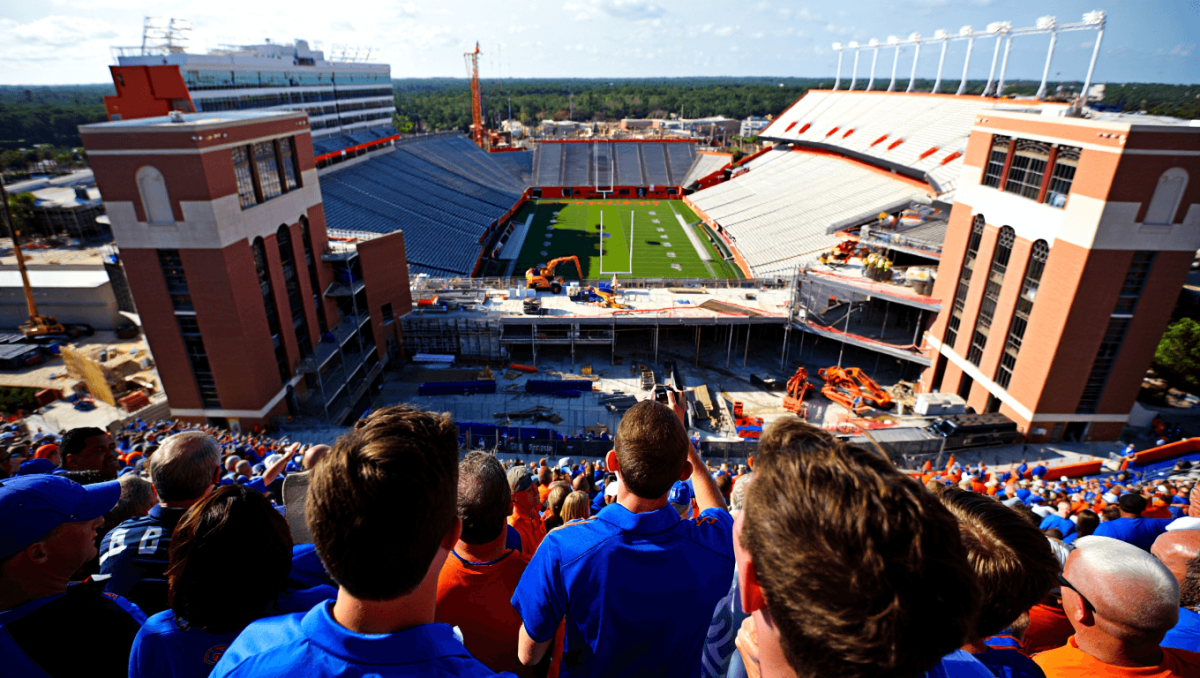
The University of Florida has unveiled plans for a sweeping renovation of Ben Hill Griffin Stadium — known to fans as The Swamp — that could reshape the school’s athletics finances and fan experience. The $1.45 billion program aims to start after the 2027 season and finish by 2030, with university leaders saying the overhaul will sharply increase revenue and modernize an almost century-old venue.
Officials describe the project as comprehensive: upgrades to seating and premium areas, major infrastructure repairs, and accessibility improvements are all on the table. Athletic director Scott Stricklin framed the work as a long-term solution, moved into motion after studies that began in 2018 and were delayed by the pandemic.
The stadium currently brings in about $75 million a year from tickets, concessions, parking and donations. University projections estimate the remodel will add roughly $65 million annually, lifting total stadium revenue to about $140 million — money the athletic department plans to use to support 21 varsity sports and expand commercial and athlete-name opportunities.
Boxing champions ditch long runs for high-intensity training: new era in fight prep
Czech nationals among victims of Pinedale-area crash: two confirmed dead
- Budget: $1.45 billion (up from earlier estimates near $400 million)
- Timeline: construction beginning in the 2027 offseason, completion targeted for the 2030 offseason
- Seating capacity: will remain at 88,548, despite reductions in lower-bowl general seating
- Premium spaces: 82 existing suites to be reworked and 63 new suites added on the east side; premium areas will be open-air
- Deferred maintenance: approximately $500 million included for infrastructure repairs and ADA improvements
- Funding sources: private donations, university reserves and long-term debt approved by the Florida Board of Governors
Rather than expand overall capacity, planners will replace some lower-bowl seats with higher-revenue premium options. The school says this trade-off — fewer general seats but more suites and enhanced premium areas — will preserve the stadium’s atmosphere while increasing per-game earnings.
Design choices reflect a deliberate balance between history and modernization. University staff visited classic ballparks and historic NFL stadiums to study preservation strategies, ultimately favoring an approach that builds above the existing bowl so the playing surface remains below ground level and hallmark features, such as the stadium’s orange wing walls, are retained.
Accessibility and fan comfort are explicit priorities: wider concourses, improved handrails and upgraded audio/visual systems are included to meet current codes and improve the game-day experience. Officials also plan new video boards and expanded sound systems intended to intensify home-field advantage.
The scale places Florida’s plan among the largest in college athletics. Administrators point to past projects — Texas A&M’s roughly $450 million Kyle Field overhaul and Penn State’s multi-hundred-million-dollar Beaver Stadium expansion — when contextualizing scope and cost, but they say the Florida project is broader in scale and financial ambition.
Beyond bricks and mortar, the university highlights potential commercial upside: expanded sponsorship inventory, premium partnerships and increased NIL-related activity for athletes. Those revenue streams are part of the justification for using a mix of gifts, reserves and approved debt to finance the work.
There are practical and political considerations ahead. Large capital projects require sustained donor support, public scrutiny of financing plans, and careful phasing to avoid major disruptions to game-day operations. The multiyear timeline also means the benefits — and risks — will unfold over multiple athletic seasons.
For fans, the promise is a modernized, louder and more comfortable venue that keeps the stadium’s distinctive character. For the university, the bet is financial: a nearly doubled stadium revenue base intended to fuel competitiveness across programs and create new commercial opportunities for years to come.