Show summary Hide summary
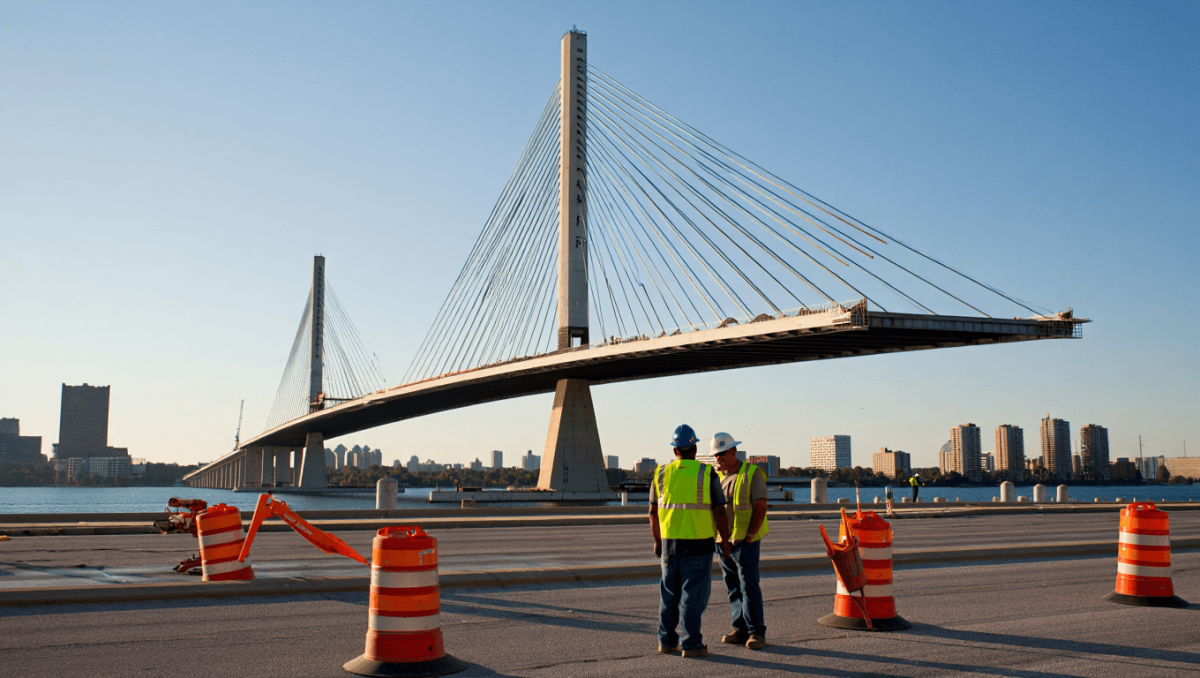
The planned ribbon-cutting for the new Gordie Howe International Bridge linking Detroit and Windsor was put on hold Thursday after Canadian and U.S. authorities agreed to pause the opening to resolve outstanding matters, officials said — a setback with immediate implications for cross-border traffic and trade. The delay, announced hours before a scheduled ceremony, leaves the bridge’s opening date uncertain while negotiators work through remaining technical and legal questions.
The Windsor-Detroit Bridge Authority said both governments requested extra time to address unresolved issues but did not specify their nature or how long the pause would last. The 1.5-mile span — funded by Canada and jointly owned by Canada and Michigan — had been expected to begin carrying traffic imminently.
Invitations for the opening were distributed this week after discussions between state and federal officials, and Michigan’s governor’s office said the governor intends to attend when the ceremony is rescheduled. Federal and provincial representatives described the delay as a move to ensure all operational, regulatory and cross-border arrangements are fully in place.
Boxing champions ditch long runs for high-intensity training: new era in fight prep
Czech nationals among victims of Pinedale-area crash: two confirmed dead
What officials say and what remains unclear
Canadian and U.S. spokespeople framed the postponement as a practical step to finish outstanding work rather than as a political standoff.
“At the request of the United States we agreed to delay the opening and take the necessary time to resolve outstanding issues,” Canadian officials said in a brief statement, adding that a number of technical items would be addressed in talks with U.S. counterparts.
U.S. federal officials declined to elaborate publicly on the specific points under discussion. Sources familiar with intergovernmental conversations said several internal reviews and interagency concerns contributed to the decision, but would not provide details.
Why this matters now
The Gordie Howe International Bridge represents a major new land link on one of North America’s busiest trade corridors. Any postponement affects freight movement, regional supply chains and daily commuters who depend on reliable crossings between Michigan and Ontario.
- Freight flow: The bridge was designed to reduce congestion at existing crossings and speed commercial shipments between the U.S. Midwest and Canadian markets.
- Local traffic: Commuters and local businesses that rely on steady cross-border travel face continued pressure at current bridges and tunnels.
- Economic stakes: Transport businesses, manufacturers and port operators are watching for the timetable because delays can ripple into inventory and delivery schedules.
Industry and regional leaders emphasized the long-term value of the project even as they acknowledged short-term frustration. The bridge — a multi-billion-dollar undertaking financed and negotiated over decades — is intended to ease bottlenecks that have long hampered the corridor.
“This is a long-term infrastructure investment,” the president of a major regional business organization said, noting that a delay of weeks or months would not negate the bridge’s projected benefits. He urged patience while officials finalize arrangements.
Border context and traffic patterns
Detroit and Windsor share deep economic ties; auto manufacturing, parts suppliers and logistics firms rely on efficient crossings. Until now, much commercial traffic has used the privately owned Ambassador Bridge and the Detroit-Windsor Tunnel, both operating at high capacity.
Federal transportation data show millions of vehicles and a substantial volume of truck traffic cross in this region each year. Planners say the Gordie Howe span will rebalance flows, offer redundancy and improve customs processing — provided operational details, staffing and inspection facilities are aligned before opening.
Local lawmakers urged a quick resolution. One U.S. senator from Michigan described the pause as a “minor hiccup” and called on both sides to finalize the remaining arrangements so the bridge can start serving the region as planned.
Construction began in 2018 after years of negotiation and planning. Canada funded the project to relieve congestion at older crossings and support long-term economic ties between the two countries.
Next steps
Officials say talks will continue and that they remain optimistic the bridge will open once outstanding matters are cleared. For now, travelers and shippers must rely on existing crossings while governments work to finalize technical, regulatory and operational frameworks.
Any new schedule will be announced jointly when both sides are satisfied that the bridge can open safely and efficiently.