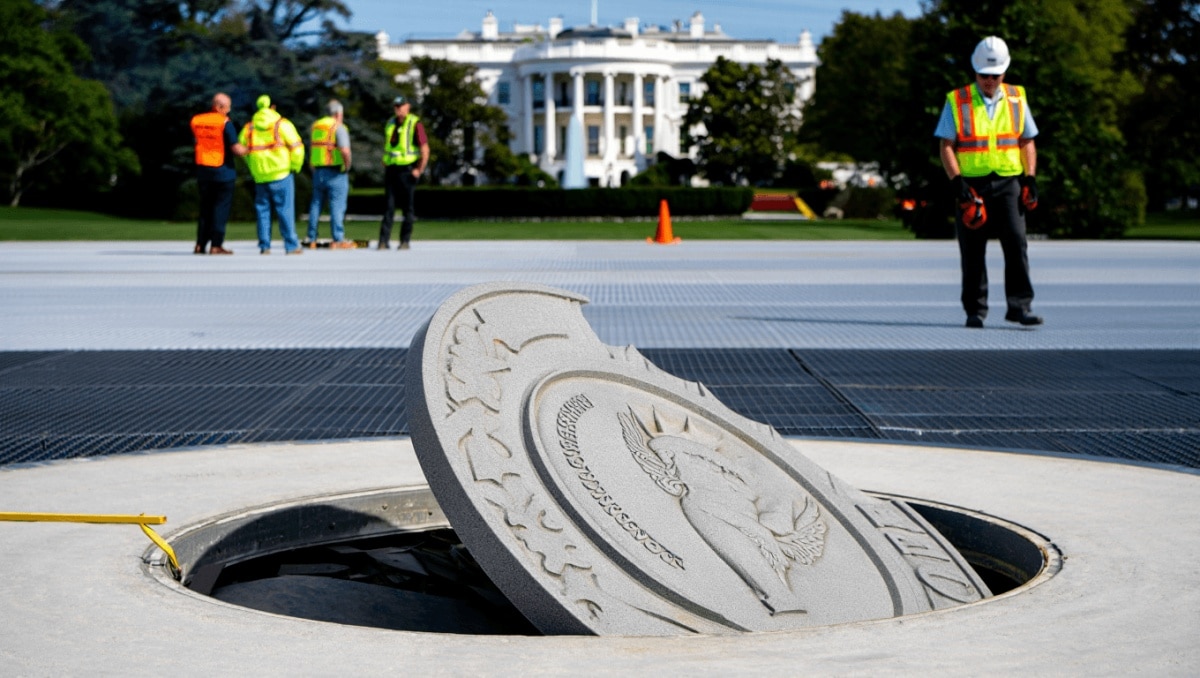
Crew members at the White House have removed the carved granite presidential seal from a newly built landing pad for Marine One, a move captured in recent photos and likely to slow completion of the project. The unexpected dismantling raises fresh questions about timing, costs and how the redesign will affect presidential travel and the South Lawn.
Photographs circulating Wednesday show workers using power tools to chip away at the helipad’s top layer; the dark-gray emblem that was visible last week is gone. Officials did not provide an immediate explanation for the removal.
The White House says the work is part of ongoing adjustments to better align the grounds with operational needs. Administration spokespeople have repeatedly argued a permanent landing surface is necessary after newer helicopters proved powerful enough to damage lawn turf during takeoffs and landings.
Boxing champions ditch long runs for high-intensity training: new era in fight prep
Czech nationals among victims of Pinedale-area crash: two confirmed dead
White House communications director Davis Ingle defended the project, saying the installation is intended to protect the South Lawn and improve safety for presidential helicopter operations. He also framed the work as part of broader refurbishment efforts at the presidential residence.
President Trump has described the pad as a “beautiful” granite feature and has said the landing area could host other events, such as press briefings. He has also claimed that Sikorsky — the helicopter manufacturer now owned by Lockheed Martin — would cover construction expenses, an assertion the company did not confirm when asked and instead deferred to the White House. The president has previously estimated the pad could cost up to $6 million.
The Sikorsky-built helicopters entered service in 2024 after procurement initiated under the prior administration, but their downward-facing exhaust has limited use on the South Lawn because of heat and turf damage. That concern has been a central justification for a hardened pad on the grounds.
- What was removed: A granite seal that had been placed on the center of the new landing pad.
- Why it matters: Changes could delay the helipad’s completion and affect how and when Marine One operates from the White House lawn.
- Funding and cost: The White House says Sikorsky would cover costs; the president cited up to $6 million. Lockheed Martin directed questions back to the White House.
- Operational context: New helicopters produce strong downward exhaust that can harm grass, prompting calls for a durable landing surface.
- Reporting: The removal was first reported by The Washington Post; recent photos document the work.
The helipad is one visible element of a wider set of renovations under the current administration, which has also made changes inside and around the residence. Those projects have drawn attention not only for their cost and aesthetics but for practical effects on day-to-day operations at the White House.
Observers say the latest development could force planners to revisit the timeline and materials for the pad. Using carved granite — championed by the president over concrete — carries both engineering and budget implications, including how it will withstand rotor wash and weather over time.
For now, the White House has offered only that adjustments are ongoing. Journalists and officials will be watching for a new schedule, any updated cost disclosures and whether the pad’s design or materials will be altered further before Marine One resumes regular landings on the South Lawn.