Show summary Hide summary
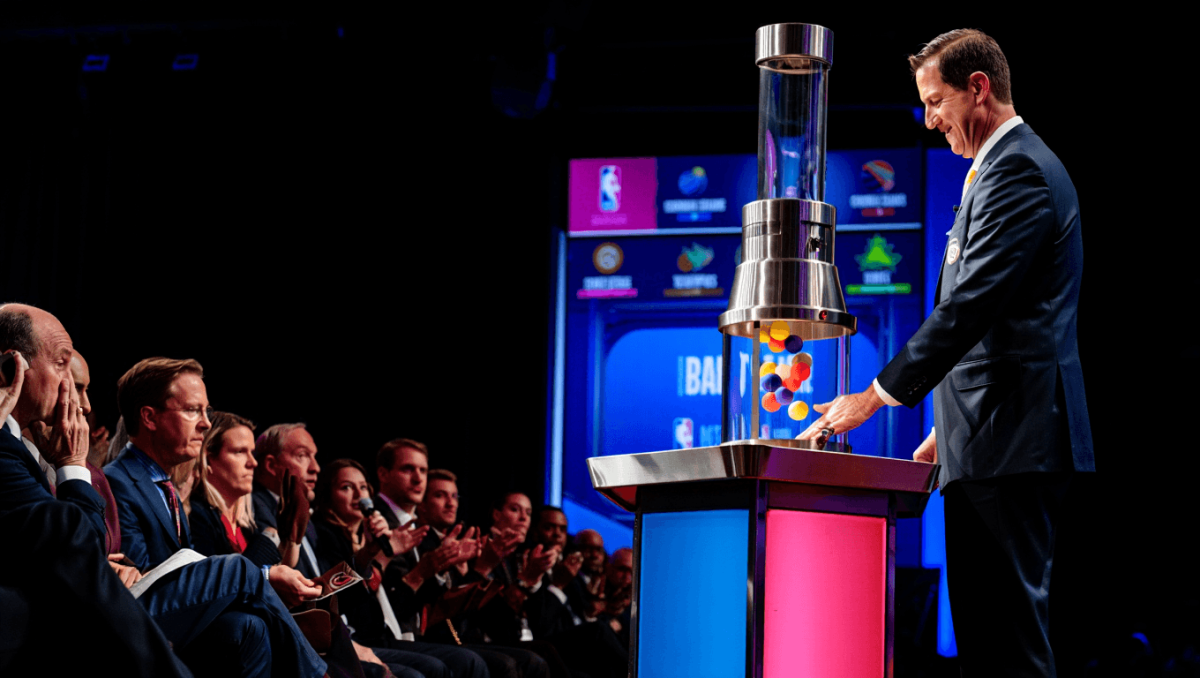
Sunday’s NBA Draft Lottery in Chicago turns randomness into a high-stakes theater: a short ceremony, a small machine and the potential to alter a team’s future. With the event airing at 3 p.m. ET on ABC, the immediate takeaway is simple — what happens in those minutes matters for roster-building, trade values and front-office plans, and the league is already signaling changes to the format next spring.
What the lottery decides — and why it still matters
The drawing determines the order for the first 14 selections at this year’s NBA draft in Brooklyn on June 23-24. Even with headlines about reforms, the outcome on Sunday will directly affect which franchises leap into contention or gain leverage in trade discussions.
Boxing champions ditch long runs for high-intensity training: new era in fight prep
Czech nationals among victims of Pinedale-area crash: two confirmed dead
Behind the spectacle is a tightly controlled process designed to balance chance and competitive fairness, but history shows the results can upend expectations: teams with long odds have walked away with top picks, and that unpredictability keeps both fans and executives glued to the moment.
Quick facts to know before the draw
- When and where: Sunday at 3 p.m. ET, McCormick Place in Chicago; broadcast on ABC.
- What’s at stake: Draft positions 1–14 for the June draft at Barclays Center.
- How many balls: The procedure uses 14 ping-pong balls, numbered 1–14.
- Combinations: There are 1,001 possible combinations when four balls are chosen, and 1,000 of those combinations are assigned to teams.
- Oversight: Representatives from Ernst & Young, the league office, team delegates and select media observe the draw; results are announced publicly in reverse order.
Step-by-step: how the drawing runs
The machine isn’t buzzing indefinitely. Balls are mixed for a preset span before each pull — a longer mix before the first ball, then shorter mixes before subsequent picks. The league repeats that cycle for the four-ball combination that selects a slot.
Once a combination is drawn, the team holding that sequence gets the corresponding pick. If a combination isn’t assigned or a team’s combination is drawn more than once, officials will redraw.
Results are revealed one envelope at a time, starting from the 14th pick and culminating with the No. 1 selection — a cadence that builds suspense and gives viewers a clear narrative to follow.
Who carries the best odds this year?
Odds are weighted by regular-season records. This year the Washington Wizards, Indiana Pacers and Brooklyn Nets each hold the top probability — about 14% — of claiming the first pick. But the lottery’s history cautions against certainties: teams with single-digit chances have frequently won, and the process is intentionally volatile to prevent straightforward tanking strategies.
Importantly, the team with the worst regular-season record cannot fall below fifth in the order, and picks 5–14 are slotted by reverse-season record subject to tiebreakers and existing trade conditions.
Who’s in the room and how the announcement works
The actual draw is sealed from the public eye: an accounting firm monitors the mechanical process, team representatives may attend, and league executives oversee the final reveal. The public-facing moment — an NBA official opening envelopes and announcing picks in reverse — is the only live portion most viewers will see.
That combination of off-camera controls and on-camera drama is meant to preserve integrity while maximizing suspense.
Want to experiment at home?
If you’re curious about probabilities, outlets such as ESPN Analytics offer draft-lottery simulators that let fans test scenarios and see how often certain teams land specific slots. It’s a practical way to understand why even slightly better regular-season results can materially change a franchise’s draft outlook.
With an expected format revision coming next year, this edition of the lottery could be one of the last under the current rules. For fans watching on Sunday, the immediate consequence is clear: a few minutes in Chicago will reverberate through trade talks, draft strategy and team-building decisions for months to come.