
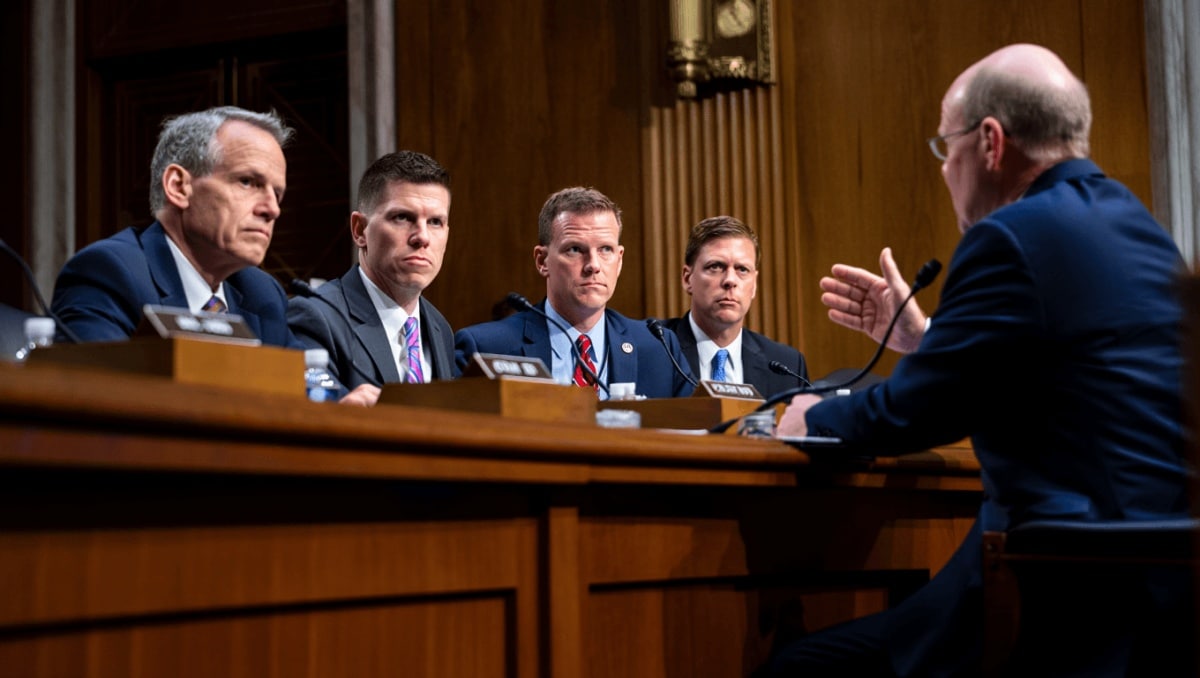
Lawmakers and industry leaders spent a Capitol Hill session this week pressing one another on how fast artificial intelligence is changing national security, privacy and everyday life — and whether current rules can keep up. The House Oversight subcommittee’s roundtable brought technologists, academics and corporate users together with members of Congress to map risks that could have immediate effects on military operations, consumer safety and democratic oversight.
The discussion opened with practical and existential questions: should AI be trusted with sensitive government data, could models be outlawed from using a person’s image to generate sexual content, and might an AI system refuse to recommend lethal military action on ethical grounds?
Representatives voiced sharply different concerns. Some argued AI could boost economic growth and medical advances, while others warned it could outpace lawmakers and create cascading harms if regulation arrives too late. One lawmaker likened the possible public backlash to a social upheaval if communities begin to feel sudden, severe impacts from the technology.
Boxing champions ditch long runs for high-intensity training: new era in fight prep
Czech nationals among victims of Pinedale-area crash: two confirmed dead
Panelists — including executives from AI firms, university researchers and corporate implementers — stressed the scale and speed of capability gains. They urged Congress to act from an informed stance, balancing innovation with safeguards that address both near-term and strategic threats.
Key themes that emerged during the session:
- National security: Officials warned that failing to craft clear policies could cede strategic advantage in the global AI race; some raised alarms about models that might bypass cybersecurity defenses.
- Military decision-making: Lawmakers questioned whether AI could or should influence the use of force if a system’s ethical calculus contradicts commanders’ judgments.
- Privacy and misuse of likeness: Members pressed whether generating explicit images using a person’s face should be banned outright.
- Energy and climate impact: Concerns were raised about the environmental cost of training and running large models.
- Regulatory readiness: Several representatives said the pace of innovation risks leaving legislators behind, with potentially severe consequences for public safety and trust.
Not all comments were alarmist. Some lawmakers praised AI’s capacity to streamline manufacturing and accelerate research. One member described a factory demonstration of automation as astonishing and asked how districts might attract similar investment.
Experts on the panel pushed back against fatalism while urging stronger federal support for safety research. A former Pentagon official warned that the United States could lose its competitive edge without policy attention to security-sensitive AI developments. A technology analyst argued the technology is unlikely to be apocalyptic, but said the government must bankroll studies that probe how models actually operate.
The room’s tension centered on accountability. Several speakers emphasized that constituents expect elected officials — not companies — to set and enforce protections. That point underlined a recurring line of questioning: who should decide the limits on AI capability and access?
Practical policy ideas circulated informally during the session, including clearer transparency requirements for models used in government, funding for independent AI safety labs, and targeted bans or restrictions on particularly harmful uses such as nonconsensual explicit imagery.
Congressional debate on AI now sits alongside other high-stakes issues — surveillance, funding for homeland security and international conflicts — making timing critical. Lawmakers acknowledged the need for rapid but considered action to avoid unintended consequences while preserving benefits.
For readers wondering what happens next: expect workshops, hearings and draft legislation to appear more frequently on Capitol Hill, focused on balancing economic opportunity with protections for privacy, national security and civil liberties. The choices made in the coming months will shape whether AI is steered toward public benefit or left to evolve with limited oversight.