Show summary Hide summary
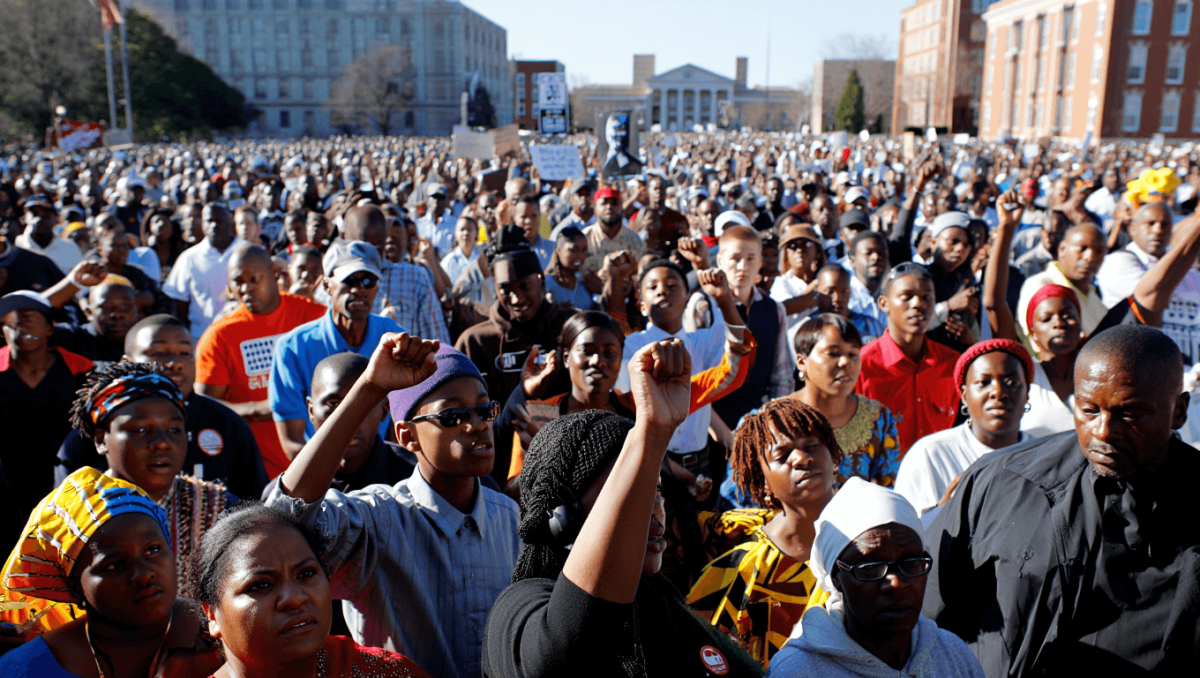
Thousands gathered in Montgomery on Saturday to oppose recent court decisions that critics say hollow out protections for Black voters and open the door to congressional maps that could reduce minority representation. The rally — staged where the civil rights movement crystallized — framed the legal fights over redistricting as an immediate threat to who gets elected and how communities are represented.
Speakers at the “All Roads Lead to the South” event argued the dispute is not only technical but also moral, linking today’s court rulings to a decades-long struggle for voting rights. Organizers brought together civil rights veterans, national lawmakers, union leaders and local clergy on the Capitol steps to press for continued political engagement and legal challenges.
A historic site, a present-day fight
Boxing champions ditch long runs for high-intensity training: new era in fight prep
Czech nationals among victims of Pinedale-area crash: two confirmed dead
The gathering took place near the same spot where the 1965 Selma-to-Montgomery march ended, a deliberate choice meant to draw a throughline from past battles to current litigation. Statues of Confederate President Jefferson Davis and civil rights icon Rosa Parks loomed behind the stage, underscoring Alabama’s complex history and the stakes lawmakers and activists say are at risk.
The Rev. Bernice King urged attendees to defend gains won by earlier generations, calling the recent Supreme Court decision a direct blow to the sacrifice of marchers and organizers. Other speakers — including U.S. Sen. Cory Booker and Rep. Terri Sewell — urged voters to convert protest into turnout.
“They think they can draw us out of power,” Rep. Alexandria Ocasio-Cortez said from the stage, warning that new maps could dilute the influence of communities of color. Supporters chanted and stood for hours in hot weather, repeating refrains like “we won’t go back” as the rally stretched past four hours.
Why this matters now
Legal shifts triggered by a recent U.S. Supreme Court ruling involving Louisiana have narrowed the scope of the Voting Rights Act, according to civil rights advocates. That decision, they say, compounds the impact of a 2013 high court ruling and has helped clear the way for tougher voter ID rules, limits on early voting and other restrictions in states once subject to federal oversight.
Veterans of the 1960s movement described how quickly protections they fought for have been eroded. Kirk Carrington, who was attacked by law enforcement on “Bloody Sunday” in Selma, said the rollback feels like history repeating itself and lamented that the fight for equal voting access continues more than six decades later.
- Representation at risk: Changes to maps could reduce the number of districts where Black voters can elect preferred candidates, altering Washington’s balance of power.
- Upcoming elections: Alabama has scheduled special primaries under the new map, heightening the urgency for campaign and legal responses.
- Voting rules: Courts’ decisions have coincided with state-level adoption of stricter voter ID and registration limits in some places.
- Ongoing litigation: Plaintiffs are pursuing court challenges aimed at restoring district lines that provide meaningful electoral opportunities.
Montgomery itself is directly affected: a federal court in 2023 ordered a redraw of Alabama’s 2nd Congressional District, finding the previous map diminished Black voting power in a district where Black residents are about 27% of the population. That redrawing produced a district intended to give Black voters a majority or near-majority voice. But the Supreme Court’s more recent ruling opened the way for state officials to implement a different map that could enable the Republican Party to reclaim the seat.
Rep. Shomari Figures, elected from that district in 2024, framed the dispute as a matter of access to representation rather than personal politics. Alabama House Speaker Nathaniel Ledbetter, speaking for Republican leaders, described the Supreme Court outcome as freeing the state to revisit a map he says was imposed by courts.
A three-judge panel has set a May 22 hearing on a request to block Alabama from switching to the newer map, and plaintiffs say they will continue the fight both in court and through public mobilization. Plaintiff Shalela Dowdy said organizers will keep pushing until the lines are drawn in a way that preserves voter opportunity.
For voters and communities watching closely, the next steps are concrete: litigation outcomes, special primary dates and the way state officials implement new lines will determine who appears on ballots and who has the structural capacity to win. The clash in Montgomery blended historical memory with a reminder that judicial rulings can reshape electoral realities quickly.
The rally made one point clear: litigation and protests are likely to continue in parallel as activists, elected officials and courts sort out what the nation’s voting maps — and the political power tied to them — will look like going forward.