Show summary Hide summary
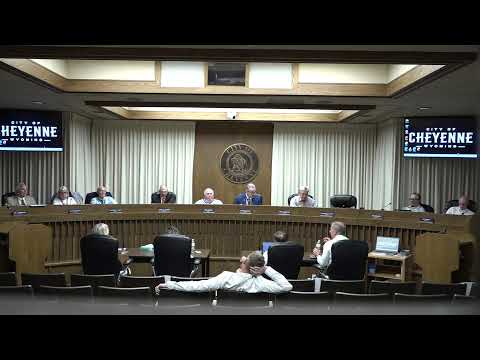
Cheyenne officials moved this week to tighten rules on oversized recreational vehicles and beef up street enforcement as summer travel ramps up, shifting $80,875 from council discretionary funds to hire an additional enforcement officer. The decisions aim to clear cluttered streets, protect neighborhood access and ensure the city can actually enforce vehicle-size limits it has long struggled to measure.
City councilors approved limits on short-term street permits for large RVs and clarified that drivers cannot dodge height restrictions by partially deflating tires. The measure caps street permits at two per 30-day period and makes enforcement language more explicit so citations can be issued without ambiguity.
Why the change now
Local storage operators and residents have pressed the city for months, saying parked oversized vehicles are clogging streets and creating safety issues. Owners of private RV facilities told council members that promised enforcement never arrived, leaving costly storage investments underused.
Boxing champions ditch long runs for high-intensity training: new era in fight prep
Czech nationals among victims of Pinedale-area crash: two confirmed dead
Corey Sutton, co-owner of Lite25 RV Storage, warned that without consistent enforcement his business may have to rethink property use. He told councilors the absence of reliable on-street monitoring undermines local storage options and could push owners to repurpose lots.
Council debates broader ban, settles on targeted fix
Councilor Michelle Aldrich sought a broader approach: remove specific size measurements from the ordinance and apply a seasonal ban on all vehicles that meet the state definition of an RV for nine months of the year. That change, she argued, would spare enforcement teams from having to take measurements on the street.
Several colleagues pushed back, saying such a major shift without broader public notice would be unfair so close to peak travel season. “Rolling out a sweeping change after Memorial Day doesn’t give people time to adjust,” said Councilor Jeff White.
Rather than adopt Aldrich’s wider ban, the council amended the budget to hire a dedicated community-level enforcement position to improve follow-up on complaints and vehicle management.
The new role — labeled a community service officer in budget documents — carries a price tag of $80,875 for fiscal year 2027. To cover the cost, councilors agreed to reduce the City Council’s general discretionary fund by the same amount; some members said they were willing to give up their share to fund enforcement.
What changes were approved
- Street permit limits for oversized recreational vehicles: maximum of two permits per 30-day period.
- Clarified enforcement language: reduced tire pressure will not exempt a vehicle from height/size citations.
- Allocation of $80,875 from the City Council discretionary fund to hire one additional community service officer.
- Postponement of a separate wastewater ordinance until June 8 to coordinate with EPA public comment deadlines.
Utilities and fees: modest increases advance
On the same night the council moved forward with annual utility adjustments. The solid waste schedule advanced on its second reading, raising residential collection rates by roughly 1% and commercial rates by about 3% to keep pace with operating costs.
Public reaction was mixed. One resident asked why the increases aren’t offset by large new industrial users, like data centers coming to town. Mayor Patrick Collins said the two issues are unrelated: these fees cover the actual cost of collection and disposal, he said.
Public Works Director Vicky Nemecek put the residential impact in plain terms: the 1% solid waste increase equals about 33 cents a month for the average household using a standard 95-gallon cart.
The Board of Public Utilities proposals also moved forward on second reading: a 5% increase in water and sewer rates plus a 3% rise in related service charges. Council leaders defended the adjustments as necessary to maintain aging pipes, treatment chemicals and large-scale infrastructure.
“The BOPU operates as an enterprise fund,” Mayor Collins said, noting those revenues are dedicated to water and sewer systems rather than general city projects. Council President Tom Segrave cited rising material and maintenance costs as drivers for the larger increase.
Both fee ordinances passed the council’s second reading; Councilor Mark Moody voted against each measure.
Next steps and timing
The utility and waste ordinances will return for final consideration at the council’s third readings in June. An amendment related to wastewater treatment limits was delayed so the city can incorporate feedback from an ongoing EPA public comment period that closes in early June.
Residents and stakeholders should expect the enforcement changes and new hire to begin phasing in over the summer, while final adoption of the fee adjustments will be decided later this month.
Quick facts
- New hire: One community service officer funded at $80,875 for FY27.
- RV permit cap: Two street permits per 30 days for oversized recreational vehicles.
- Solid waste: Residential +1%, commercial +3% (approx. $0.33/month for typical 95-gallon residential bin).
- Water & sewer: 5% rate increase; 3% increase in service charges proposed by BOPU.
- Wastewater ordinance: Third reading postponed to June 8 to align with EPA comments.
The council’s decisions reflect a pragmatic balance: tightening rules where needed, beefing up enforcement capacity, and moving forward modest fee adjustments to keep essential services funded. How effectively Cheyenne enforces the new rules this summer will determine whether private storage operators and residents see tangible improvement in street conditions.