Show summary Hide summary
Toothbrushes clean our mouths, but they can also hold the microbes we shed when we’re sick. Updated guidance in July 2026 highlights when replacing your brush is sensible — and when good storage and routine replacement are enough.
How likely is a toothbrush to make you ill?
Brushing deposits saliva, bacteria and sometimes viruses onto bristles. For most healthy people, those organisms dry out and lose infectivity quickly, and the immune system usually prevents the same bug from causing another episode.
Boxing champions ditch long runs for high-intensity training: new era in fight prep
Czech nationals among victims of Pinedale-area crash: two confirmed dead
Still, some germs persist longer under the right conditions. Dr. Jason Nagata, a pediatrician at UCSF Benioff Children’s Hospital, says reinfection from one’s own toothbrush is uncommon for the average person, but not impossible.
When to be more cautious
Certain infections and certain people merit extra care. Experts point to three scenarios where replacing a toothbrush is a reasonable step:
| Situation | Recommended action | Why it matters |
|---|---|---|
| Routine wear | Replace every 3–4 months or sooner | Frayed bristles clean less effectively; standard dental guidance |
| Bacterial infection (e.g., strep throat) | Replace after finishing treatment | Some bacteria can survive on bristles for days and are contagious |
| Fungal infection (oral thrush) | Replace once the infection is controlled | Candida can linger on oral surfaces and bristles |
| Cold sore (HSV) | Consider replacing or disinfecting after symptoms | Virus can remain detectable on a brush for 24 hours or more |
| Immunocompromised people | Replace more frequently and avoid shared storage | Weaker immune responses increase risk from repeated exposures |
| Toothbrushes stored together | Keep brushes apart; replace if cross-contamination is suspected | Close proximity can transfer microbes between brushes |
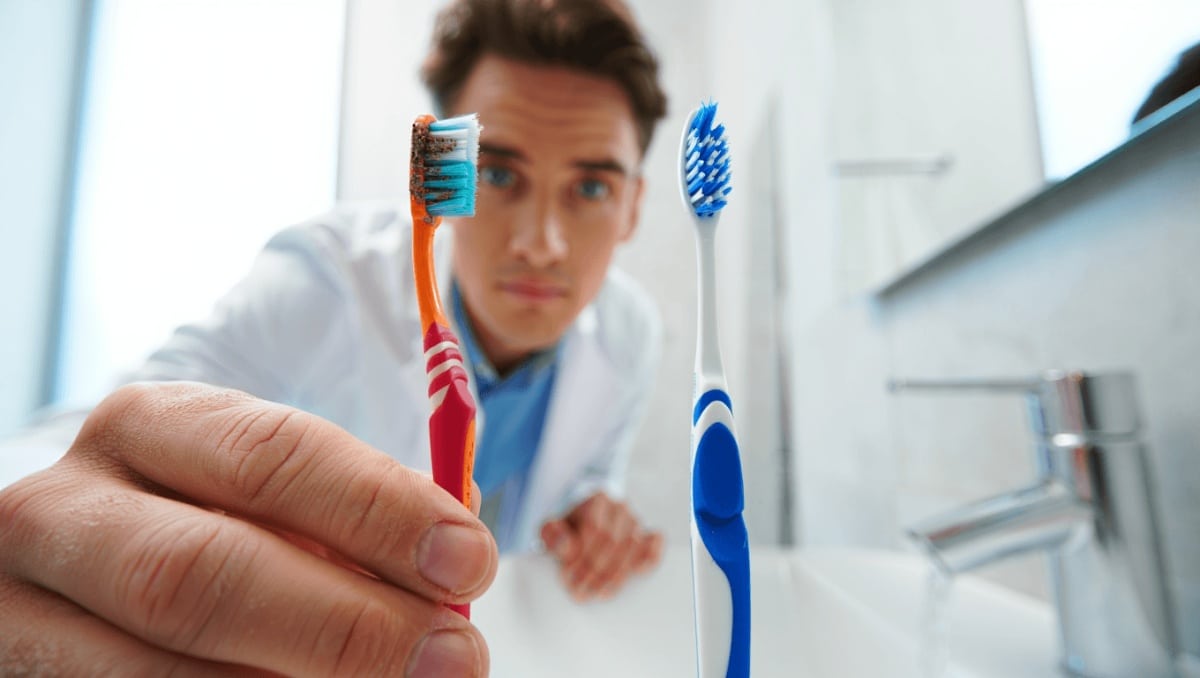
Dr. Briar Voy, a prosthodontist with the Amsterdam Dental Group, warns that toothbrushes kept in closed containers or that remain damp may shelter microbes longer. Proper drying reduces the chance that bacteria and viruses remain infectious.
Practical hygiene tips
Simple habits cut risk for nearly everyone:
- Rinse your brush well after brushing and store it upright so it can air-dry.
- Do not share toothbrushes under any circumstances.
- Avoid putting a wet brush into a closed travel case between uses.
For extra sanitizing, options include short UV treatments or soaking bristles in an antimicrobial mouthwash or diluted hydrogen peroxide — measures that lower microbial load but are not always necessary for healthy users. Boiling water will kill many organisms but can also warp bristles and shorten a brush’s life.
When considering replacement, balance practicality and caution. The American Dental Association’s long-standing advice to replace your toothbrush every three to four months remains a solid baseline. Replace sooner after infections like strep, oral thrush or active cold sores, and be more vigilant if you or a household member has a weakened immune system.
Bottom line: for most people, routine brushing, upright drying and replacing brushes every few months keep the benefits of cleaning while minimizing the small risk of reinfection or household spread.