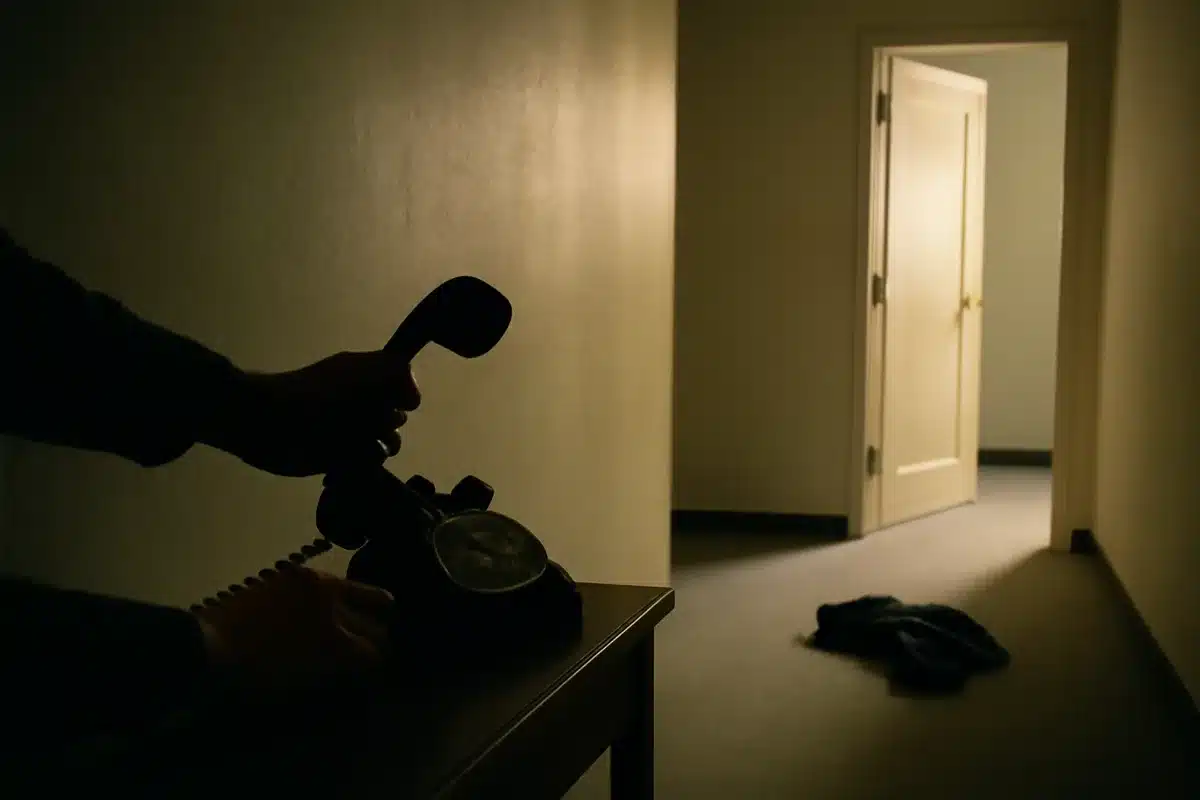
Prosecutors say a distressing 911 recording captured a man pleading that he was being killed while his son was allegedly stabbing him dozens of times, court filings show — evidence that has become central to a new murder case and is raising questions about how emergency calls are used in criminal proceedings.
According to the district attorney’s office, the emergency call made during the attack includes the victim’s voice shouting that he was being murdered as the assault continued; investigators contend the suspect inflicted roughly 40 stab wounds. The defendant has been arrested and charged, and prosecutors say the call will be presented to a judge and jury as part of the evidence against him.
The recording, prosecutors say, is unusually vivid
Prosecutors describe the 911 audio as a raw, contemporaneous account of the attack that captures both the victim’s voice and the sounds of the assault. In filings submitted to the court, officials argue the call corroborates other evidence — including the scene investigators found and medical examiner reports — and demonstrates the immediacy of the threat.
Boxing champions ditch long runs for high-intensity training: new era in fight prep
Czech nationals among victims of Pinedale-area crash: two confirmed dead
Defense attorneys often challenge recordings like this on several grounds — arguing hearsay, questioning whether the voice on tape is accurately identified, or disputing whether the caller was capable of making reliable statements under extreme stress. The DA’s office says the recording meets the rules that allow first-hand emergency statements to be admitted at trial.
What the prosecution reportedly says:
– The 911 call contains a live statement from the victim asserting he was being killed at that moment.
– Investigators allege the victim suffered about 40 stab wounds consistent with the recorded disturbance.
– Police arrested the suspect and recovered a weapon they believe was used in the attack.
– Prosecutors intend to introduce the audio at trial as part of a broader case that includes forensic and witness evidence.
Why this matters now
Emergency-call recordings are powerful pieces of evidence because they can relay what was happening in real time, unfiltered by later memory or interpretation. For jurors, an audio file can create an immediate emotional response that shapes how other facts are perceived. For courts, the question becomes whether that emotional force is legally admissible and whether proper precautions — such as limiting instructions to jurors — will be applied to prevent undue prejudice.
Broader implications and context
Public safety officials and legal scholars watch cases like this because they sit at the intersection of technology, trauma and due process. A few key trends are relevant:
– The growing routine use of digital audio and video from phones and dispatch centers in criminal prosecutions.
– Ongoing debate over the standards courts use to admit statements made under stress or pain.
– Concerns about victims’ privacy and the impact of graphic evidence on family members and the public.
What to expect next
The prosecution will likely file a motion to admit the 911 recording; the defense may move to exclude it or to have portions redacted. Pretrial hearings typically address these disputes, and a judge will rule on admissibility before a jury sees or hears the material.
If the case goes to trial, the 911 audio could play a significant role in the jury’s deliberations — but it will be one piece among forensic findings, medical testimony and witness statements. The outcome will hinge on how convincingly the prosecution ties the recording to other corroborating evidence and whether the judge gives jurors balanced instructions about how to weigh emotional or graphic material.
The case is ongoing, and the DA’s office has emphasized that the charges are allegations until proven in court. Further updates are expected as pretrial filings are made public and as the court schedules hearings.