Show summary Hide summary
The Cheyenne Planning Commission postponed a vote on tighter rules for on-site power generation after regulators said key utility companies had not been fully consulted. The delay leaves a proposed rewrite of the city’s Unified Development Code unresolved at a time when data centers and other heavy electricity users are increasingly turning to on-site generation.
City planners launched the rewrite after a proposed site plan for a hydrogen fuel cell installation revealed gaps in the current code, which focuses largely on traditional pollutants and does not clearly limit non-noxious emissions such as carbon dioxide.
Why the city moved to change the rules
Staff said existing land-use rules treat most energy equipment as generic industrial activity, which can obscure the unique impacts of systems such as fuel cells, battery storage and wind or solar generation paired with backup equipment. One staff report estimated the hydrogen project under review could produce an annual volume of carbon dioxide roughly comparable to emissions from tens of thousands of passenger vehicles — a figure planners used to justify clearer limits on volume, not just pollutant type.
Boxing champions ditch long runs for high-intensity training: new era in fight prep
Czech nationals among victims of Pinedale-area crash: two confirmed dead

The draft amendment aims to identify several energy technologies as distinct uses and to impose specific controls on their operation, size and emergency behavior. It was first presented in September and returned in revised form on Oct. 5, after commissioners raised concerns about potential loopholes.
Key elements of the latest proposal
The current draft would:
- Classify hydrogen fuel cells, nuclear, solar, wind and battery storage as separate land‑use categories rather than generic industrial uses.
- Limit on-site generation to properties producing under 0.5 MW and require that such systems make no discernible noise at property lines.
- Require developments that avoid state Industrial Siting Division review to undergo special use review by the City Council.
- Cap continuous operation of backup generators in non-emergency situations at 144 hours, with extensions allowed only if the governor declares an emergency.
- Clarify that an “emergency” means an involuntary interruption of service created by a physical disruption to the electrical transmission system, intended to exclude deliberate or manufactured outages.
- Establish fines of $750 per day for unauthorized operation beyond the permitted timeframe.
What led commissioners to pause the vote
Commissioners said the revised language answered many earlier concerns but still left open important operational questions that typically involve local utilities. In particular, they sought clarity on whether utility-directed load shedding — when a utility asks a major customer such as a data center to switch to backup power to protect the broader grid — would count as an emergency under the new definition.
Commissioners also worried about situations where severe weather or other disruptions could leave customers without power for extended periods if the governor does not declare an emergency. Those scenarios, they argued, could force operators to choose between staying within the code’s time cap or risking broader infrastructure consequences.
Local providers Black Hills Energy and High West Energy were aware of the proposed changes but did not appear to have provided the targeted feedback commissioners wanted on the operational questions. Planning staff said they would reach back out to the utilities for further comment.
Implications for data centers and the grid
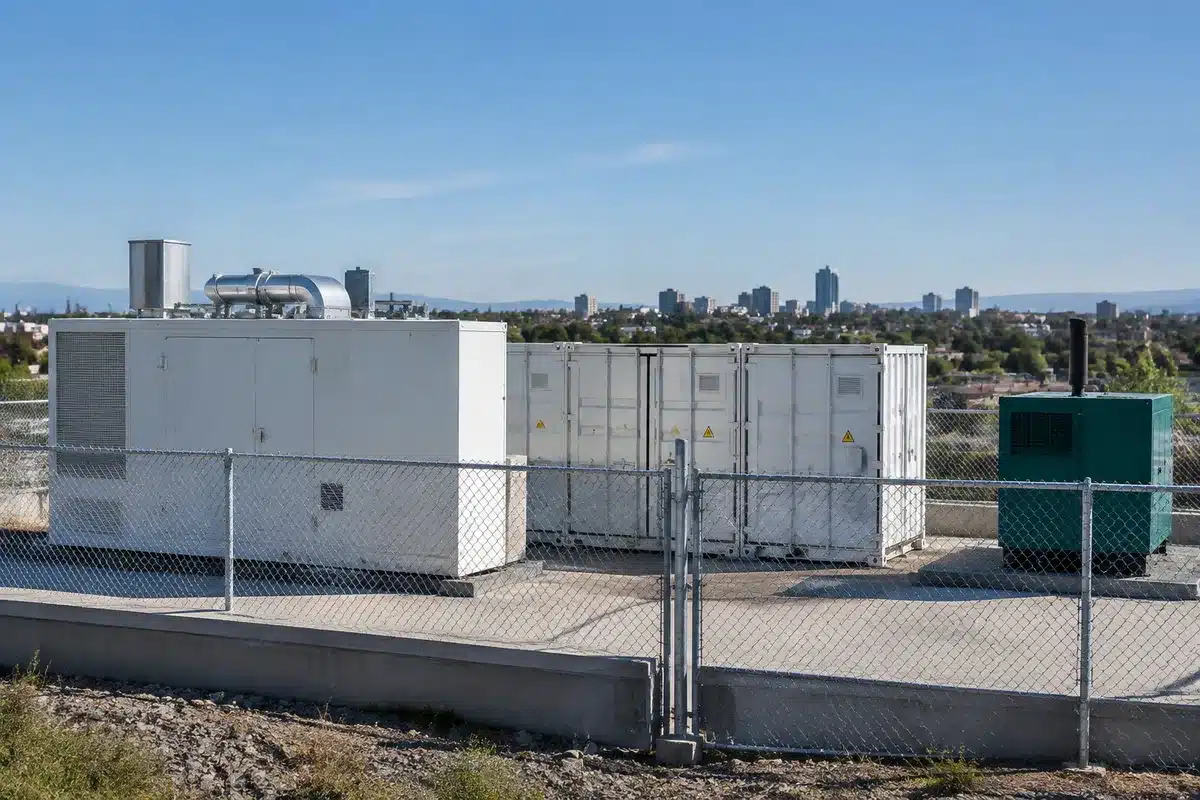
Data centers are among the primary drivers of demand for on-site generation because of their persistent, high electricity needs and need for uninterrupted power. How the city defines emergencies and caps backup runtime could affect data center operations, utility responses during peak grid stress and decisions about investing in cleaner on-site sources such as solar plus storage or hydrogen.

Planners also flagged emissions from hydrogen produced by steam methane reforming — sometimes called gray hydrogen — as a specific concern, arguing that even relatively “clean” technologies may produce substantial volumes of carbon dioxide that the city should be able to measure and, if needed, limit.
Next steps
With utilities input still outstanding, the Planning Commission voted to defer action until its Nov. 2 meeting so staff can gather more detailed comments. The commission’s recommendation will then go to the Cheyenne City Council, which has the final say. Even if the commission ultimately recommends denial, the council will still consider the measure.
Staff and commissioners framed the pause as a request for operational detail rather than opposition to stricter rules: they want the code to be enforceable, clear for industry, and aligned with how the grid actually operates during stress events.
What to watch next:
- Whether Black Hills Energy and High West Energy submit formal comments before the Nov. 2 meeting.
- Any further tightening or loosening of the emergency definition and the backup-generator runtime cap.
- How the city balances emissions oversight for emerging power technologies with the needs of large energy users such as data centers.