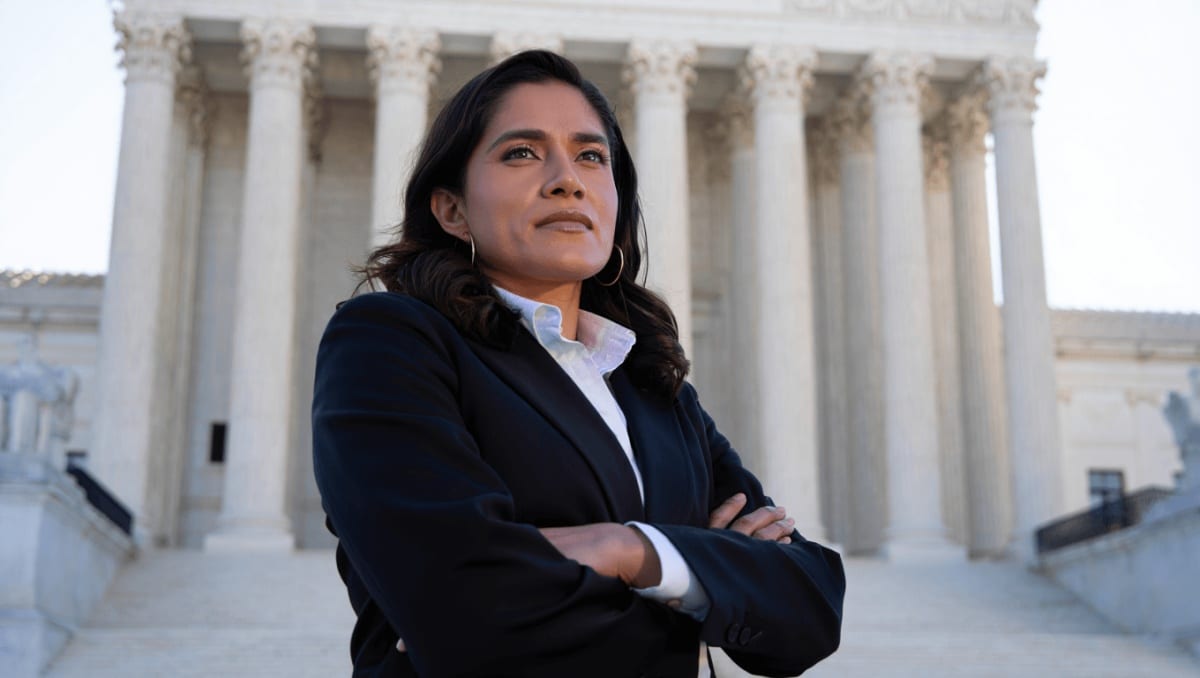
The Supreme Court on Monday declined to hear the appeal of journalist Priscilla Villarreal, widely known online as La Gordiloca, leaving intact a federal appeals court decision that blocks her from suing law-enforcement officials over a 2017 arrest tied to her reporting. The step keeps in place a contentious ruling with immediate implications for reporters who seek nonpublic police records.
Justice Sonia Sotomayor registered a lone dissent, saying plainly, “It should be obvious that this arrest violated the First Amendment.” Her opposition underscores a sharp split over how far police and prosecutors can go when detaining reporters who gather information not released to the public.
The case centers on an arrest after Villarreal obtained the identities of a person who died by suicide and of a family involved in a traffic crash from a police officer and then published those names. Prosecutors used a state law to bring charges; a state judge later threw out the criminal case, finding the statute unconstitutional.
Boxing champions ditch long runs for high-intensity training: new era in fight prep
Czech nationals among victims of Pinedale-area crash: two confirmed dead
Villarreal then sued local officials for damages, but an en banc panel of the U.S. Court of Appeals for the Fifth Circuit ruled 9–7 that the officers and others she named were entitled to legal immunity. By declining to review the appeal, the Supreme Court left that split decision intact, without providing an explanation.
Earlier this year the justices had intervened in a related Texas matter, sending another case back to the Fifth Circuit and allowing a different plaintiff — a former local council member — another opportunity to pursue her suit. Advocates for press freedom had hoped the high court would use Villarreal’s case to clarify how the First Amendment protects routine newsgathering when police records are involved.
- What the decision means now: The appeals court’s ruling stands, so officials named in Villarreal’s lawsuit remain shielded from civil liability in this instance.
- Impact on journalists: Reporters who rely on police sources for nonpublic details may face increased risk of arrest or legal exposure in parts of the country covered by the Fifth Circuit.
- Legal landscape to watch: Questions about the scope of the First Amendment and officials’ immunity remain unresolved at the Supreme Court level.
Villarreal’s lawyers argued that the Fifth Circuit’s decision effectively allows authorities to convert ordinary newsgathering into a criminal matter. “The Fifth Circuit has doubled down on granting officials free rein to turn routine news reporting into a felony,” they said in court papers.
The factual record is narrow: police paperwork alleged Villarreal sought the names to grow her social media following, and prosecutors pursued state charges; the criminal count collapsed when a judge found the statute used to arrest her conflicted with constitutional protections. Still, the civil suit depended on whether the officials could be held personally liable, and the appellate court sided with the defendants.
For journalists and local communities, the stakes are concrete. Reporters covering crime, accidents and public-safety incidents often rely on informal channels inside law enforcement. When courts signal broad immunity for officials who respond with arrests, the practical result can be a chilling effect on routine reporting — especially for independent and social-media-based journalists who lack institutional legal backing.
What’s next is uncertain. With the Supreme Court declining review, change could come from state courts, legislative action to clarify permissible access to certain records, or future federal cases that present the issue under different facts. Observers say the development will be watched closely by newsrooms and civil-rights groups across the country.