Show summary Hide summary
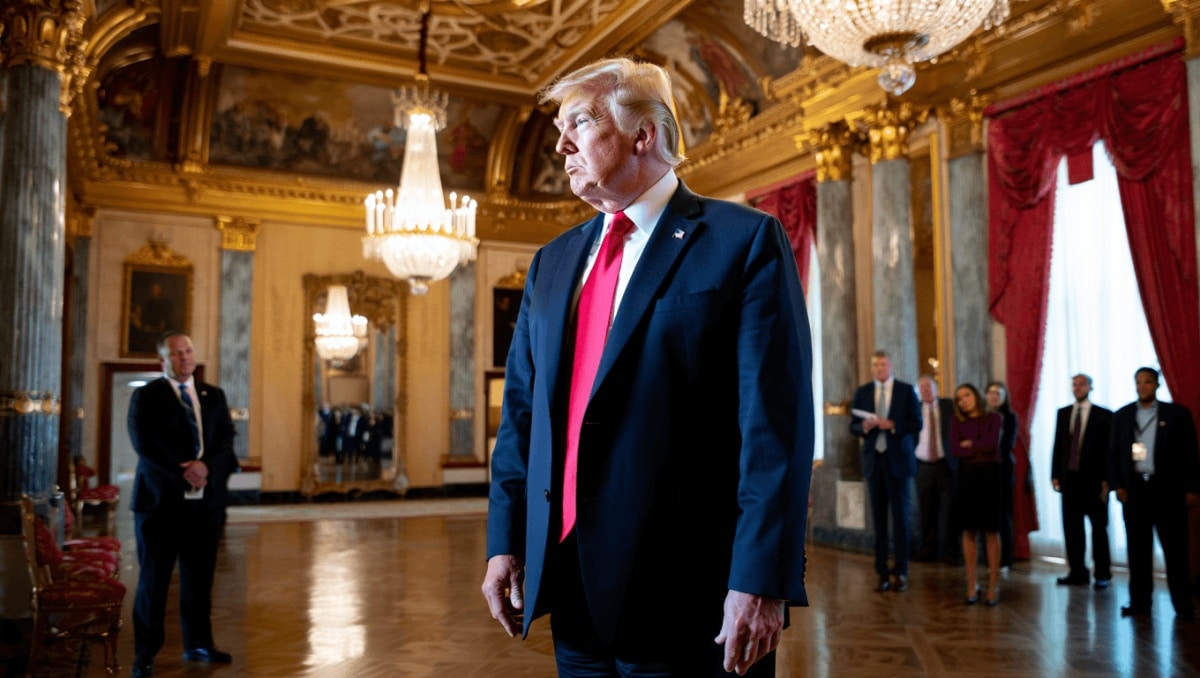
President Trump has again put an ornate construction plan at the center of a political argument over his priorities, unveiling renderings for a proposed $400 million White House ballroom as lawmakers and voters worry about everyday costs and local projects. With November’s midterms approaching, the debate over the project’s symbolism and timing is sharpening into a tangible campaign issue.
On a recent flight back to Washington, Trump displayed artist impressions of the planned addition — complete with carved Corinthian columns and grand public spaces — and described ambitions for what he called an unmatched reception hall. That presentation came as his administration moved forward with other high-visibility projects in the capital, including plans for a memorial-style installation near the Lincoln Memorial.
Political fallout and public reaction
Democrats seized on the imagery to argue the president is detached from economic strains facing many Americans. New Jersey Sen. Andy Kim contrasted the ballroom focus with surging gas prices and the administration’s handling of international conflicts, while California Gov. Gavin Newsom posted a satirical image likening the president to Marie Antoinette.
Boxing champions ditch long runs for high-intensity training: new era in fight prep
Czech nationals among victims of Pinedale-area crash: two confirmed dead
The White House pushed back. Spokesman Davis Ingle argued the president’s record will leave a lasting mark on the nation and that his accomplishments benefit all Americans, framing the construction plans as part of a broader legacy.
Still, some Republicans have signaled unease. The GOP leadership in Congress has not prioritized legislation to advance the ballroom, and several lawmakers have been cautious when pressed for praise. “I’m not much into architecture,” one Republican senator said last year, underscoring a reluctance to make the project a high-profile party defense.
Local projects and practical consequences
Critics point to tangible trade-offs: certain federally backed infrastructure initiatives have been delayed or entangled in administrative reviews while high-profile White House projects proceed. Joe Meyer, former mayor of Covington, Kentucky, said funding for critical repairs to the Brent Spence Bridge was slowed by an administration review; work is now set to begin but with constrained options because of the delay.
“The ballroom is Washington inside-baseball,” Meyer said. “The bridge is just a wreck.” That contrast has become shorthand for voters who face everyday expenses while federal attention is diverted to symbolic construction.
Images and optics: gold tractors and $100 tips
The ornate plans are only one piece of a larger pattern of spectacle. The president has staged public events that draw attention — including a $100 tip to a delivery worker at the White House and an agricultural appearance beside a gold-painted tractor — moments critics say amplify the perception of privilege.
At the same time, administration officials have offered practical messaging about household budgets that some find tone-deaf. A health official suggested cheaper cuts of meat such as liver as an affordable protein option on a widely listened-to podcast, and an agriculture official outlined modest meal combinations as attainable for many families.
- Political stakes: The ballroom narrative gives Democrats a clear theme to highlight in the run-up to the midterms.
- Local impact: Federal reviews and delays can slow infrastructure work — affecting safety and commerce in communities.
- Voter perception: Spectacle and symbolism may reinforce impressions that the administration is out of touch.
- Party unity: Republican leaders face pressure to defend the president without alienating constituents focused on pocketbook issues.
Why advisers and analysts are concerned
Scholars and former officials point out that presidents often become absorbed in their own narratives — prioritizing projects that reflect legacy rather than immediate public needs. Elaine Kamarck, who has written about presidential leadership, says the current pattern is closely tied to the president’s identity as a developer and brand-builder, a dynamic that shapes which projects receive attention.
Political consultants note voters may tolerate a degree of showmanship from a leader known for grand gestures, but that tolerance has limits when everyday economic worries mount. One Republican strategist warned Democrats could successfully frame the issue as evidence of coziness with wealthy backers — a line of attack that could resonate in competitive districts.
As midterm campaigns intensify, the ballroom debate is unlikely to fade. It crystallizes broader questions about priorities in Washington: whether symbolic, high-cost projects should proceed while some communities wait years for essential repairs, and how such choices will be weighed at the ballot box.