Show summary Hide summary
Virginia has moved to sharply restrict certain semi-automatic firearms, a change that takes effect July 1 and is already drawing immediate legal challenges. The measure, approved by Democratic Gov. Abigail Spanberger, tightens sales and manufacturing rules and joins a patchwork of state laws that sharply divide the country on gun policy.
What the new law does
The law makes it a crime to transfer, import, sell or manufacture a narrowly defined class of weapons and magazines — a shift that targets commonly owned semi-automatic rifles and pistols with higher-capacity feeding devices.
Boxing champions ditch long runs for high-intensity training: new era in fight prep
Czech nationals among victims of Pinedale-area crash: two confirmed dead
- Effective date: July 1.
- Criminal penalties: Violations of the sales-and-manufacture ban are a misdemeanor, punishable by up to one year in jail and fines up to $2,500.
- Scope: The prohibition covers semi-automatic firearms with magazines that hold more than 15 rounds and certain firearms that combine detachable magazines with features such as a second handgrip or collapsible stock. High-capacity magazines are also restricted.
- Possession: For the majority of owners, simply possessing a covered firearm or magazine is not criminalized under the new statute.
- Broader package: Spanberger has signed roughly two dozen gun-related measures in her first months in office, including changes to the minimum handgun purchase age and new civil remedies against gun makers.
Immediate legal pushback
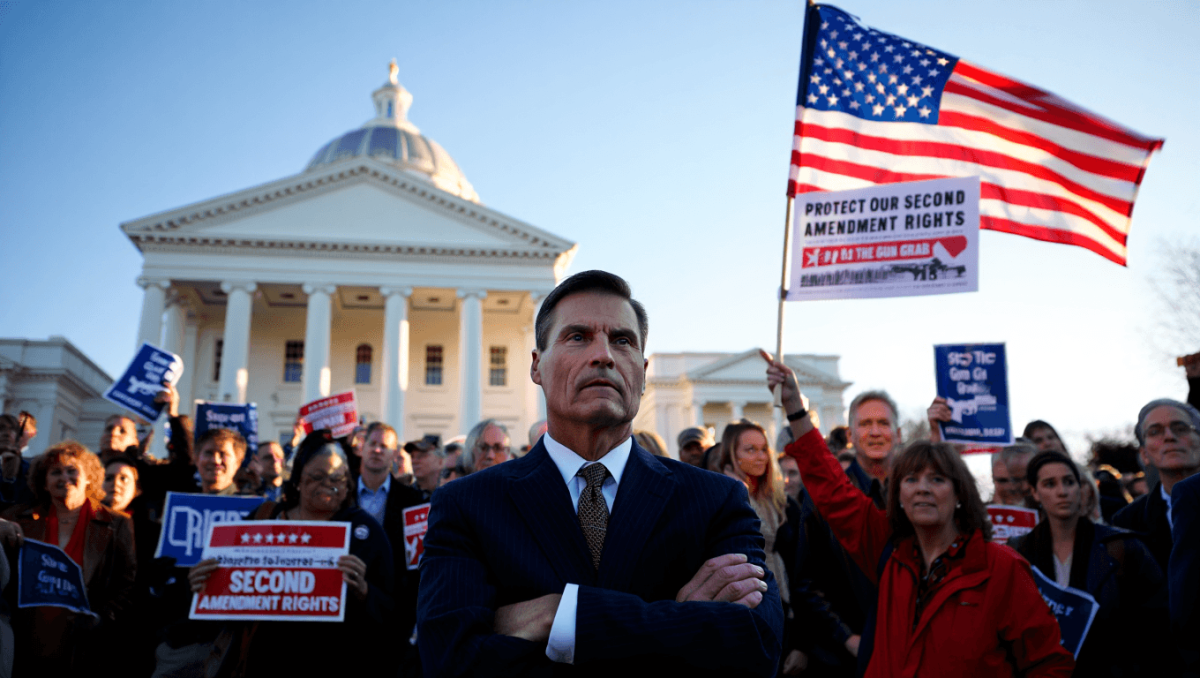
Within hours of the governor’s signature, national gun-rights organizations filed lawsuits in both federal and state courts arguing the measure violates the Second Amendment. The groups contend the firearms and magazines targeted by the law are widely owned and used for lawful purposes.
The federal government has also moved to halt enforcement, arguing the restrictions improperly curtail constitutionally protected firearms rights. State and federal filings are already scheduled to test those claims, setting the stage for protracted litigation.
How courts have ruled elsewhere
Previous cases provide mixed signals but recent appellate rulings have backed state-level restrictions. The 4th U.S. Circuit Court of Appeals — whose jurisdiction includes Virginia — has upheld a Maryland ban on dozens of semi-automatic models, characterizing those weapons as ill-suited to self-defense. That decision drew dissent from several conservative judges, however, leaving open the possibility of future reversals.
A sharp reversal in Richmond
Virginia’s move reflects a rapid policy pivot after a change in the governor’s office. The previous Republican governor vetoed comparable bills; the new Democratic administration and a Democratic-led legislature were ready to act once power shifted.
Spanberger, a former member of Congress and former intelligence officer who has worked with gun-violence prevention organizers, framed the law as a measure to protect families and support law enforcement. Advocacy groups on both sides see her signature as a bellwether: proponents call it a necessary safety step, opponents say it infringes on lawful ownership.
Where this fits in the national map
Virginia’s law brings it into closer alignment with states such as California, Illinois and New York, which have adopted wide-ranging limits on semi-automatic arms. At the same time, a number of Republican-led states are expanding gun access in multiple ways.
- Missouri approved a program that could allow trained volunteers to carry firearms in schools.
- West Virginia lowered the minimum age to carry a concealed firearm without a state permit from 21 to 18.
- Utah recently moved to curb some liability claims against the firearms industry, while Virginia opened new legal avenues for suits against manufacturers.
The immediate clash of statutes and court filings means the Virginia law’s fate will be decided in the courts rather than the legislature in the near term. Watch for preliminary injunction requests and appeals that could take the question up to higher federal courts, where any ruling could reshape how far states can go in restricting particular types of semi-automatic weapons.