Show summary Hide summary
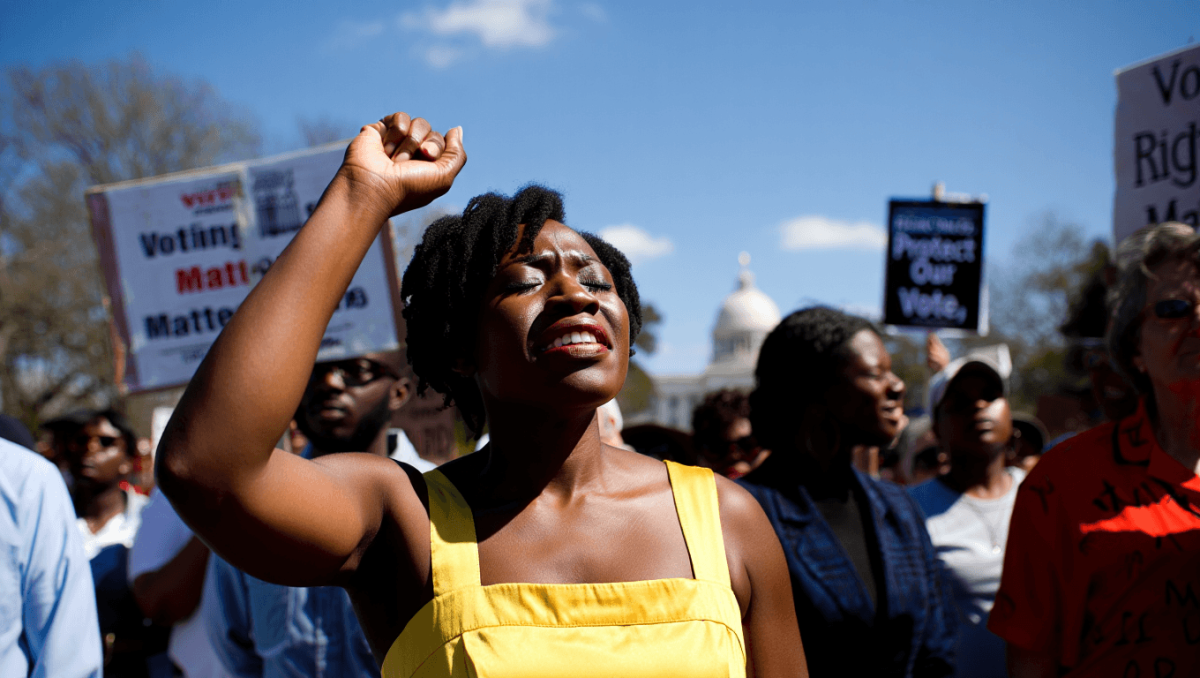
The push to protect voting power in the South has shifted from courtroom battles to the streets of Selma and Montgomery, where civil-rights groups say a recent Supreme Court ruling threatens decades of gains. Activists gathered this weekend to turn that legal setback into a renewed organizing campaign aimed at preserving minority representation ahead of next year’s elections.
Leaders from the NAACP and a broad coalition of racial justice organizations convened in Alabama to mark the anniversary of the 1965 Voting Rights Act while strategizing a response to the court’s latest decision limiting the consideration of race in drawing political districts. Their message: the stakes now extend well beyond symbolic locations to who holds power in statehouses and congressional delegations.
From remembrance to mobilization
Boxing champions ditch long runs for high-intensity training: new era in fight prep
Czech nationals among victims of Pinedale-area crash: two confirmed dead
What began as a commemorative march has become a planning hub. Organizers emphasize that the Selma and Montgomery events are meant to jump-start organizing rather than serve as a culminating protest.
NAACP President Derrick Johnson described the gatherings as an urgent call to action, saying civil-rights groups must move quickly to counter what they view as an effort to roll back political gains. Activists point to the Supreme Court’s recent ruling in Louisiana v. Callais, which, together with Shelby v. Holder (2013), has narrowed federal tools previously used to police discriminatory district maps.
Jared Evans, director at the Power Coalition for Equity and Justice, framed the moment as one that requires dramatic responses, arguing the legal shifts have removed protections that once underpinned equal access to the ballot.
What organizers want from Congress
Democratic lawmakers in attendance urged a legislative remedy. Representative Terri Sewell, whose district includes Selma, called for a revived voting-rights bill modeled on the John Lewis Voting Rights Act — one that would restore a modern version of preclearance and curb partisan gerrymandering.
Advocates want clearer, up-to-date criteria to demonstrate when state actions cross the line into discriminatory redistricting. Their aim is to translate legal losses into electoral and policy gains by electing sympathetic officials and blocking maps they view as dilutive of minority votes.
Where the changes are already playing out
State legislatures across the South have acted quickly after the Court’s decision, reshaping districts that previously contained multiple majority-Black seats. Examples highlighted by activists include:
- Alabama and Louisiana — both returned to single majority-Black districts after lower courts had ordered additional such districts under prior Voting Rights Act interpretations.
- Tennessee — lawmakers dismantled a compact majority-Black district in greater Memphis, dividing it among multiple new districts.
- Florida and Texas — moved ahead with redistricting plans that many civil-rights groups had warned about before the ruling.
- Georgia — the governor scheduled a June special session to redraw lines for the 2028 cycle.
Organizers warn the effort won’t stop at congressional maps. Their expectation is a multi-layered push affecting state legislatures and local councils — the venues where many policy decisions that shape daily life are made.
Political and practical consequences
Because heavily minority districts have historically elected Democratic candidates, redistricting here has immediate implications for party control in the U.S. House and for state policy agendas. Activists say the changes could also reshape judicial confirmations and legislative priorities that affect everything from worker protections to civil liberties.
Johnson argued the risk is broader than one racial group: he presented the redistricting fight as an issue that threatens fundamental rights and economic interests across communities, not solely a partisan skirmish.
Organizing amid fragmentation
Unlike the more centralized movement of the 1960s, today’s resistance is decentralized. There’s no single leader or organization steering the effort, and groups vary in tactics and priorities.
Still, organizers describe growing energy: large virtual town halls, packed statehouse corridors, and legal challenges filed in multiple states. The NAACP and partners have already mounted lawsuits against new maps even as courts reconsider the scope of the Voting Rights Act.
Evans and others have invoked historical parallels, calling for systemic change reminiscent of Reconstruction-era reforms, while acknowledging that building such a coalition will take time — and sustained effort across years of litigation and political campaigns.
Why this matters now
Two recent Supreme Court decisions have narrowed federal oversight of redistricting and voting protections, creating a window for state lawmakers to redraw boundaries without race as a formal consideration. For voters, the immediate consequences include the potential dilution of minority voting strength and a reordering of political representation at every level of government.
- Immediate risk: Fewer districts where Black and other nonwhite voters can elect their preferred candidates.
- Downstream effects: Changes to state policy priorities, judicial appointments, and resource allocation.
- Organizational response: Lawsuits, federal legislative pushes, and intensified grassroots turnout efforts ahead of the midterms.
Organizers stress that reversing or mitigating these shifts will require a mix of legal action, new laws from Congress, and stronger turnout at the polls. For advocates gathered in Alabama, the past is both a reminder and a roadmap: the civil-rights victories of the 1960s were won through sustained, multi-year campaigns — and they say similar persistence will be needed now.