Show summary Hide summary
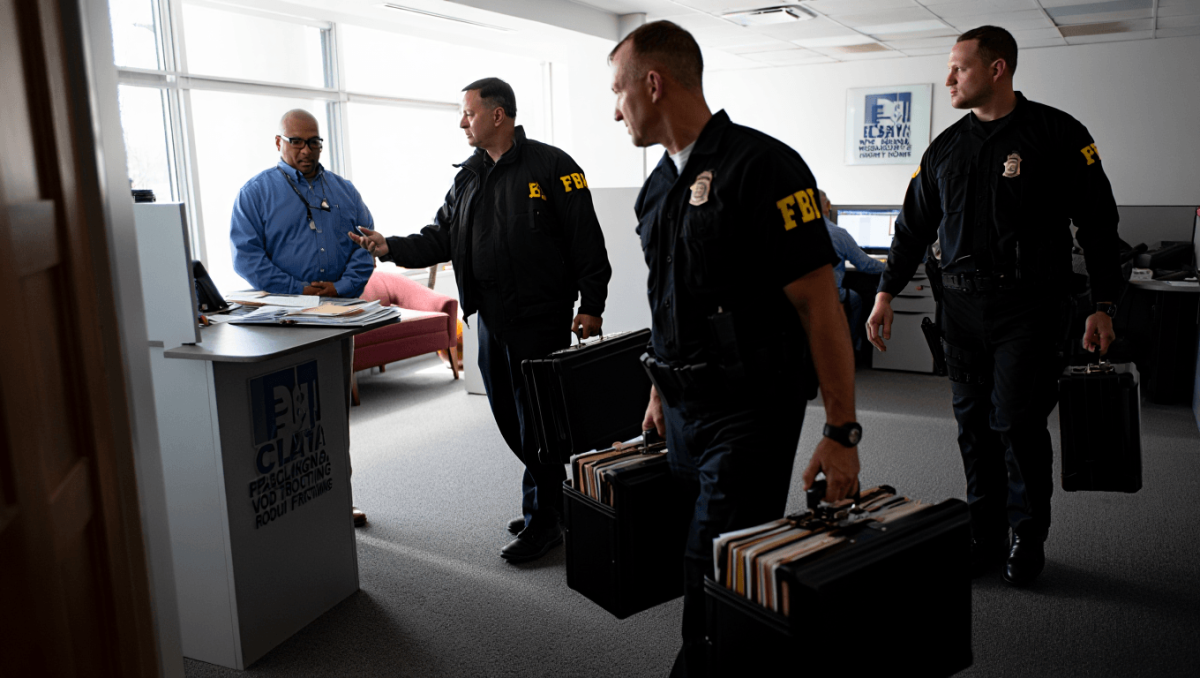
Federal agents executed a search at the Cleveland office of a nonprofit that helps register voters, removing documents and computer files and interviewing staff, the group said Friday. The action, coming weeks ahead of hotly contested statewide races, adds to a string of Justice Department probes tied to election operations in battleground states.
The Cleveland visit targeted the Ohio Organizing Collaborative, a grassroots organization founded in 2007 that says it works on criminal justice and racial equity while promoting access to the ballot. Board member Prentiss Haney said FBI agents arrived Thursday, questioned employees for hours and also contacted people linked to the group at their homes.
Haney described the visits as heavy-handed, asserting the searches and interviews were intended to intimidate volunteers and discourage voter registration ahead of the fall elections. He said federal agents seized both paper records and electronic files. The FBI and the Justice Department declined to comment on the probe.
UFC Edmonton: who to book next, five matchups fans want led by Mike Malott vs Sean Brady
Laramie County arrests: who was booked Sept. 25-Oct. 2
What investigators are reportedly examining
A person familiar with the inquiry, speaking on the condition of anonymity, told reporters agents are looking into possible fraud related to voter registration. The specifics of the evidence presented to secure a warrant have not been released.
Under federal procedure, authorities must persuade a judge there is probable cause of criminal activity before obtaining a search warrant. That legal threshold and the lack of public details prompted immediate concern among Democratic leaders about whether the raid was justified.
- Target: Ohio Organizing Collaborative — Cleveland office searched; staff interviewed at the office and at home.
- Items seized: Documents and electronic files, according to the organization.
- Investigative focus: Possible voter-registration or voter-fraud violations, per an anonymous source.
- Official response: Justice Department and FBI declined to comment publicly.
Political reaction and stakes for November
Leading Democrats in Ohio publicly criticized the FBI action. Dr. Amy Acton, the Democratic nominee for governor, said federal interference with voter-registration drives is unacceptable. Senator Sherrod Brown demanded transparency from the bureau, asking that officials disclose details of the searches.
Ohio is expected to feature competitive races for governor and the U.S. Senate this year. Republicans have held the governor’s office for two decades and control both Senate seats, but Democrats see the state as part of a possible midterm swing. Campaigns and civic groups say law-enforcement actions that touch on registration efforts risk deterring volunteers and voters in the run-up to Election Day.
National context: a pattern of election-related probes
The Cleveland search is part of a broader pattern of Justice Department and FBI activities tied to election administration and voting records over the last several years. Federal agents have previously removed ballots and election materials in high-profile inquiries in other battleground states, and prosecutors have pursued cases tied to voter-registration fraud in several jurisdictions.
Notable recent actions include seizures of 2020 and 2024 election materials in states such as Georgia, Arizona and Michigan, and questioning of election workers in Wisconsin’s Milwaukee County. The department also has sought voter-roll data from multiple states, pursuing litigation to obtain records that include partial Social Security numbers and birth dates for eligibility checks.
Possible consequences and open questions
Legal experts note that searches like this can be part of legitimate criminal inquiries, but they also raise practical and political questions when they involve civic organizations engaged in registration work. Key unknowns remain:
- What evidence justified the search warrant?
- Whether the seized materials will lead to criminal charges.
- How the probe will affect community outreach and voter-signup efforts before the fall elections.
State and federal law typically assign election-integrity investigations to local authorities, but federal involvement has grown in recent years. That shift has heightened scrutiny from lawmakers and voting-rights advocates, who argue the public deserves clear explanations for such interventions—particularly when they touch on organizations that register voters.
As the campaign season intensifies, the Cleveland search is likely to sharpen debates over enforcement and political influence in election administration. Observers say transparency about the investigation’s scope and evidence will be central to determining whether federal action was warranted or whether it will be viewed as a deterrent to voter participation.