Show summary Hide summary
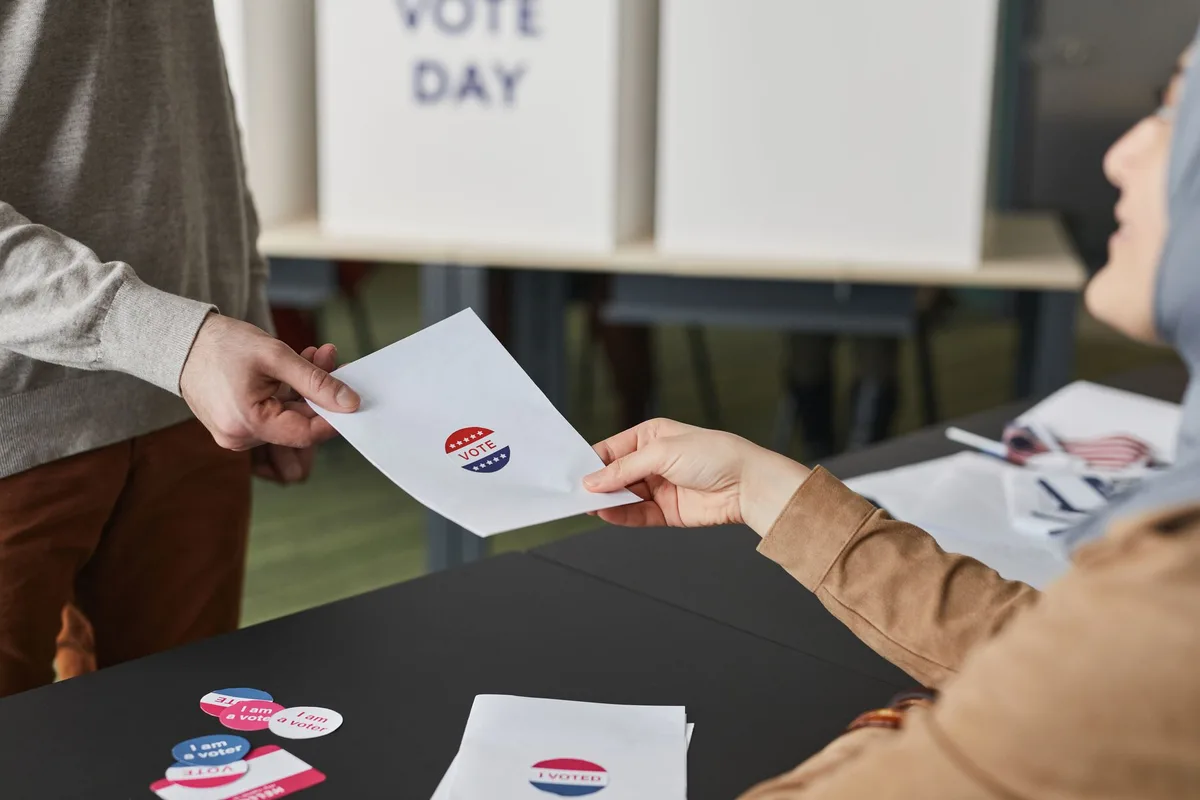
The Wyoming Republican Party has abandoned a long-standing practice of staying neutral before its primaries, issuing formal endorsements in six statewide and federal contests while simultaneously suing to overturn a state law that bars party spending for primary campaigns. The move — and the decision to name the state’s chief elections officer, who is also an endorsed candidate, as the defendant — sets up a legal clash that could reshape how Wyoming primary contests are funded and fought before the Aug. 18 primary.
A legal and political knot
At the center of the dispute is a state statute that makes it a misdemeanor for a political party to spend money “in the aid of the nomination” of one primary candidate over another. The Wyoming GOP’s leadership says the restriction prevents the party from acting like a modern political organization, so it has opened a federal lawsuit targeting Wyo. Stat. § 22-25-104.

The suit, filed June 4 in U.S. District Court, names Secretary of State Chuck Gray — the state’s chief elections official — as the lone defendant in his official capacity. That creates an unusual optics problem: Gray enforces the code section the party seeks to strike down and is among the candidates the party publicly endorsed.
Boxing champions ditch long runs for high-intensity training: new era in fight prep
Czech nationals among victims of Pinedale-area crash: two confirmed dead
Party chair Bryan Miller argues the lawsuit is about restoring the ability of the party to spend on campaigns, not about silencing voters. He has framed the endorsements and litigation as a response to outside spending and partisan mailers that he says drown out local voices.
The endorsements
| Office | Endorsed candidate | Notes |
|---|---|---|
| U.S. Senate | Harriet Hageman | Former U.S. Representative |
| U.S. House | Chuck Gray | Wyoming Secretary of State; named defendant |
| Governor | Brent Bien | Statewide candidate in GOP field |
| Secretary of State | Rachel Williams | State representative |
| Treasurer | Scott Smith | State representative |
| Superintendent of Public Instruction | Tom Kelly | State representative |
The endorsements followed new party bylaws adopted at the April convention, which set up vetting committees at both the state and county level and spelled out criteria — from voting history to donation records — that were used to evaluate hopefuls.
Why the party stopped waiting
Miller and Wyoming GOP executive director Ginger Bennett say the change addresses a practical problem: outside groups with deep pockets have been influencing races with advertising and mailers, and the party wants to give voters a local, coordinated alternative.
“We’re local volunteers trying to help voters cut through the noise,” Bennett told party audiences. The leadership stresses the current phase — publishing endorsements — stops short of spending campaign dollars, which they say is the next step if the courts allow it.
Mixed reactions inside the party
Responses from Republicans across Wyoming have been uneven. Some candidates welcomed the endorsements as overdue modernization. Others, including elected lawmakers with long records in the Legislature, defended the traditional neutrality that kept the party out of contested primaries.
Several critics describe the new process as opaque and potentially exclusionary. Kevin Christensen, a U.S. House hopeful who was not endorsed, accused the party of creating a system that favors those with an established partisan footprint and could edge out candidates whose careers required periods of nonpartisanship.
Representative Julie Jarvis declined to seek the party’s backing, saying her responsibility is to the voters in her district rather than to an organization’s platform. Senator Charles Scott warned that public voting records can be mischaracterized in campaign materials and said he might withhold financial support from a party that backs candidates he opposes.
- Supporters argue endorsements help voters identify preferred candidates and counter external influence.
- Opponents fear the process privileges insiders and risks coercing ideological conformity.
- Neutral observers note the move tests long-standing state restrictions on party activity in primaries.
Legal backdrop and what’s next
The party’s challenge seeks to nullify the spending ban, while stopping short of attacking the rule that prevents parties from listing endorsements on ballots — endorsement publication itself remains lawful under current statute.
Miller points to a recent U.S. Supreme Court decision striking down federal limits on party coordinated spending as supportive precedent. In National Republican Senatorial Committee v. FEC (June 30), the court ruled on general-election coordinated spending caps; the Wyoming GOP hopes that reasoning will bolster its case that political parties have a First Amendment right to back their own candidates.
Still, the federal case here concerns state law and primary spending, and no decision is expected before Wyoming’s Aug. 18 primary. In the meantime, lower court rulings and separate state disputes have already forced the party into compliance on at least one occasion: a district judge ordered the state party to follow existing law after a dispute over county leadership elections.
Outside money has followed the endorsements. Reporting shows a super PAC funded by the family of Secretary Gray began voter outreach promoting the party’s picks the day after the statewide announcement — an early sign that private funding will shape the unfolding contest.
Why it matters
If the party succeeds, Wyoming’s Republican organization would gain the legal authority to spend on primary campaigns and to coordinate support for favored candidates — a shift that could concentrate influence inside party structures and change how competitive primaries play out.
For voters, the stakes are immediate: whichever candidates carry the party’s imprimatur into August will be harder to dislodge in the general election in a heavily Republican state. For the party, the litigation tests the balance between grassroots control and legal limits imposed by state law.
The court fight will determine not only whether Wyoming’s GOP can finance primary campaigns, but also whether parties across the state can openly coordinate their messaging and money before voters cast their ballots.