Show summary Hide summary
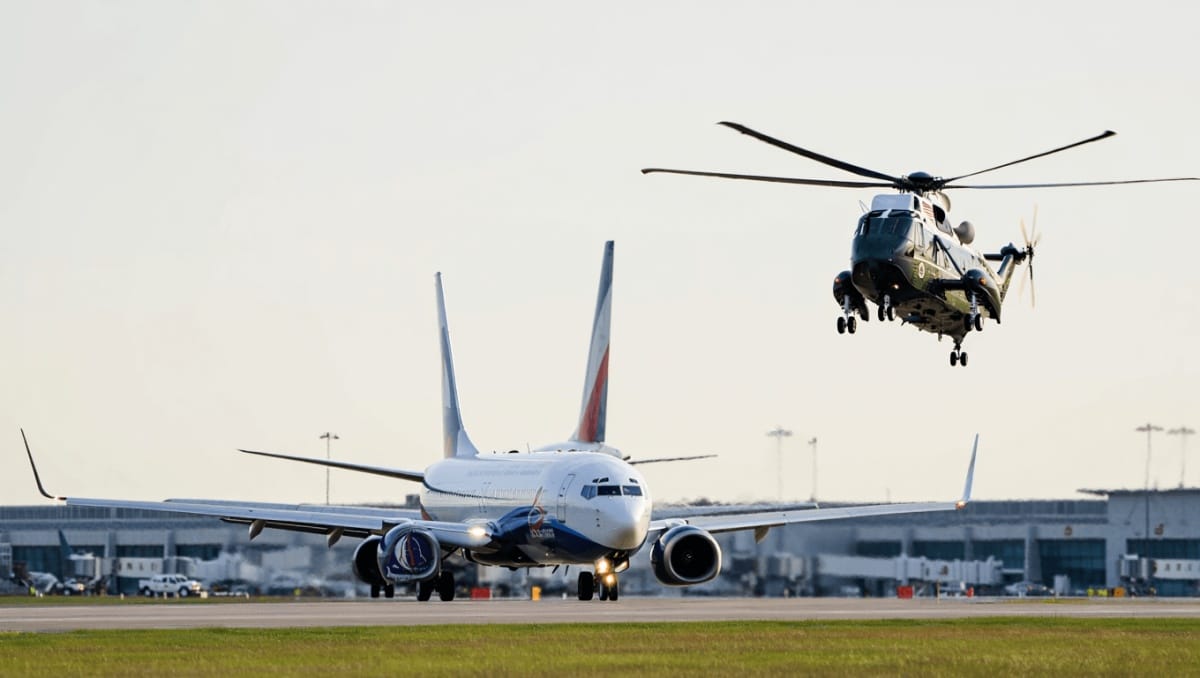
A commercial airliner departed Reagan National Airport on Tuesday as President Trump’s helicopter, Marine One, was inbound—triggering probes by the FAA and the NTSB and reviving worries about safety in one of the nation’s busiest airspaces. The incident comes after new restrictions were adopted following a fatal midair collision last year, raising fresh questions about whether procedures meant to prevent exactly this kind of encounter are being followed.
Both federal safety agencies opened reviews Wednesday to reconstruct the event and determine why a takeoff occurred while the presidential helicopter was transiting near the airport. Authorities say there was no impact and the president was not endangered, but preliminary material indicates a brief loss of required separation between the two aircraft.
What the agencies have said so far
UFC Edmonton: who to book next, five matchups fans want led by Mike Malott vs Sean Brady
Laramie County arrests: who was booked Sept. 25-Oct. 2
The FAA described the interruption as a short-lived lapse in spacing after which the two aircraft moved apart. Investigators are examining recorded communications, radar tracks and flight data to establish a precise timeline.
The White House stressed that the president remained safe throughout the movement. A Marine Corps spokesperson also defended the helicopter crew, saying tower personnel did not instruct the pilots to alter their planned profile.
Tower audio suggests miscommunication
Recordings from the control tower capture the Marine One pilot notifying controllers of an impending lift. The controller did not clearly acknowledge that call and later described the transmission as garbled. When the helicopter announced it would proceed “as briefed,” the controller’s reaction suggested surprise, and he then warned the crew about departing traffic.
After being alerted, the helicopter crew reported visual contact with the airplane and said they would pause momentarily. Radar data appear to show the jet climbing above the helicopter so the two were not on a direct collision path, but the overlap nevertheless triggered the probe.
- Who is investigating: FAA and NTSB
- Primary focus: communications between tower and aircraft, radar separation, and compliance with new procedures
- Immediate finding: a brief loss of separation but no collision or injury
- First report: the incident was initially disclosed by the Wall Street Journal
Rules put in place after last year’s collision
In the wake of last year’s midair accident, federal regulators tightened operations around the capital. Since a rule change on Jan. 29, 2025, controllers have been instructed to suspend takeoffs and landings at Reagan whenever a helicopter is on a conflicting route. Additional requirements call for controllers to rely on radar rather than visual separation and for military aircraft to broadcast positional data.
That collision had exposed other weaknesses: oversight hearings revealed that a direct communications line connecting the Pentagon and Reagan tower was out of service for years without the FAA’s knowledge. Families of last year’s victims continue to press for fuller implementation of safety measures recommended by investigators.
Why this matters now
Washington’s airspace mixes frequent military movements, presidential flights and high-volume commercial service. Any breakdown in communication or procedure has amplified consequences — not only for aircraft safety but also for public confidence in air-traffic controls that protect the president and thousands of daily travelers.
Investigators’ findings could prompt tightened controls, new training mandates for tower and military pilots, or changes to how presidential movements are coordinated with commercial operations. Lawmakers and oversight bodies may seek briefings depending on the outcome of the FAA and NTSB inquiries.
The agencies have not yet released a final report. Until investigators publish detailed conclusions, questions will remain about how a departure was cleared under rules designed to prevent such overlaps in one of the nation’s most congested flight corridors.